
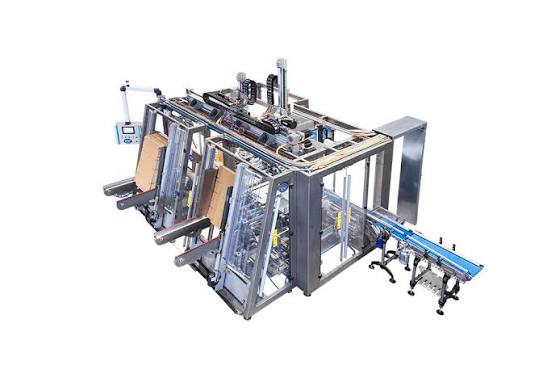
Packaging machinery plays an essential role in modern manufacturing by ensuring products are packed efficiently, securely, and consistently. As production requirements become more demanding, businesses often compare different packaging technologies to identify the most suitable solution. Two commonly considered options are wrap around packaging machines and traditional cartoning machines.
Although both systems are designed to package products into cartons, they differ in their operating methods, packaging materials, efficiency, and application requirements. Understanding how a Wrap Around Packer compares with traditional cartoning equipment can help manufacturers make informed decisions based on their production needs, product characteristics, and long-term operational goals.
What Is a Wrap Around Packer?
A wrap around packer is an automated packaging machine that forms a corrugated cardboard case around a group of products. Instead of placing products into a pre-assembled carton, the machine feeds a flat cardboard blank, positions the products, and folds the material around them to create a complete package.
The packaging process typically involves product grouping, blank feeding, carton folding, and sealing. Depending on the machine configuration, adhesive or other sealing methods are used to secure the finished case.
This approach is widely used in industries that package products in groups, including food and beverage manufacturing, household goods, personal care, and consumer products.
What Are Traditional Cartoning Machines?
Traditional cartoning machines package individual products or groups of products inside pre-formed or flat-folded cartons. These machines are commonly used for products that require smaller retail cartons, protective packaging, or organized product presentation.
Depending on their design, cartoning machines may operate horizontally or vertically. Horizontal systems typically load products through the side of a carton, while vertical systems place products into cartons from above.
They are frequently found in pharmaceutical, cosmetics, food, electronics, and consumer goods industries. Their flexibility makes them suitable for various product types and packaging formats.
Key Differences Between Wrap Around Packers and Traditional Cartoning Machines
Both technologies automate packaging operations, but several important differences influence their suitability for particular production environments.
1. Packaging Formation Process
The most noticeable difference is how each machine forms the package.
A wrap around packer creates a case directly around a group of products using a flat cardboard blank. This allows the packaging material to follow the product arrangement and form a compact outer case.
Traditional cartoning machines generally work with pre-glued cartons or carton blanks that are erected before products are inserted. The products are then loaded into the prepared cartons before the machine completes the closing process.
2. Packaging Material Usage
Material consumption is another important consideration. Wrap around systems use flat corrugated blanks that are folded around the products, potentially reducing unnecessary packaging space.
Traditional cartoning equipment commonly uses paperboard cartons designed for individual products or retail packaging applications. These cartons may include additional flaps, inserts, or internal supports depending on product requirements.
The most efficient option depends on carton design, product dimensions, material thickness, and required protection.
3. Production Speed and Efficiency
Both machine types can support automated production, but their performance depends on the product, packaging configuration, and equipment design.
Wrap around systems are particularly useful for packaging products in consistent grouped arrangements. Their automated folding and sealing operations can support continuous case production in high-volume manufacturing environments.
Traditional cartoning machines also offer high production speeds, especially in industries where individual products need to be loaded into cartons. However, their operating speed can vary depending on product feeding, carton erection, and loading complexity.
Manufacturers should compare actual machine capacities rather than assuming one technology is always faster.
4. Product Compatibility
Wrap around packers are generally suitable for products that can be arranged in stable groups. Common examples include bottles, cans, containers, and packaged consumer goods.
Traditional cartoning machines offer broader flexibility for products requiring individual cartons. They can handle items such as cosmetic products, pharmaceutical packages, food items, and small electronic components.
The choice depends on whether the production process requires grouped shipping cases or individual retail cartons.
5. Packaging Strength and Product Protection
Packaging strength is essential for products that travel through warehouses, distribution centers, and transportation networks.
Wrap around cases made from suitable corrugated cardboard can provide structural support and help protect grouped products from external pressure and handling damage.
Traditional cartons offer protection based on their material thickness, construction, and internal packaging design. They are often suitable for products that need individual containment or additional presentation features.
Neither system automatically provides better protection in every situation. Product weight, carton specifications, stacking requirements, and transportation conditions should guide the decision.
Benefits of Using a Wrap Around Packer
For manufacturers handling products in grouped configurations, wrap around packaging technology offers several practical advantages.
Efficient Use of Packaging Materials
Because the cardboard blank is folded around the product group, the packaging can be designed to fit the arrangement closely. This may reduce excess material and unnecessary empty space compared with less optimized carton designs.
Suitable for High-Volume Operations
Automated product grouping, blank feeding, folding, and sealing help maintain consistent packaging output. This makes wrap around systems useful for manufacturing facilities with demanding production schedules.
Improved Case Stability
Properly designed corrugated cases provide support during stacking, storage, and transportation. Consistent folding and sealing also contribute to uniform package construction.
Reduced Manual Handling
Automation minimizes the need for workers to manually assemble cases and arrange products. This can improve workflow efficiency and allow employees to focus on monitoring and quality control.
Better Integration with Packaging Lines
Wrap around packers can be integrated with upstream production equipment and downstream systems such as conveyors, case handling equipment, and palletizers.
Benefits of Traditional Cartoning Machines
Traditional cartoning machines remain valuable because they support packaging applications that require individual cartons and different product configurations.
Greater Packaging Format Variety
These machines can accommodate different carton styles, including straight-tuck, reverse-tuck, and other specialized carton designs. This makes them suitable for businesses with varied retail packaging requirements.
Individual Product Packaging
Traditional cartoning systems are particularly useful when products need separate packaging for identification, branding, instructions, or retail display.
Flexible Loading Configurations
Horizontal and vertical cartoning technologies provide different loading approaches. Manufacturers can select a configuration based on product shape, size, orientation, and handling requirements.
Suitable for Specialized Industries
Pharmaceutical and cosmetic manufacturers often require individual cartons with inserts, leaflets, or additional protective components. Traditional cartoning machines can support these specialized packaging needs.
Factors to Consider When Choosing Between the Two
Selecting the appropriate packaging technology requires an understanding of current production requirements and future business objectives.
Consider the following factors before making a decision:
- Product type: Determine whether products need individual cartons or grouped shipping cases.
- Production volume: Evaluate the required output and the machine’s actual operating capacity.
- Packaging design: Consider carton dimensions, material specifications, and structural requirements.
- Available factory space: Check installation dimensions and the space required for product movement and maintenance.
- Automation requirements: Determine how much manual handling can be reduced through automated operations.
- Operating costs: Compare equipment investment, material consumption, maintenance, and energy requirements.
- Future expansion: Select equipment that can accommodate potential changes in product ranges and production volumes.
A detailed assessment of these factors can help businesses avoid investing in machinery that does not match their actual packaging needs.
Which Packaging Machine Is Right for Your Production Line?
A wrap around packaging system is generally a suitable choice for manufacturers that need to package multiple products together in strong, corrugated shipping cases. It is particularly useful for beverage producers, food manufacturers, and consumer goods companies handling high-volume grouped packaging.
Traditional cartoning machines are often a better option for businesses that require individual product cartons, specialized packaging designs, or additional retail presentation features.
In some manufacturing facilities, both technologies may be used within the same packaging operation. For example, traditional cartoning equipment can package individual products, while wrap around systems can prepare grouped cases for transportation and distribution.
The best solution depends on the complete packaging workflow rather than the capabilities of one machine alone.
Conclusion
Wrap around packers and traditional cartoning machines serve different but important purposes in modern packaging operations. Wrap around systems focus on forming corrugated cases around grouped products, while traditional cartoning machines specialize in placing products into individual cartons.
Understanding their differences in packaging formation, material usage, product compatibility, automation, and production efficiency helps manufacturers select equipment that supports their operational requirements.
Businesses exploring automated packaging solutions can review the available technologies from Techflow Pack to better understand how different machine configurations may support their production processes. Ultimately, choosing equipment based on product specifications, packaging objectives, and long-term efficiency can contribute to a more reliable and productive manufacturing operation.