
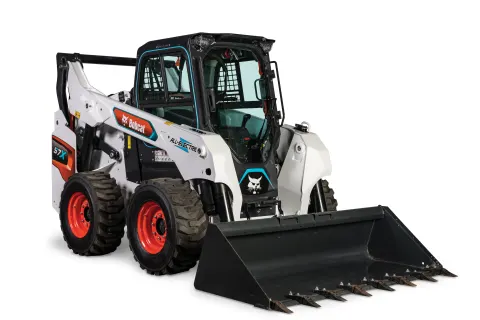
Construction companies are increasingly looking for equipment that combines productivity, maneuverability, and environmental performance. In busy urban areas and enclosed workspaces, traditional diesel-powered machinery can present challenges related to exhaust emissions, noise, and ventilation. These concerns have encouraged contractors to explore alternative equipment that better suits modern construction requirements.
The growing interest in the electric skid steer reflects this shift toward more adaptable construction machinery. Powered by rechargeable battery systems, these compact loaders offer practical advantages for indoor projects, urban developments, warehouses, and other locations where operating conditions require careful consideration.
1. Zero Direct Exhaust Emissions
One of the main reasons electric skid steers are gaining attention is that they produce no direct exhaust emissions during operation.
Diesel-powered equipment releases exhaust gases that can affect air quality, particularly in enclosed or poorly ventilated spaces. Electric models eliminate these emissions at the point of use, making them a suitable option for certain indoor construction applications.
This advantage is particularly relevant for:
- Warehouse construction and renovation.
- Indoor demolition preparation.
- Commercial building projects.
- Underground parking facilities.
- Industrial maintenance operations.
Although electricity generation and battery manufacturing still have environmental impacts, electric equipment can help reduce emissions directly at construction sites.
2. Lower Noise Levels in Urban Environments
Noise pollution is a major concern for construction projects located near homes, offices, schools, hospitals, and commercial properties.
Traditional skid steer loaders can generate considerable noise from their engines and operating systems. Electric models generally operate more quietly because they do not use conventional combustion engines.
Reduced engine noise can make construction activities more manageable in noise-sensitive environments.
This is especially useful for projects that operate near occupied buildings or need to minimize disturbances during working hours. However, hydraulic systems, tires, attachments, and material handling still produce operational noise.
3. Compact Design for Restricted Workspaces
Urban construction sites often have limited access, narrow pathways, and crowded working areas. Large machinery may struggle to operate efficiently in these conditions.
Skid steers are known for their compact structure and maneuverability. Their ability to turn within a small area allows operators to work around obstacles and move materials through restricted spaces.
Electric models maintain these practical characteristics while providing the benefits of battery-powered operation.
They can be useful for indoor renovations, landscaping, property maintenance, and construction work where space is limited.
4. Reduced Maintenance Requirements
Equipment maintenance directly affects construction schedules and operating expenses.
Conventional diesel machines require regular engine servicing, including oil changes, fuel filter replacements, and maintenance of exhaust-related components.
Electric skid steers generally have fewer engine-related maintenance requirements. Their electric drive systems eliminate several routine servicing tasks associated with combustion engines.
However, they still require proper maintenance of batteries, electrical connections, hydraulic systems, tires, cooling components, and safety equipment.
Following the manufacturer’s maintenance schedule helps maintain performance and reduce unexpected downtime.
5. Improved Operating Conditions for Workers
Construction workers often operate machinery for extended periods, making workplace conditions an important consideration.
Electric skid steers can create a more comfortable environment by reducing engine noise and eliminating direct exhaust emissions.
These characteristics are particularly valuable in enclosed buildings where air circulation may be limited.
Modern machines may also include ergonomic seating, intuitive control systems, improved visibility, and operator protection features.
Contractors should evaluate these design elements when comparing equipment to ensure that operators can work safely and comfortably.
6. Suitable for Indoor Construction and Renovation
Indoor construction projects require machinery that can operate effectively without creating unnecessary ventilation or noise challenges.
Electric skid steers are increasingly attractive for tasks such as moving building materials, clearing debris, transporting supplies, and preparing surfaces.
Their compact design helps them navigate warehouses, industrial facilities, and commercial buildings.
Before using one indoors, contractors should confirm that the machine’s dimensions, load capacity, floor requirements, and operating specifications are appropriate for the site.
7. Greater Flexibility Through Attachment Compatibility
Skid steer loaders are widely used because they can perform different tasks with interchangeable attachments.
Depending on the model, available attachments may include:
- General-purpose buckets for material handling.
- Forks for moving pallets and supplies.
- Sweepers for site cleaning.
- Augers for drilling operations.
- Specialized tools for landscaping and surface preparation.
This flexibility can reduce the need for multiple machines on a construction site.
However, buyers should check hydraulic flow requirements, attachment compatibility, electrical limitations, and manufacturer-approved operating conditions before selecting additional equipment.
8. Lower Operating Expenses Over Time
Electric skid steers can offer potential savings through reduced fuel consumption and fewer routine engine maintenance tasks.
Instead of purchasing diesel, businesses use electricity to recharge the machine’s battery. Depending on local electricity rates and operating conditions, this may reduce daily energy expenses.
The overall financial benefit depends on several factors, including:
- Electricity prices.
- Battery capacity and lifespan.
- Daily operating hours.
- Charging efficiency.
- Maintenance costs.
- Initial purchase price.
Contractors should compare total ownership costs rather than relying only on the equipment’s purchase price.
9. Better Alignment with Urban Environmental Requirements
Many urban development projects operate under environmental guidelines or local restrictions related to emissions and noise.
Electric construction machinery can help businesses address some of these requirements because it produces no direct exhaust emissions and generally operates more quietly than comparable diesel equipment.
This can make electric skid steers a useful option for contractors working in environmentally sensitive areas.
However, local regulations and project-specific requirements should always be reviewed before selecting equipment.
10. Battery Technology Supports More Efficient Work Planning
Battery performance is a major consideration when choosing electric construction machinery.
Modern battery-powered equipment is designed to provide practical operating periods for different applications. However, actual runtime depends on battery capacity, workload, attachment usage, operating conditions, and machine configuration.
Contractors should review the manufacturer’s battery specifications and estimate the energy required for their typical workday.
It is also important to understand charging time, charger compatibility, and available electrical infrastructure.
Planning charging periods around work schedules can help minimize interruptions and improve equipment utilization.
11. Reduced Dependence on Conventional Fuel
Fuel availability and price changes can affect construction operating budgets.
Electric skid steers reduce dependence on diesel fuel by using rechargeable battery systems. This can simplify energy planning for businesses with suitable charging facilities.
For companies operating multiple machines, establishing a dedicated charging area may also help organize equipment use across different shifts.
However, reliable access to electricity is essential. Contractors should assess the site’s power supply and charging requirements before introducing electric equipment into their fleet.
12. Important Factors to Consider Before Purchasing
Although electric skid steers offer several advantages, they are not automatically suitable for every construction project.
Buyers should evaluate the following specifications before making a purchase:
Battery capacity: Check whether the battery supports the expected operating duration.
Rated operating capacity: Confirm that the machine can safely handle the materials used on the site.
Machine dimensions: Make sure the loader can pass through access points and operate within restricted areas.
Hydraulic performance: Review compatibility with the attachments required for the project.
Charging time: Determine whether charging schedules fit the working shifts.
Safety features: Evaluate visibility, stability, braking systems, and operator protection.
After-sales support: Check warranty coverage, spare parts availability, and technical assistance.
Careful evaluation helps businesses select machinery that matches their actual operating requirements.
13. The Future of Electric Equipment in Urban Construction
As construction companies place greater emphasis on efficiency and environmental performance, demand for electric machinery is expected to remain an important industry trend.
Improvements in battery technology, charging systems, and electric drive components may expand the applications of battery-powered equipment.
Electric skid steers are particularly relevant to projects where reduced noise and the absence of direct exhaust emissions provide practical benefits.
Their adoption will depend on equipment costs, battery performance, charging infrastructure, and the specific requirements of individual construction sites.
Conclusion
Electric skid steers are becoming popular for indoor and urban construction because they combine compact maneuverability with reduced operating noise, zero direct exhaust emissions, and potentially lower maintenance requirements. These characteristics make them attractive for warehouses, commercial renovations, residential developments, and other projects where conventional machinery may create operational challenges.
Before investing in electric equipment, contractors should carefully evaluate battery capacity, charging arrangements, lifting performance, attachment compatibility, and long-term ownership costs. With the right machine and proper planning, electric skid steers can help construction businesses improve productivity while adapting to the changing demands of modern urban projects.