
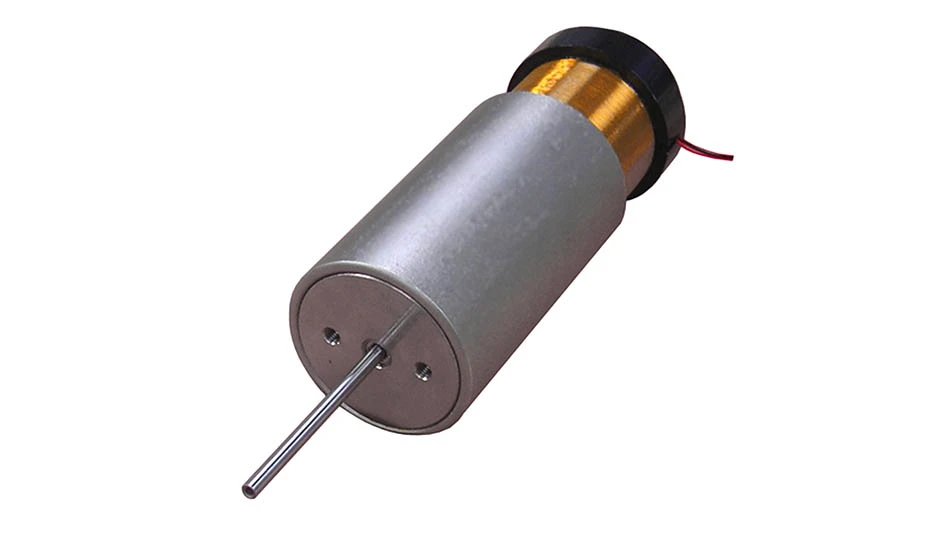
Voice coil linear actuators are widely used in precision motion systems where controlled force, accurate displacement, and fast dynamic response are essential. Their electromagnetic operating principle allows direct conversion of electrical energy into linear motion, making them highly suitable for advanced automation, robotics, and high-precision industrial applications.
In modern motion control design, a voice coil linear actuator is often selected for its direct-drive architecture, which eliminates mechanical transmission elements such as gears or lead screws. This results in smooth, backlash-free motion and highly responsive force control, especially in systems that require rapid adjustments and fine positioning accuracy.
Understanding Force Characteristics
The force generated by a voice coil linear actuator is one of its most important performance parameters. It is directly proportional to the input current, following the Lorentz force principle. This linear relationship allows precise control of output force without complex mechanical conversions.
Key aspects of force behavior include:
- Force increases linearly with current input
- Direction of force changes with current polarity
- Stable magnetic field ensures consistent force output
- Minimal mechanical resistance improves efficiency
This predictable force response makes voice coil actuators ideal for applications requiring controlled pressure, tension, or delicate positioning.
Stroke Length and Motion Range
Stroke length refers to the total linear travel distance the actuator can achieve. Voice coil linear actuators are available in a wide range of stroke configurations, from very short micro-positioning movements to longer displacement systems.
Several factors influence stroke performance:
- Magnetic circuit design and air gap size
- Coil geometry and winding length
- Mechanical guidance system limitations
- Thermal constraints during continuous operation
While longer stroke designs are possible, many high-precision applications use shorter strokes to maintain maximum accuracy and force consistency across the motion range.
Speed and Dynamic Response
One of the most significant advantages of voice coil linear actuators is their exceptional speed and dynamic response. Because there are no gears or mechanical transmission components, motion is generated almost instantly when current is applied.
Speed characteristics are influenced by:
- Moving mass of the coil or armature
- Magnetic field strength
- Electrical inductance of the coil
- Controller bandwidth and feedback system performance
Low inertia allows rapid acceleration and deceleration, making these actuators ideal for high-speed positioning and repetitive motion tasks.
Balancing Force, Stroke, and Speed
Force, stroke, and speed are closely interconnected in voice coil linear actuator design. Increasing stroke length may affect force consistency, while higher force output can influence thermal performance and speed efficiency.
Engineers must balance these parameters based on application requirements:
- High-force systems prioritize magnetic strength and coil design
- High-speed systems focus on reducing moving mass
- Precision systems optimize stroke length for accuracy and stability
Advanced control systems help maintain performance balance by dynamically adjusting current and feedback parameters in real time.
Role of Thermal Management
Thermal behavior plays a critical role in maintaining consistent performance across force, stroke, and speed operations. As current flows through the coil, heat is generated, which can affect resistance and magnetic efficiency.
Common thermal management strategies include:
- Efficient heat-dissipating housing materials
- Optimized coil winding to reduce resistance
- Controlled duty cycles for continuous operation
- Integration of cooling structures in high-power designs
Proper thermal control ensures stable performance even during high-speed or high-force operation.
Applications Requiring Balanced Performance
Voice coil linear actuators are used in applications where a combination of force precision, stroke control, and speed is required:
- Semiconductor wafer positioning systems
- Optical alignment and focusing equipment
- Medical diagnostic and surgical devices
- Precision testing and calibration systems
- Robotics requiring rapid yet controlled motion
These systems rely on consistent actuator behavior to maintain accuracy and efficiency.
Conclusion
Voice coil linear actuators offer a unique combination of controllable force, adaptable stroke length, and rapid dynamic response. Their direct-drive electromagnetic design enables precise and efficient motion across a wide range of applications. As industrial systems continue to demand higher performance and flexibility, these actuators remain a key technology in advanced motion control engineering.