
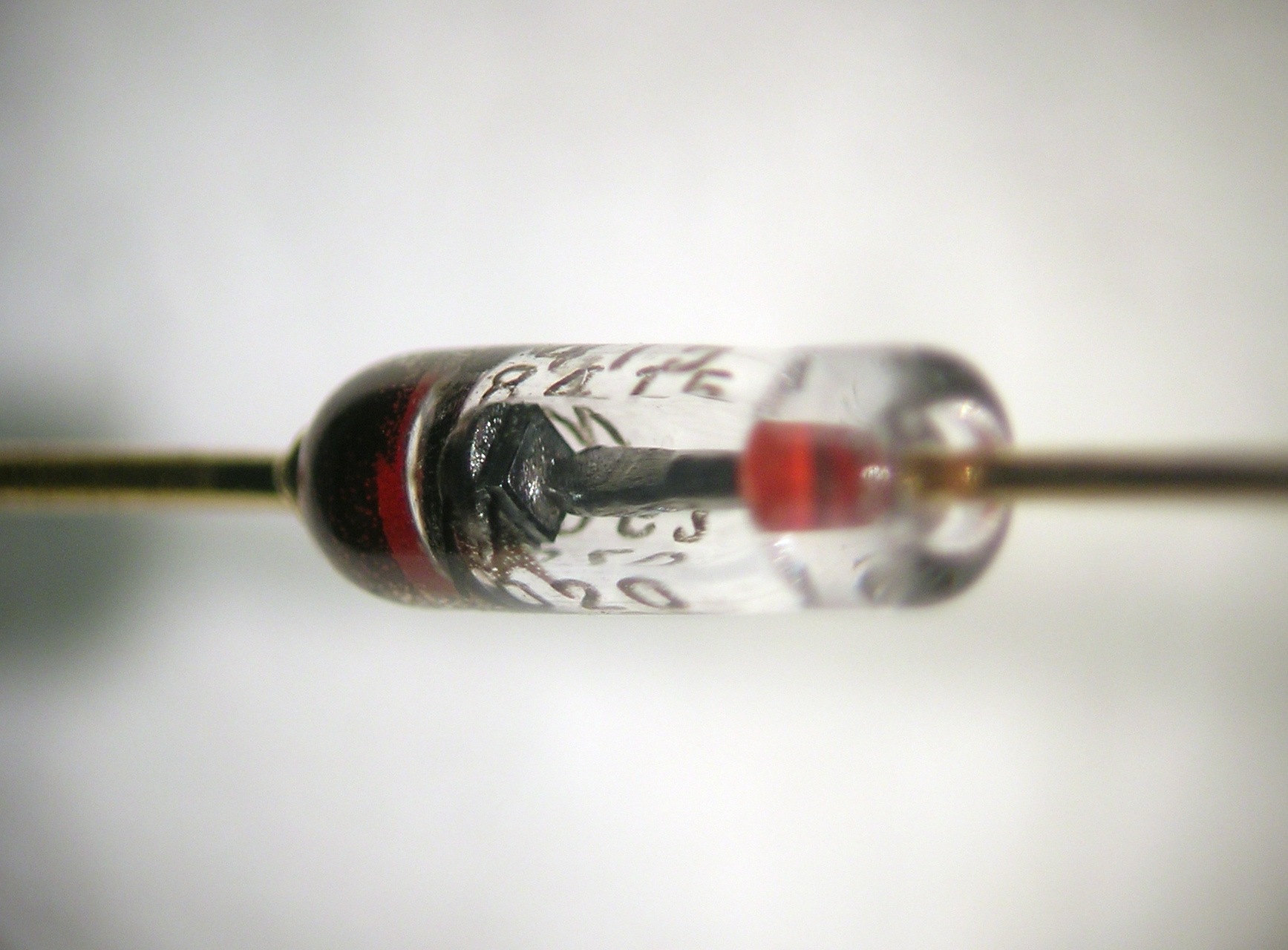
Diodes are essential components in electronic circuits, controlling the direction of current flow and supporting functions such as rectification, switching, and voltage protection. One important factor engineers must consider when selecting a diode is its forward voltage drop. This characteristic affects how much voltage remains available to other components and how much electrical power is converted into heat during operation.
The Silicon Diode Voltage drop refers to the voltage difference across a silicon diode when it is forward-biased and conducting current. A standard silicon diode commonly has a forward voltage drop of approximately 0.6 to 0.7 volts under typical operating conditions, although the actual value varies with current, temperature, and device construction. Understanding this behavior helps designers improve circuit efficiency and maintain reliable electronic performance.
What Is Silicon Diode Voltage Drop?
A silicon diode is a semiconductor device made from silicon that allows current to flow primarily in one direction. It contains a P-N junction formed by joining P-type and N-type semiconductor materials.
When a diode is forward-biased, the applied voltage reduces the potential barrier at the junction, allowing current to flow. During this process, a voltage appears across the diode terminals. This is known as the forward voltage drop.
Unlike an ideal diode, which would conduct without consuming any voltage, a real silicon diode requires a certain forward voltage to operate effectively. This voltage must be considered when designing circuits that have limited power or voltage available.
Typical Forward Voltage of a Silicon Diode
The forward voltage drop of a standard silicon diode is often described as approximately 0.7 volts. However, this is a general reference value rather than a fixed specification.
The actual voltage depends on several operating conditions:
- Forward current: The voltage drop generally increases as the current through the diode increases.
- Temperature: The forward voltage of a silicon diode typically decreases as its junction temperature rises, at a given current.
- Diode construction: Different diode types and semiconductor structures have different forward voltage characteristics.
- Operating conditions: The manufacturer’s specified test current and measurement conditions influence the quoted voltage value.
For accurate circuit design, engineers should refer to the diode’s datasheet and examine its forward voltage specifications at the expected operating current and temperature.
Factors That Affect Silicon Diode Voltage Drop
Several electrical and environmental factors influence the voltage across a conducting silicon diode.
1. Forward Current
Forward current is one of the main factors affecting diode voltage drop. As more current passes through the P-N junction, the forward voltage generally increases.
For example, a diode operating at a few milliamperes may have a different forward voltage from the same device operating at several hundred milliamperes. Therefore, using a single assumed voltage value for every operating condition may lead to inaccurate circuit calculations.
2. Junction Temperature
Temperature has a significant effect on semiconductor behavior. For a typical silicon diode operating at a constant forward current, the forward voltage decreases as junction temperature increases.
This temperature dependence is important in circuits exposed to changing environmental conditions or significant self-heating. Engineers should ensure that the diode remains within its specified operating temperature range.
3. Semiconductor Material
The semiconductor material determines many of a diode’s electrical properties. Silicon diodes generally have a higher forward voltage drop than germanium and Schottky diodes.
While a lower forward voltage can reduce conduction losses, silicon diodes offer other advantages, including low reverse leakage current and good temperature stability.
4. Diode Type and Design
Not all silicon diodes have identical forward voltage characteristics. Standard rectifier diodes, switching diodes, Zener diodes, and fast-recovery diodes are designed for different purposes.
Their forward voltage values can vary depending on their internal construction, current ratings, and intended applications.
How Voltage Drop Affects Circuit Performance
The forward voltage drop directly influences how an electronic circuit operates. Ignoring it during the design process can result in unexpected voltage levels, power losses, and thermal problems.
Reduced Output Voltage
In a rectifier circuit, diodes consume part of the available input voltage during conduction. As a result, the output voltage is lower than it would be with ideal components.
For example, a single-diode half-wave rectifier has one forward voltage drop in its conducting path. A conventional bridge rectifier has two diodes conducting at the same time, so its total diode drop is approximately twice the individual forward drop under the same operating conditions.
This difference must be included when estimating the DC output voltage.
Power Dissipation and Heat Generation
A conducting diode converts some electrical energy into heat. Its approximate forward power dissipation can be calculated using:
[
P_D = V_F \times I_F
]
Where:
- (P_D) = diode power dissipation in watts
- (V_F) = forward voltage drop in volts
- (I_F) = forward current in amperes
For example, if a diode has a forward voltage drop of 0.7 volts and carries 0.5 amperes, its approximate power dissipation is:
[
P_D = 0.7 \times 0.5 = 0.35,W
]
This heat must be managed through suitable component selection, PCB design, and thermal considerations.
Reduced Power Supply Efficiency
In power supply circuits, voltage lost across rectifier diodes reduces the amount of energy available to the load. This can become particularly important in low-voltage systems where even a small voltage drop represents a significant percentage of the input.
Selecting an appropriate diode helps balance voltage loss, current capacity, switching performance, and cost.
Changes in Signal Levels
In signal-processing circuits, the forward voltage drop can affect the minimum signal amplitude required for diode conduction. This may influence detector circuits, clamping networks, and waveform-shaping applications.
Designers must account for the diode’s nonlinear current-voltage relationship when working with small signals.
Silicon Diode Voltage Drop in Common Applications
Silicon diode voltage drop is relevant in many electronic systems.
1. Rectifier Circuits
Rectifier circuits convert alternating current into direct current. Silicon diodes are commonly used in half-wave, full-wave, and bridge rectifiers.
The forward voltage drop reduces the available output voltage and contributes to power dissipation. Engineers must consider the number of conducting diodes and the expected current when estimating rectifier performance.
2. Power Supply Protection
Diodes are often used to protect circuits against reverse polarity and unwanted current paths. Their forward voltage drop affects the voltage delivered to the protected circuit.
For applications with limited voltage headroom, designers may consider alternative protection arrangements or lower-drop diode types.
3. Voltage Clamping Circuits
Diodes can limit signal voltages by conducting when a particular voltage level is reached. The forward voltage drop helps determine the approximate clamping level.
These circuits are used in signal conditioning, input protection, and waveform control.
4. Switching Applications
Silicon switching diodes are used to control current paths in electronic circuits. Their forward voltage drop affects conduction losses, while their reverse recovery characteristics influence performance during rapid switching.
Selecting a diode with suitable switching and electrical ratings is important for efficient operation.
5. Battery-Powered Devices
In battery-powered electronics, diode voltage drop can reduce the voltage available to the load. This may affect operating time, especially in low-voltage devices where every fraction of a volt matters.
Engineers often evaluate Schottky diodes, MOSFET-based protection, or other alternatives when reducing conduction losses is a priority.
Silicon Diode Voltage Drop Compared with Other Diodes
Different diode technologies have different forward voltage characteristics.
| Diode Type | Typical Forward Voltage | Common Applications |
|---|---|---|
| Standard silicon diode | 0.6–0.7 V | Rectification and protection |
| Germanium diode | 0.2–0.3 V | Low-level signal detection |
| Schottky diode | 0.2–0.5 V | High-efficiency switching and rectification |
| LED | Varies by color and material, often around 1.8–3.5 V | Lighting and indicators |
These values are approximate and depend on current, temperature, and component design. An LED, for example, has a forward voltage determined largely by its semiconductor material and emitted light wavelength.
The best diode choice depends on the complete circuit requirements rather than forward voltage alone.
How to Reduce the Impact of Diode Voltage Drop
Although forward voltage is an inherent property of a real diode, its effect on circuit performance can often be managed.
Choose a suitable diode type: Schottky diodes may be appropriate when low forward voltage is important, provided their reverse voltage, leakage current, and thermal ratings meet the design requirements.
Select the correct current rating: Operating a diode within its specified current range helps maintain predictable performance and avoid excessive heating.
Use an efficient rectifier configuration: The number of diodes conducting in the current path affects total voltage loss. Circuit topology should be considered during power supply design.
Check datasheet characteristics: Review forward voltage curves at the expected current and temperature instead of relying only on a typical reference value.
Provide adequate thermal management: Proper PCB copper area, component spacing, and heat dissipation help maintain safe operating temperatures.
Consider alternative circuit designs: In low-voltage power applications, ideal-diode controllers or MOSFET-based arrangements may reduce conduction losses compared with conventional diode solutions.
Conclusion
Silicon diode voltage drop is an important consideration in electronic circuit design because it affects output voltage, power dissipation, efficiency, and signal behavior. Although a standard silicon diode commonly has a forward voltage drop of around 0.6 to 0.7 volts, its actual value depends on operating current, junction temperature, and device construction.
By understanding these factors and reviewing manufacturer specifications, engineers can select suitable diodes for rectification, switching, protection, and signal-processing applications. Careful component selection and thermal management help reduce unnecessary losses and support reliable circuit performance.