
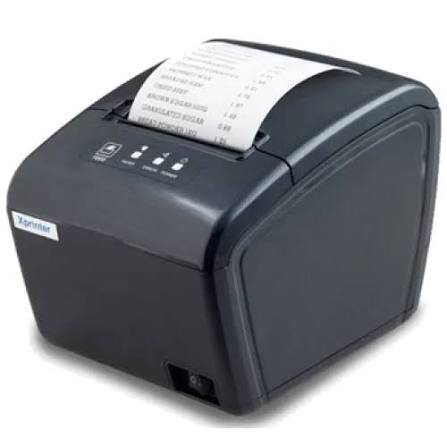
Choosing the right thermal printer is an important decision for businesses that depend on fast and accurate printing. Retail stores, restaurants, warehouses, logistics companies, and offices all have different printing requirements. Selecting equipment that matches daily workloads can improve operational efficiency, reduce unnecessary expenses, and support smoother business processes.
Thermal printers are available in various models with different printing speeds, resolutions, connectivity options, and media compatibility. When evaluating an Xprinter Thermal Printer, businesses should understand these technical features and consider how they relate to their intended applications. A careful comparison can help buyers select a printer that delivers reliable performance and meets long-term operational needs.
1. Printing Technology: Direct Thermal or Thermal Transfer
One of the first considerations is the printing technology used by the device. Thermal printers generally operate through two main methods, each designed for different applications.
Direct Thermal Printing
Direct thermal printers use heat-sensitive paper that darkens when exposed to a heated printhead. This process does not require ink, toner, or printing ribbons.
Common applications include:
- Retail receipts
- Temporary shipping labels
- Order tickets
- Short-term product identification
- Queue and service tickets
Direct thermal printing is convenient for businesses that need fast output without additional ribbon supplies. However, printed materials can fade when exposed to heat, sunlight, or friction.
Thermal Transfer Printing
Thermal transfer printers use heat to transfer ink from a ribbon onto paper or other compatible materials. This method generally creates more durable labels that can remain readable for longer periods.
It is commonly used for warehouse identification, product labeling, asset tracking, and industrial applications.
Businesses should choose between these technologies based on the expected lifespan of printed materials and the conditions in which they will be used.
2. Printing Speed and Daily Workload
Printing speed directly affects productivity, especially in environments where employees handle frequent transactions or generate large quantities of labels.
A printer with an appropriate speed rating can reduce waiting times and help maintain consistent workflows. This is particularly important for supermarkets, restaurants, shipping departments, and busy retail counters.
When comparing models, buyers should examine the specified printing speed, usually measured in millimeters per second (mm/s).
However, the fastest available printer is not necessarily the best choice. Businesses should balance printing speed with output quality, media compatibility, and their actual daily workload.
3. Print Resolution and Output Quality
Print resolution determines how clearly a thermal printer reproduces text, barcodes, symbols, and graphics. It is commonly measured in dots per inch (DPI).
A higher resolution can produce more detailed output, which is useful when printing small characters, compact barcodes, and detailed product information.
Common resolution options include 203 DPI and 300 DPI, although available configurations depend on the printer model.
For standard receipts and many shipping labels, 203 DPI may be sufficient. Businesses with smaller labels or more detailed printing requirements may benefit from higher-resolution equipment.
The key is to select a resolution that supports the intended application without paying for capabilities that are not necessary.
4. Connectivity and Interface Options
Connectivity determines how easily a printer communicates with computers, POS terminals, tablets, and other business devices.
Different models offer different interface options, so buyers should check compatibility before purchasing.
USB Connectivity
USB is commonly used for connecting a printer directly to a computer or POS terminal. It is a practical option for individual workstations and straightforward installations.
Ethernet Connectivity
Ethernet allows printers to connect to a local network. This can be useful in larger businesses where multiple employees or workstations need access to shared printing equipment.
Bluetooth Connectivity
Bluetooth supports wireless communication with compatible mobile devices. It can be useful for mobile retail operations, delivery services, and temporary workstations.
Wi-Fi Connectivity
Wi-Fi provides wireless network access without requiring a physical Ethernet connection. It offers flexibility when installing printers in different areas of a workplace.
The appropriate connection depends on the existing network infrastructure, device compatibility, and the intended installation environment.
5. Paper Width and Media Compatibility
Not every thermal printer supports the same paper sizes or label materials. This makes media compatibility an important purchasing consideration.
Receipt printers commonly support specific paper widths, while label printers may accommodate different label dimensions and roll configurations.
Before selecting a model, consider:
- Supported paper and label widths
- Maximum printing width
- Roll diameter and capacity
- Label thickness and material
- Media loading mechanism
- Compatibility with specialized printing supplies
Using the correct media helps maintain consistent printing quality and reduces the risk of paper jams, feeding problems, and unnecessary component wear.
6. Barcode and QR Code Printing Capabilities
Barcodes and QR codes are widely used in retail, inventory management, logistics, and product identification.
A suitable thermal printer should support the barcode formats and printing requirements used by the business. Clear barcode output is essential because poorly printed symbols may be difficult for scanning equipment to recognize.
Businesses should check whether a printer supports the required barcode types, including common one-dimensional and two-dimensional formats.
For applications involving compact labels, print resolution and positioning accuracy are particularly important.
7. Cutter and Paper Handling Features
Paper handling features influence convenience and efficiency during regular operations.
Some receipt printers include automatic cutters that separate printed receipts after each transaction. This reduces the need for employees to tear paper manually and helps maintain a consistent checkout process.
Other models use manual tear bars or different paper-feeding arrangements.
Businesses should also consider whether the printer offers:
- Easy paper-roll replacement
- Automatic paper feeding
- Paper-out detection
- Cover-open detection
- Reliable paper alignment
- Suitable roll capacity
These features can simplify daily operation and reduce interruptions caused by routine paper replacement.
8. Printer Size and Installation Requirements
Available workspace should be considered before selecting printing equipment.
Compact thermal printers are often suitable for retail counters, small offices, and service stations where desk space is limited. Larger industrial label printers may be more appropriate for warehouses and production facilities.
Buyers should review the device’s dimensions, weight, mounting options, and required operating space.
It is also important to consider access to power outlets, network connections, and paper-loading areas. Proper positioning makes maintenance easier and helps employees operate the equipment comfortably.
9. Durability and Build Quality
A printer used occasionally in an office may have different durability requirements from one operating throughout the day in a busy warehouse.
Businesses should evaluate the expected printing volume and working environment before making a selection.
Important considerations include:
- Printhead durability
- Cutter performance
- Housing construction
- Operating temperature range
- Resistance to dust and workplace conditions
- Manufacturer-recommended duty cycle
For demanding applications, selecting a model designed for the intended workload can help reduce unexpected downtime and replacement expenses.
10. Software and Operating System Compatibility
A thermal printer must communicate properly with the software used by the business.
Compatibility with operating systems, POS applications, and inventory management platforms is therefore essential.
Before purchasing, check the availability of suitable printer drivers, software development kits (SDKs), and supported printing languages.
For businesses using specialized applications, it is also useful to confirm whether the printer supports the required command sets and integration methods.
Proper software compatibility reduces installation difficulties and helps maintain consistent printing operations.
11. Ease of Maintenance and Technical Support
Regular maintenance helps preserve print quality and extend equipment life. However, the maintenance requirements can vary between printer models.
Buyers should consider how easily they can access the printhead, rollers, cutter, and other serviceable components.
It is also important to review the availability of replacement parts, product documentation, warranty coverage, and technical support.
A printer with accessible maintenance procedures can help businesses resolve common issues without interrupting operations for extended periods.
12. Energy Consumption and Operating Costs
The initial purchase price is only one part of the total cost of owning a thermal printer.
Businesses should also evaluate electricity consumption, printing materials, maintenance requirements, replacement parts, and expected service life.
Direct thermal models can reduce consumable expenses because they do not require ink, toner, or ribbons. Thermal transfer models require ribbons but may provide longer-lasting labels for applications where durability is important.
Comparing these ongoing costs helps businesses understand the long-term financial implications of different printing technologies.
How to Match Printer Features With Business Applications
The best printer configuration depends on the type of work being performed. Different industries prioritize different features.
| Business Application | Important Features |
|---|---|
| Retail checkout | Fast printing, automatic cutter, USB or Ethernet |
| Restaurant operations | Reliable receipt printing, compact design, POS compatibility |
| Warehouse labeling | Barcode support, media compatibility, suitable resolution |
| Shipping and logistics | Label width, connectivity, consistent output |
| Mobile businesses | Bluetooth connectivity, compact size, portability |
| Office documentation | Easy operation, software compatibility, low maintenance |
This comparison provides a starting point for evaluating available models. Businesses should also review individual product specifications before making a final decision.
Common Mistakes to Avoid When Choosing a Thermal Printer
Even when a printer has impressive specifications, it may not be suitable for a particular business environment.
Some common purchasing mistakes include:
Ignoring the intended printing application: Choosing a receipt printer when durable product labels are required can create operational limitations.
Overlooking software compatibility: A printer that cannot communicate with existing POS software may require additional configuration or replacement equipment.
Focusing only on purchase price: Lower initial costs do not always translate into lower long-term expenses.
Choosing insufficient resolution: Poor print clarity can create barcode scanning problems and reduce document readability.
Ignoring connectivity requirements: The wrong interface may complicate installation and limit workstation flexibility.
Underestimating daily printing volume: Equipment that cannot handle the expected workload may experience frequent interruptions or premature wear.
Avoiding these mistakes can make the selection process more efficient and help businesses invest in equipment that supports their actual requirements.
Conclusion
Choosing the right thermal printer requires more than comparing prices and basic specifications. Printing technology, speed, resolution, connectivity, media compatibility, durability, and software integration all influence how effectively a device performs in everyday business environments.
By evaluating these features in relation to specific printing applications, businesses can identify equipment that supports productivity, simplifies routine tasks, and controls operating costs. A well-selected thermal printer can become a valuable part of retail, hospitality, warehousing, logistics, and office operations while providing consistent printing performance over time.