
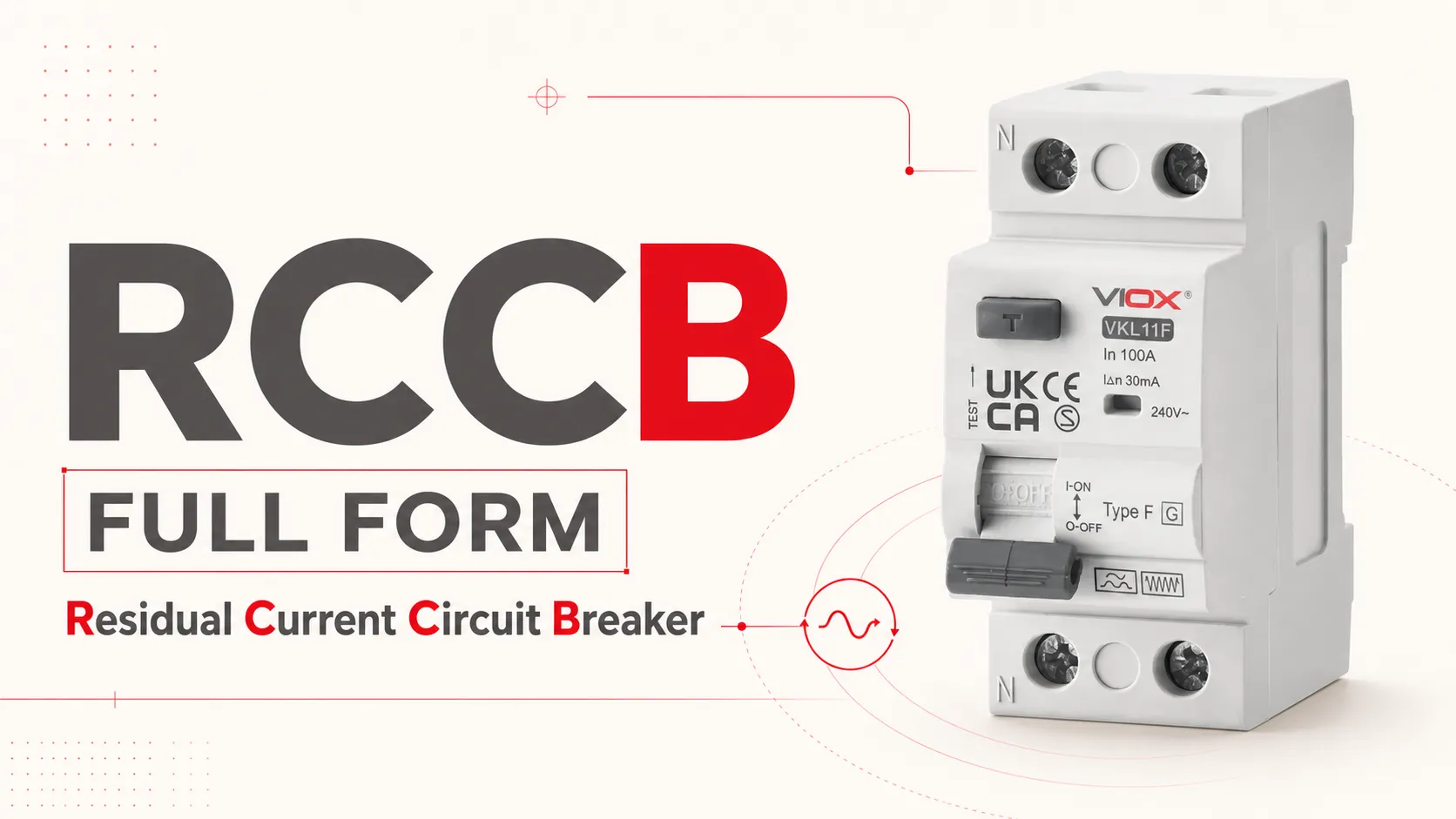
Electrical safety is an important consideration in residential, commercial, and industrial installations. Electrical faults such as damaged insulation, faulty appliances, and current leakage can create serious hazards, including electric shock and electrical fires. To reduce these risks, modern electrical systems use protective devices that detect abnormal conditions and disconnect the power supply when necessary. One important device used for this purpose is the Residual Current Circuit Breaker (RCCB).
Understanding the Rccb Meaning helps homeowners, electricians, engineers, and facility managers recognize how this device contributes to electrical protection. An RCCB monitors the current flowing through live and neutral conductors and detects differences that may indicate electricity is escaping through an unintended path. When the detected leakage reaches the device’s specified operating threshold, it disconnects the circuit to help reduce the risk of electric shock and other electrical hazards.
What Does RCCB Mean?
RCCB stands for Residual Current Circuit Breaker. It is an electrical safety device designed to detect residual current, which occurs when some current flows outside its intended circuit path.
Under normal operating conditions, the current entering a circuit through the live conductor should be equal to the current returning through the neutral conductor. An RCCB continuously monitors this balance.
If an electrical fault causes some current to flow through an alternative path, such as an earth conductor, damaged insulation, or a person’s body, the current balance changes. The RCCB identifies this difference and trips when the residual current reaches its rated operating threshold.
Unlike a conventional Miniature Circuit Breaker (MCB), an RCCB does not normally provide overload or short-circuit protection. It must therefore be used with suitable overcurrent protection to provide a more complete electrical safety arrangement.
Main Function of an RCCB
The primary function of an RCCB is to protect people and electrical installations against certain hazards associated with current leakage.
Its main functions include:
- Detecting current leakage: Monitors the difference between incoming and outgoing current.
- Reducing electric shock risks: Disconnects the supply when a qualifying residual current fault occurs.
- Supporting fire prevention: Helps reduce risks associated with certain leakage faults that may contribute to overheating or electrical fires.
- Improving installation safety: Provides an additional layer of protection in residential, commercial, and industrial electrical systems.
- Identifying electrical faults: Unexpected tripping can indicate insulation deterioration, faulty appliances, or other leakage problems requiring investigation.
An RCCB is particularly useful in circuits where people may come into contact with electrical equipment, conductive surfaces, or moisture.
How Does an RCCB Work?
An RCCB operates through an internal current-sensing mechanism that compares the current flowing through the live and neutral conductors.
Its working principle can be explained through three stages.
1. Normal Current Flow
During normal operation, electrical current flows through the live conductor to connected appliances and returns through the neutral conductor.
For example, if an appliance draws 4 amperes through the live conductor, approximately 4 amperes should return through the neutral conductor.
Because the currents are balanced, the RCCB does not detect a residual current fault and remains switched on.
2. Detection of Current Leakage
If damaged insulation, faulty equipment, or another electrical problem allows current to escape from the intended circuit path, the incoming and outgoing currents become unequal.
The RCCB detects this difference through its internal sensing mechanism, commonly based on a magnetic core and associated tripping system.
The difference between the live and neutral currents is called residual current.
3. Automatic Power Disconnection
When the detected residual current reaches the device’s rated operating threshold, the RCCB activates its tripping mechanism.
Its internal contacts open and disconnect the electrical supply to the protected circuit.
This rapid interruption helps limit the duration of exposure to dangerous leakage current and reduces the risk of serious electrical accidents.
Important Components of an RCCB
Understanding the main components of an RCCB provides a clearer picture of how the device operates.
Current Transformer
The current transformer is a central part of the RCCB’s sensing system. It monitors the live and neutral conductors and detects differences between their current values.
Tripping Mechanism
The tripping mechanism responds when the detected residual current reaches the operating threshold. It releases the switching contacts and interrupts the circuit.
Switching Contacts
These contacts connect or disconnect the electrical supply. Under normal conditions, they remain closed. When the device trips, they open to isolate the protected circuit.
Test Button
Most RCCBs include a test button that creates an artificial imbalance to check whether the internal tripping mechanism operates correctly.
The test button should be used according to the manufacturer’s instructions and recommended testing schedule.
Operating Handle
The handle allows the user to switch the RCCB on or off manually and reset it after an appropriate investigation and correction of the fault.
Types of RCCBs
RCCBs are available in different configurations to suit various electrical installations and connected equipment.
1. Two-Pole RCCB
A two-pole RCCB is commonly used in single-phase electrical installations. It monitors the live and neutral conductors and disconnects the relevant poles when a qualifying leakage fault occurs.
These devices are frequently installed in residential and small commercial distribution boards.
2. Four-Pole RCCB
A four-pole RCCB is designed for suitable three-phase installations with a neutral conductor. It monitors the relevant conductors and disconnects the protected circuit when residual current exceeds its operating threshold.
Four-pole devices are commonly used in commercial buildings and industrial electrical distribution systems.
3. Type AC RCCB
A Type AC RCCB is designed to detect sinusoidal alternating residual current. It may be suitable for certain conventional electrical loads, depending on the installation requirements.
4. Type A RCCB
A Type A RCCB can detect sinusoidal alternating residual current and pulsating direct residual current. It is commonly considered for circuits supplying equipment containing electronic components.
5. Type F and Type B RCCBs
Type F and Type B devices provide additional detection capabilities for particular residual current characteristics.
They may be required for certain electronic equipment, variable-speed drives, inverters, and power conversion systems. The appropriate type should be selected according to the equipment manufacturer’s guidance and the electrical design.
RCCB vs. MCB: What Is the Difference?
RCCBs and MCBs are both important electrical protection devices, but they address different types of faults.
| Feature | RCCB | MCB |
|---|---|---|
| Full form | Residual Current Circuit Breaker | Miniature Circuit Breaker |
| Primary function | Detects current leakage | Detects overloads and short circuits |
| Operating principle | Monitors current imbalance | Responds to excessive current |
| Electric shock protection | Provides protection against certain leakage faults | Does not provide dedicated residual current protection |
| Overload protection | Not normally included | Included |
| Short-circuit protection | Not normally included | Included |
| Typical application | Additional protection against earth leakage | Protection of electrical circuits against overcurrent |
Both devices can be installed together to provide complementary protection.
Another option is an RCBO, which combines residual current protection with overload and short-circuit protection in a single device.
RCCB Sensitivity Ratings and Their Importance
An important RCCB specification is its rated residual operating current, commonly expressed in milliamperes (mA).
This value indicates the residual current level at which the device is designed to operate under specified conditions.
Common ratings include:
- 10 mA: Used in selected applications requiring a higher level of sensitivity.
- 30 mA: Widely used for additional protection against electric shock.
- 100 mA: Used in certain installation arrangements where the design and regulations permit.
- 300 mA: Often considered for particular fire-protection or upstream protection applications.
The appropriate rating depends on the intended protective function, electrical installation design, and applicable regulations. A higher sensitivity rating should not automatically be considered better for every circuit.
Where Are RCCBs Used?
RCCBs are widely used in electrical installations where current leakage may create a risk to people or property.
Residential Buildings
Homes use RCCBs to provide additional protection for suitable socket circuits, kitchens, bathrooms, and other electrical installations.
Commercial Properties
Offices, hotels, restaurants, shopping centers, and retail stores use residual current protection to improve electrical safety for employees, customers, and visitors.
Industrial Facilities
Factories and workshops may use RCCBs in suitable distribution circuits to help detect leakage faults involving machinery and electrical equipment.
Outdoor Electrical Installations
Outdoor lighting, garden equipment, external socket outlets, and other exposed installations may be vulnerable to moisture and insulation damage. Suitable RCCB protection helps reduce certain associated electrical risks.
Construction Sites
Temporary electrical installations and portable tools may be exposed to physical damage and demanding working conditions. Appropriate residual current protection is an important part of construction-site electrical safety.
Electrical Safety Benefits of Using an RCCB
Installing a correctly selected RCCB provides several important safety advantages.
Reduced Risk of Electric Shock
An RCCB can disconnect a circuit when it detects a qualifying current imbalance. This helps reduce the duration of exposure to dangerous leakage current.
Improved Protection Against Leakage-Related Fires
Current leakage can contribute to electrical hazards, particularly when insulation or equipment deteriorates. An RCCB helps identify certain leakage conditions and disconnect the affected circuit.
Better Fault Detection
Unexpected RCCB tripping can alert users and maintenance personnel to potential electrical problems that might otherwise remain unnoticed.
Additional Protection in High-Risk Areas
Bathrooms, kitchens, outdoor spaces, and workshops may present increased exposure to moisture or damaged equipment. Suitable RCCB protection provides an additional safety measure in these environments.
Important Limitations of RCCBs
Although RCCBs are valuable safety devices, they cannot prevent every electrical accident.
For example, if a person touches live and neutral conductors simultaneously and the current remains balanced, the RCCB may not detect a residual current fault.
An RCCB also does not normally protect against overloads or short circuits. These faults require suitable overcurrent protection, such as an MCB or fuse.
Furthermore, RCCBs cannot replace proper earthing, insulation, equipment maintenance, or safe electrical working practices.
For reliable protection, an RCCB should form part of a coordinated electrical safety system that includes correctly selected protective devices.
RCCB Installation and Maintenance Guidelines
Correct installation and regular testing are essential for reliable RCCB operation.
A qualified electrician should install the device according to the manufacturer’s instructions and applicable electrical standards. The installer should verify the correct conductor connections, rated current, residual operating current, and compatibility with the electrical system.
Important maintenance practices include:
- Use the built-in test button according to the manufacturer’s recommended schedule.
- Inspect the device and distribution board for physical damage or signs of overheating.
- Investigate repeated or unexplained tripping.
- Check electrical connections as part of appropriate maintenance procedures.
- Confirm that the RCCB remains suitable for the connected equipment.
- Arrange professional testing when a fault or malfunction is suspected.
If an RCCB trips repeatedly, the cause should be identified before the circuit is returned to normal operation. Bypassing the device can expose people and property to serious electrical risks.
Conclusion
RCCB stands for Residual Current Circuit Breaker, an important electrical safety device designed to detect current leakage and disconnect the power supply when a dangerous imbalance occurs. By monitoring the relationship between live and neutral currents, it helps reduce the risk of electric shock and certain leakage-related electrical hazards.
Understanding the meaning, working principle, types, and limitations of an RCCB makes it easier to select suitable protection for residential, commercial, and industrial installations. When correctly installed and maintained alongside appropriate overcurrent protection, earthing, and insulation measures, an RCCB contributes to a safer and more reliable electrical system.