
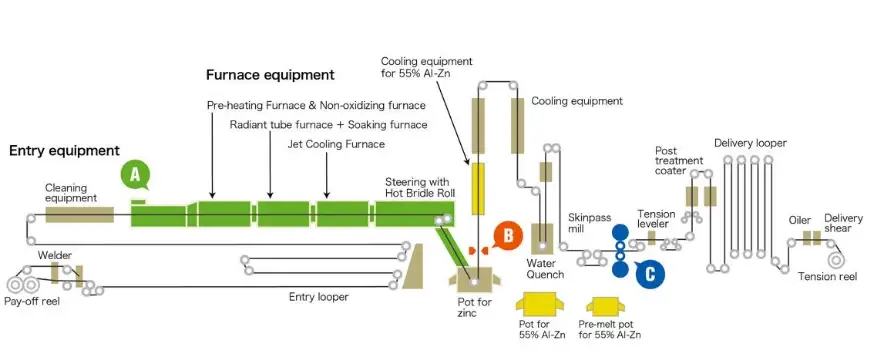
Hot dip galvanizing is widely used in steel processing industries to provide long-lasting protection against corrosion. As demand for galvanized steel continues across construction, automotive, and infrastructure sectors, production capacity becomes a key concern for manufacturers.
A well-designed hot dip galvanizing line must balance speed, quality, and efficiency to achieve stable output. Several technical and operational factors directly influence how much steel can be processed within a given time.
Importance of Production Capacity Planning
Production capacity determines how efficiently a galvanizing plant can meet market demand. If the line operates below its potential, resources are wasted. If it is overloaded, quality issues and breakdowns may occur.
Careful planning helps maintain:
- Stable product quality
- Consistent output rates
- Reduced downtime
- Balanced energy consumption
Understanding capacity factors allows operators to optimize performance without compromising coating quality.
Steel Preparation Speed
The rate at which steel moves through surface preparation stages has a direct impact on total output. Cleaning, pickling, and fluxing must be completed efficiently to avoid bottlenecks.
Delays in preparation can occur due to:
- Slow chemical reaction times
- Inadequate rinsing systems
- Accumulation of contaminants
- Poor coordination between process stages
Efficient preparation systems help maintain a continuous production flow.
Furnace Heating Efficiency
The furnace section plays a major role in determining line speed. Steel must reach the correct temperature before entering the zinc bath, and this heating process must be stable.
Factors affecting furnace efficiency include:
- Heat distribution uniformity
- Fuel consumption rate
- Insulation quality
- Recovery of waste heat
If heating is too slow, it reduces overall line speed and limits production capacity.
Zinc Bath Stability and Flow Rate
The zinc bath is the core stage of galvanizing, and its condition directly affects production continuity. Stable temperature and proper zinc circulation are essential for maintaining steady throughput.
Capacity can be influenced by:
- Bath temperature consistency
- Dross accumulation levels
- Zinc purity and composition
- Immersion and withdrawal timing
Any instability in the bath can slow down operations and reduce output efficiency.
Line Speed and Material Handling
The movement speed of steel through the galvanizing line is a critical factor in determining capacity. Each section must operate in synchronization to avoid delays.
Important elements include:
- Conveyor speed control
- Roller alignment and condition
- Smooth transfer between stages
- Automated timing coordination
Balanced line speed ensures continuous and uninterrupted production flow.
Cooling System Efficiency
After zinc coating, steel must pass through cooling sections before final handling. The cooling rate affects how quickly products can move to the next stage.
Slow cooling systems may create bottlenecks, while efficient cooling allows faster throughput. Proper airflow control and temperature regulation help maintain steady production rates.
Maintenance and Equipment Reliability
Frequent breakdowns or maintenance interruptions can significantly reduce production capacity. Reliable equipment is essential for continuous operation.
Key maintenance factors include:
- Regular inspection schedules
- Lubrication of moving parts
- Replacement of worn components
- Monitoring of critical system performance
Well-maintained equipment reduces downtime and improves long-term productivity.
Workforce Coordination and Operation Control
Although automation plays a major role, skilled operators are still essential for maintaining production flow. Proper coordination between teams ensures smooth transitions between process stages.
Important aspects include:
- Operator training and experience
- Clear communication between sections
- Quick response to process changes
- Efficient shift management
Human supervision helps maintain stability in complex operations.
Energy Availability and Process Continuity
Energy supply stability also affects production capacity. Interruptions in fuel or electricity can slow down or stop the entire line.
To maintain steady operation, facilities must ensure:
- Stable energy supply systems
- Backup power solutions
- Efficient energy distribution
- Reduced energy fluctuations
Reliable energy flow supports uninterrupted production cycles.
Conclusion
Production capacity in galvanizing operations depends on many interconnected factors, including preparation speed, furnace efficiency, bath stability, and equipment reliability. Each stage must work in harmony to maintain consistent output.
A well-optimized hot dip galvanizing line can achieve high productivity while maintaining coating quality and operational stability. By managing these key factors, manufacturers can improve efficiency and meet growing industrial demand effectively.