
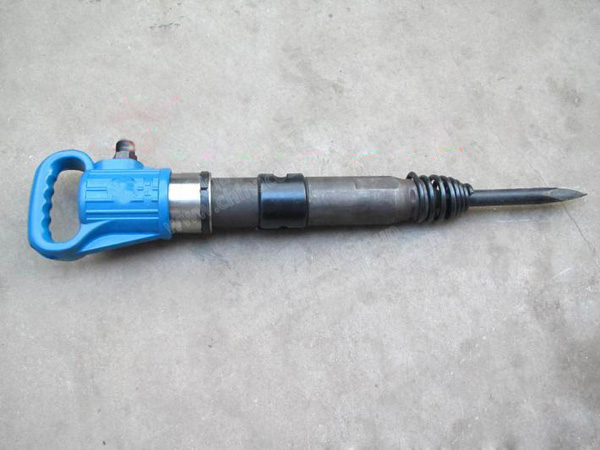
Pneumatic tools are widely used in industries that require dependable impact force for breaking hard materials, loosening compacted ground, and performing maintenance work. A pneumatic air pick is a handheld tool that uses compressed air to produce repeated mechanical impacts. Its compact design and practical operation make it useful for selected tasks in construction, mining, road maintenance, and industrial facilities.
Choosing the right Pneumatic Air Pick requires an understanding of its working mechanism, available configurations, and intended applications. Air pressure, consumption rate, impact performance, tool weight, and accessory compatibility all influence its suitability for a particular job. Evaluating these factors helps businesses select equipment that meets operational requirements without unnecessary expense or downtime.
What Is a Pneumatic Air Pick?
A pneumatic air pick is a compressed-air-powered tool designed to break, chip, or loosen hard materials. It contains an internal piston mechanism that generates repeated impacts, transferring energy to a pointed bit or chisel attached to the tool.
Unlike manual breaking tools, pneumatic picks deliver repeated blows without requiring the operator to generate each strike physically. They are especially useful for localized material removal where handheld control is important and larger machinery may be impractical.
These tools come in different sizes and performance ranges. The most suitable model depends on the material being processed, the available compressed-air supply, and the intensity of the intended workload.
Working Principles of a Pneumatic Air Pick
The operation of a pneumatic air pick involves converting compressed-air energy into mechanical movement.
When pressurized air enters the tool, it activates an internal piston. The piston moves back and forth within the cylinder, producing repeated impacts that transfer force to the fitted tool bit. The bit then strikes the working surface, helping fracture or loosen the material.
The process continues while the tool receives an adequate air supply and the operator maintains the correct working position.
Several factors influence the effectiveness of this mechanism:
- Operating pressure: The pressure must remain within the manufacturer’s recommended range.
- Air consumption: The compressor must provide enough airflow to maintain consistent operation.
- Impact frequency: The number of blows delivered over time affects working speed.
- Tool-bit design: The shape and dimensions of the bit influence how force reaches the material.
- Material characteristics: Hardness, thickness, and structural composition determine how readily the material breaks.
Understanding these variables helps operators select suitable equipment and maintain consistent performance.
Common Types of Pneumatic Air Picks
Pneumatic air picks can be categorized according to their size, construction, and intended workload. Specific classifications vary by manufacturer, so technical documentation should always be consulted when comparing models.
1. Lightweight Pneumatic Air Picks
Lightweight models are designed for applications that require frequent repositioning and easy handling. They may be suitable for small repair jobs, localized demolition, and selected maintenance tasks in confined areas.
Their lower weight can reduce handling demands, although their impact capacity may be more limited than that of heavier equipment.
2. Medium-Duty Air Picks
Medium-duty models offer a balance between portability and impact performance. They are commonly considered for general construction work, concrete removal, and selected excavation tasks.
Their suitability depends on the rated specifications and the type of material being processed.
3. Heavy-Duty Pneumatic Air Picks
Heavy-duty models are intended for more demanding breaking and loosening operations. Depending on their design, they may be used in mining, quarrying, and industrial environments where greater impact performance is required.
Buyers should also consider weight, air consumption, vibration, and operator handling before selecting a heavy-duty model.
4. Application-Specific Models
Some pneumatic picks are designed for particular materials or working conditions. Differences may include handle configuration, tool-bit compatibility, cylinder dimensions, and internal impact mechanisms.
Choosing a model based on verified technical specifications is more reliable than relying solely on product labels or general descriptions.
Industrial Uses of Pneumatic Air Picks
Pneumatic air picks support a variety of applications where portable impact force is useful.
Construction and Demolition
Construction crews may use air picks to break small concrete sections, remove masonry, loosen compacted soil, and carry out localized renovation work. Their handheld design helps operators access areas where larger machinery may be difficult to position.
For extensive structural demolition, larger breakers or specialized equipment may be more appropriate.
Mining and Quarrying
In selected mining operations, pneumatic picks can help loosen coal, break suitable rock formations, and carry out localized excavation. Their usefulness depends on geological conditions, ventilation, material hardness, and the availability of an adequate compressed-air system.
Road Maintenance
Road maintenance teams may use pneumatic picks to remove damaged pavement, break sections of concrete, and prepare surfaces for repair. Their portability can make them practical for small maintenance jobs that do not justify deploying larger equipment.
Industrial Maintenance
Factories, workshops, and processing facilities may use pneumatic picks for selected breaking tasks, removing hardened material, and supporting equipment maintenance. The appropriate tool and attachment depend on the material and the manufacturer’s recommended applications.
Utility and Infrastructure Work
Air picks can support certain trenching, foundation repair, and infrastructure maintenance activities. Before breaking ground or concrete, workers should identify buried utilities and assess surrounding structures to avoid accidental damage.
Key Benefits of Pneumatic Air Picks
Pneumatic air picks offer several practical advantages when properly matched to the intended application.
Portable operation: Their handheld construction allows operators to move equipment between work areas and access locations that are difficult to reach with larger machines.
Repeated impact force: The piston mechanism delivers successive blows, making the tool useful for localized breaking and material removal.
Compressed-air power: Pneumatic operation eliminates the need for an integrated electric motor or combustion engine, which can be advantageous at sites with existing compressed-air infrastructure.
Versatile applications: Suitable models can support construction, mining, road repair, and industrial maintenance tasks.
Serviceable mechanical design: Many conventional pneumatic tools can be maintained through routine inspection, lubrication, and replacement of worn components.
Actual benefits depend on equipment quality, compressor capacity, working conditions, and operator technique.
How to Choose the Right Pneumatic Air Pick
Selecting an appropriate tool involves comparing its specifications with the requirements of the intended job.
Check Operating Pressure and Air Consumption
Confirm the recommended operating pressure and airflow requirements. The compressor should provide adequate air at the tool under working conditions, accounting for hose length, fittings, and other equipment connected to the same supply.
Insufficient airflow can reduce impact performance and cause interruptions.
Evaluate Impact Performance
Review the tool’s rated impact frequency and other available performance measurements. Consider the hardness and thickness of the material, as well as the amount of material that must be removed.
A tool with greater impact performance is not automatically the best choice for every application.
Consider Weight and Ergonomics
Tool weight, grip design, and vibration characteristics affect operator comfort and control. These factors become especially important during prolonged work or when operators must use the tool in awkward positions.
Verify Tool-Bit Compatibility
Confirm the correct bit dimensions, retaining mechanism, and availability of replacement accessories. Compatible attachments help ensure effective force transfer and reduce the risk of damage.
Review Supplier Support
Examine product documentation, quality-control procedures, warranty conditions, and spare-part availability. Reliable technical support can help businesses maintain equipment and minimize operational interruptions.
Maintenance and Safety Guidelines
Routine maintenance helps preserve performance and reduce the likelihood of unexpected equipment failure. Before use, inspect the tool body, air hose, fittings, and bit-retaining mechanism for visible damage or excessive wear.
Follow the manufacturer’s lubrication and servicing instructions. Disconnect the air supply before changing accessories or performing repairs, and never operate the tool above its rated pressure.
Pneumatic air picks generate noise, vibration, and flying debris. Operators should wear suitable eye, hearing, hand, and foot protection and follow workplace procedures for dust control and vibration exposure.
Only trained personnel should operate the equipment. Work areas should be assessed for underground utilities and other hazards before excavation or concrete breaking begins.
Conclusion
A pneumatic air pick is a practical tool for localized breaking, excavation, and maintenance across construction, mining, road repair, and industrial environments. Its compressed-air mechanism delivers repeated impacts, while its handheld design supports tasks where maneuverability and controlled material removal are important.
Choosing the right model requires careful consideration of air supply, impact performance, tool weight, accessory compatibility, and maintenance needs. By matching equipment to the workload and following appropriate safety practices, businesses can improve operational efficiency and support reliable long-term performance.