
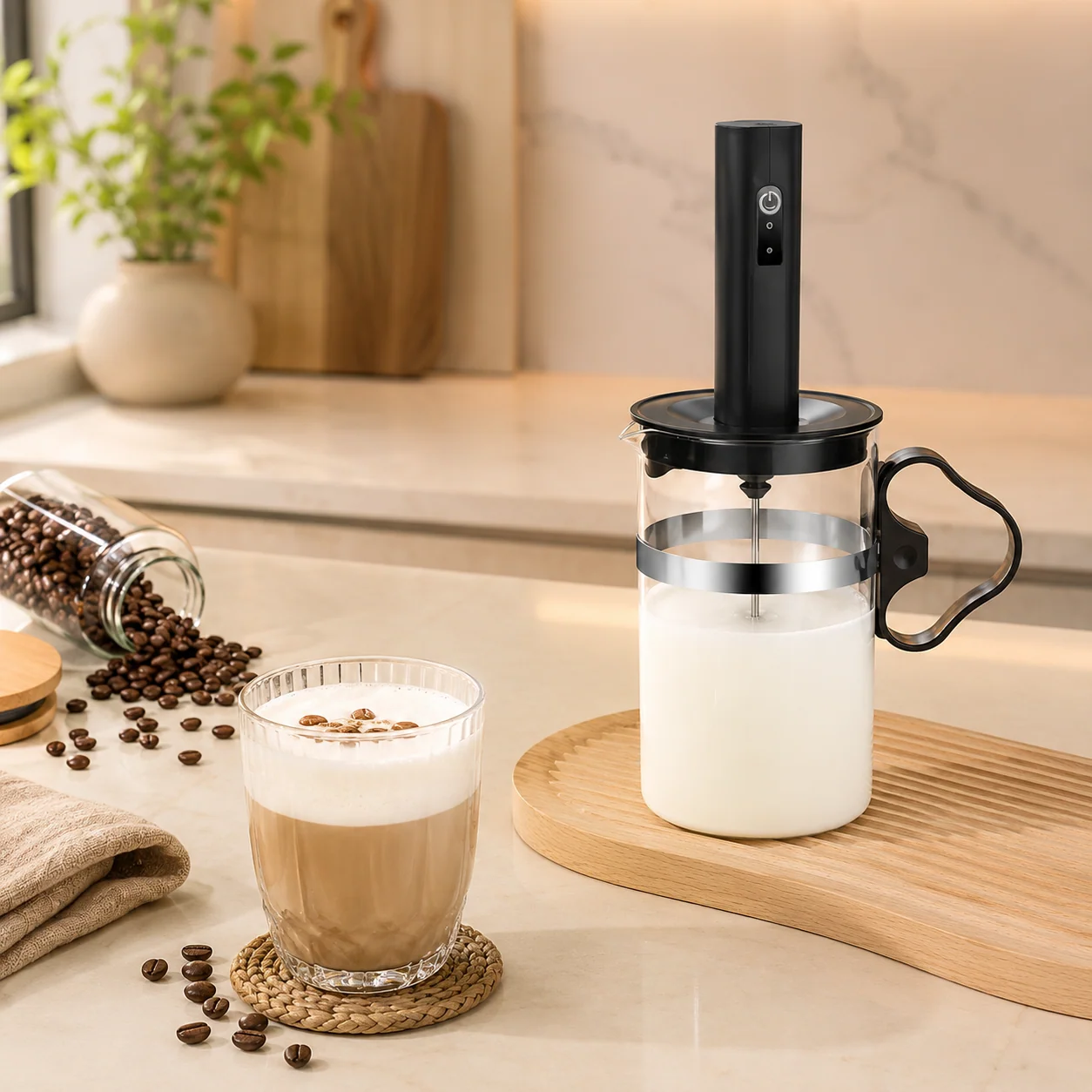
A creamy layer of milk foam can transform an ordinary cup of coffee into a café-style beverage. From smooth lattes and rich cappuccinos to comforting hot chocolate, textured milk adds a pleasant mouthfeel and enhances the overall drinking experience. While professional coffee shops often rely on specialized equipment, creating delicious drinks at home can be surprisingly simple with the right tools.
A Milk Frother offers a convenient way to introduce air into milk, creating a light, creamy texture for a wide range of hot and cold beverages. Whether you enjoy a morning latte, an afternoon matcha, or a relaxing cup of cocoa, this handy kitchen accessory can help you customize your drinks without visiting a café.
What Is a Milk Frother and How Does It Work?
A milk frother is a device designed to add air to milk, producing foam that can be used in coffee and other beverages. Depending on its design, it may use a small rotating whisk, a mechanical pump, or a steam wand to create bubbles and improve the texture of the milk.
The process involves introducing air into the milk while mixing it. The milk’s proteins help stabilize the bubbles, allowing the foam to maintain its structure for a period of time. Fat content also influences the final texture, contributing to creaminess and richness.
Different frothers produce different results. Some create light, airy foam suitable for cappuccinos, while others are designed to produce finer, smoother microfoam that blends naturally into espresso-based drinks.
Understanding these differences can help you choose the right device for your favorite beverages.
Different Types of Milk Frothers for Home Use
Milk frothers come in several styles, each offering a different balance of convenience, control, and performance.
Handheld Electric Frothers
Handheld frothers are compact devices with a small motor and a whisk-like attachment. They are generally easy to store and simple to operate.
To use one, place the whisk just below the surface of the milk and switch it on. Gradually move the whisk through the milk to incorporate air and create foam. Many models operate on batteries or use rechargeable power.
These frothers are suitable for people who want an affordable option for occasional lattes, matcha drinks, hot chocolate, or iced coffee. However, they usually do not heat the milk themselves, so warm milk must be prepared separately when needed.
Automatic Milk Frothers
Automatic frothers combine mixing with additional functions, and many models can heat milk while producing foam. Depending on the design, they may offer separate settings for hot foam, cold foam, or heated milk with minimal frothing.
Their automated operation makes them convenient for busy mornings. Users can add the recommended amount of milk, select a setting, and allow the device to complete the process.
Automatic models are especially useful for households that prepare milk-based beverages frequently and prefer a consistent routine with less manual effort.
Manual Milk Frothers
Manual frothers typically use a plunger or pump mechanism to introduce air into milk. They do not require electricity, making them suitable for kitchens with limited counter space or situations where power is unavailable.
The user controls the frothing process by moving the plunger repeatedly. Although manual models require more effort than electric alternatives, they can provide a straightforward and practical way to prepare foam.
Espresso Machine Steam Wands
Steam wands use hot steam to heat and aerate milk simultaneously. They are commonly found on espresso machines and can produce the fine microfoam needed for traditional lattes and other espresso-based drinks.
Using a steam wand requires some practice because the position of the wand, the amount of air introduced, and the temperature of the milk all influence the result. With experience, users can create smooth, glossy milk that blends well with espresso.
Choosing the Right Milk for Creamy Foam
The milk you use can significantly affect the texture, stability, and taste of your finished drink. Different types of milk respond differently to aeration, so experimenting with a few options can help you discover your preferred result.
Whole Milk
Whole milk often produces a rich, creamy texture because of its fat content. Its proteins help support foam formation, while the fat contributes to a fuller mouthfeel.
It is a popular choice for lattes and cappuccinos, particularly when you want a balanced combination of sweetness, creaminess, and texture.
Low-Fat Milk
Low-fat milk can produce a relatively generous amount of foam, although its texture may feel less rich than that of whole milk. It can be a suitable option for people who prefer a lighter beverage.
The final result depends on the milk’s protein content, freshness, temperature, and the frothing method used.
Plant-Based Milk
Plant-based alternatives such as oat, soy, and almond milk can also be used for frothing. However, their performance varies according to their formulation.
Barista-style versions are often designed to provide better texture and stability in coffee. Oat milk is frequently chosen for its smooth mouthfeel, while soy milk can create substantial foam when properly formulated. Almond milk varies considerably between brands and may produce lighter or less stable foam.
For the best results, select a product labeled for barista use when available and follow the manufacturer’s preparation recommendations.
How to Make Café-Style Milk Foam at Home
Creating satisfying foam does not require professional training. A few simple steps can help you prepare a smoother, more consistent result.
- Choose fresh milk: Start with milk that suits your taste and frother. Check the device’s recommended minimum and maximum fill levels.
- Prepare the milk at the appropriate temperature: If using a handheld frother, gently heat the milk separately for a hot drink. Automatic frothers may heat it during operation.
- Position the frother correctly: For handheld models, begin near the milk’s surface to introduce air, then move the whisk slightly deeper to help refine the bubbles.
- Avoid excessive aeration: Too much air can create large, dry bubbles rather than a smooth, creamy texture.
- Check the consistency: Good foam should suit the beverage you are preparing. Cappuccinos generally use airier foam, while lattes benefit from finer, more fluid milk.
- Combine with your drink: Pour the textured milk slowly into espresso, matcha, or another prepared beverage.
Always follow the device’s instructions, especially when working with hot milk. Avoid overfilling the container, and handle heated components carefully to prevent burns.
Delicious Drinks You Can Make with a Milk Frother
One of the biggest advantages of a milk frother is its versatility. It can support a variety of drinks beyond traditional espresso-based coffee.
Creamy Homemade Latte
Prepare a shot of espresso or strong coffee, then froth warm milk until it becomes smooth and lightly textured. Pour the milk into the coffee and finish with a thin layer of foam.
You can customize the drink with vanilla, cinnamon, caramel, or your preferred sweetener.
Classic Cappuccino
A cappuccino combines espresso, steamed milk, and a more substantial layer of foam. Prepare your espresso, then use a frother to create airy milk with a creamy consistency.
Add the milk to the espresso and spoon the foam over the top. A light dusting of cocoa powder or cinnamon can provide a simple finishing touch.
Iced Coffee with Cold Foam
Cold foam adds a creamy topping to iced coffee without requiring a hot beverage. Use cold milk and a frother that supports cold frothing, then spoon or pour the foam over coffee served with ice.
Depending on the milk and device, the foam may be lighter than hot milk foam, so choose a milk designed to froth well if a more stable topping is desired.
Frothy Hot Chocolate
Prepare hot chocolate using cocoa powder or melted chocolate and warm milk. Froth a small portion of milk separately, then add it to the drink for a softer texture and creamy finish.
You can also top the beverage with a little foam and a sprinkle of cocoa. Avoid placing a handheld frother directly into a container that is too hot or too full.
Matcha Latte
Whisk matcha powder with a small amount of water until it forms a smooth mixture, then add warm or cold milk according to your preference. A frother can help texture the milk and create a pleasant finish.
For the best result, ensure the matcha is fully mixed before combining it with the milk. This helps prevent clumps and creates a more even drink.
Important Features to Consider Before Buying
Selecting a milk frother becomes easier when you focus on the features that matter most to your daily routine.
Heating and Cold-Frothing Options
Some devices only froth milk, while others can heat it or prepare cold foam. If you mainly drink hot lattes, a model with an integrated heating function may save time. If iced coffee is your preference, check whether the device includes a dedicated cold-frothing setting.
Ease of Use
Simple controls and clear instructions make a frother more convenient, particularly for beginners. Automatic programs can reduce the need to monitor the process, while handheld devices provide greater control over how much air is introduced.
Choose a design that matches the level of involvement you prefer.
Capacity
Consider how much milk you typically use for one serving or multiple drinks. A compact handheld frother may be sufficient for a single cup, while an automatic model with a larger capacity can be more practical for families.
Always distinguish between the maximum capacity for heating milk and the lower maximum level that may apply when creating foam, since aeration increases the milk’s volume.
Cleaning and Maintenance
Milk residue can accumulate quickly, so easy cleaning is an important feature. Look for removable components, accessible mixing areas, and clear cleaning instructions.
Some automatic models include nonstick interiors, while certain parts may be dishwasher-safe. Verify these details before cleaning, and never immerse an electrical base or motorized handle in water unless the manufacturer specifically permits it.
Size and Storage
A frother should fit comfortably into your kitchen. Handheld models take up little space and are easy to store in a drawer, while automatic frothers require more counter or cabinet room.
If you use the device every day, a convenient storage location can make it easier to maintain your routine.
Common Milk-Frothing Mistakes to Avoid
A few common mistakes can prevent you from achieving the texture you want.
- Using the wrong milk setting: Not every milk alternative responds equally well to the same technique. Adjust your choice according to the product and device.
- Overheating the milk: Excessive heat can affect flavor and texture. Follow the recommended temperature guidance for your frother and beverage.
- Filling the container too high: Milk expands as air is incorporated, so leaving enough room helps prevent spills.
- Creating too many large bubbles: Keep handheld frothers positioned appropriately and avoid introducing air for longer than necessary.
- Skipping cleaning: Dried milk can be difficult to remove and may affect hygiene and performance.
- Expecting identical results from every device: A handheld whisk, automatic frother, and steam wand work differently. Practice with your equipment to learn its strengths.
With a little experimentation, these issues become easier to manage, and preparing your favorite drinks can become a reliable daily habit.
Why a Milk Frother Is a Useful Addition to Your Kitchen
A milk frother offers a practical way to personalize beverages, improve texture, and enjoy more variety at home. It can help recreate familiar café-style drinks while allowing you to adjust milk type, sweetness, temperature, and foam consistency to your preferences.
It can also make simple drinks feel more special without requiring a complete espresso setup. A handheld model is a useful starting point for occasional use, while an automatic frother may be better suited to households that regularly prepare several milk-based beverages.
Before making a purchase, consider your favorite drinks, available storage space, preferred milk, and cleaning requirements. Matching these needs to the right design can help you get more value from the appliance.
Conclusion
Creating café-style foam at home is easier when you have a suitable milk frother and understand how different milk types and techniques affect the final texture. From hot lattes and cappuccinos to iced coffee and matcha, a reliable frother can expand your beverage options and make everyday drinks more enjoyable.
By choosing a model with practical features, following safe preparation methods, and cleaning the equipment regularly, you can build a simple routine that delivers satisfying results. With fresh ingredients and a little practice, your favorite homemade beverages can become a delicious part of every day.