
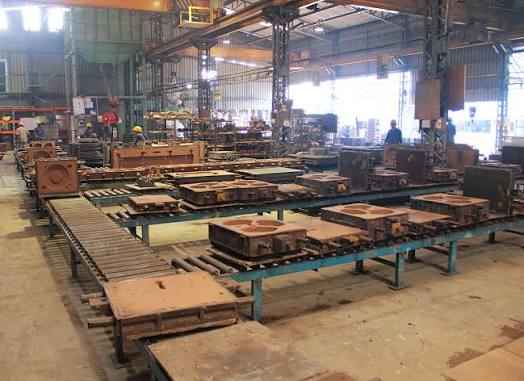
Iron castings are essential components in many industrial applications, including automotive production, construction equipment, agricultural machinery, mining, and general engineering. Their strength, durability, and ability to accommodate complex shapes make them a practical choice for manufacturing different types of mechanical parts. However, the quality of a finished casting depends heavily on the manufacturer’s technical expertise, production methods, and quality control procedures.
Choosing the right manufacturing partner is therefore an important decision for businesses that depend on consistent component performance. A reliable Iron Castings Manufacturer should have the necessary experience, material knowledge, production equipment, and inspection capabilities to meet specific project requirements. Evaluating these factors before placing an order can help buyers avoid unnecessary production delays, reduce quality risks, and establish a dependable supply relationship.
1. Evaluate Manufacturing Experience and Industry Knowledge
Manufacturing experience is one of the first factors to examine when selecting an iron casting supplier. Experienced manufacturers generally have a better understanding of casting techniques, material behavior, mold development, and common production challenges.
They are also more likely to recognize potential problems during the early stages of product development. For example, an experienced engineering team can identify design features that may cause shrinkage, uneven cooling, or incomplete mold filling.
When evaluating a manufacturer’s experience, consider:
- How long the company has been involved in iron casting production.
- Whether it has experience with similar industrial components.
- The industries it regularly serves.
- Its ability to handle complex or customized casting projects.
- Examples of previous manufacturing work.
Industry knowledge is particularly valuable when producing components that must operate under heavy loads, high temperatures, or continuous mechanical stress.
2. Check the Range of Iron Materials Available
Different industrial applications require different mechanical properties. A manufacturer should understand the characteristics of various iron grades and be able to recommend suitable materials according to the intended application.
Some commonly used casting materials include:
Gray Cast Iron
Gray cast iron offers good machinability, thermal conductivity, and vibration-damping properties. It is frequently used for machine bases, engine blocks, brake components, and industrial housings.
Ductile Cast Iron
Ductile iron provides greater tensile strength and toughness than conventional gray iron. Its properties make it suitable for gears, crankshafts, automotive components, pipes, and heavy-duty machinery.
White Cast Iron
White cast iron has high hardness and abrasion resistance. It is commonly selected for crusher components, grinding equipment, and industrial parts exposed to significant surface wear.
Malleable Cast Iron
Malleable iron offers improved ductility and toughness through heat treatment. It is often used in fittings, brackets, connectors, and mechanical assemblies.
Before choosing a supplier, confirm that its material capabilities match your project’s specifications.
3. Examine Production Equipment and Manufacturing Technology
Modern production equipment plays an important role in achieving consistent casting quality. Manufacturers with suitable furnaces, molding systems, and finishing equipment can manage different component designs and production requirements more effectively.
Important equipment and technologies to consider include:
- Melting furnaces with appropriate temperature controls.
- Sand molding or other suitable molding systems.
- Pattern-making and mold preparation equipment.
- Automated or controlled pouring systems.
- Shot blasting and surface cleaning facilities.
- CNC machining equipment for precision finishing.
- Dimensional inspection and testing instruments.
Advanced equipment does not automatically guarantee better results. However, properly maintained machinery combined with skilled operators can improve process stability and production efficiency.
4. Assess Quality Control and Inspection Procedures
Quality assurance is one of the most important considerations when sourcing iron castings. Defects such as porosity, shrinkage cavities, cracks, and dimensional inconsistencies can affect the performance and service life of finished components.
A reliable manufacturer should have inspection procedures covering multiple production stages rather than checking only the final products.
Common quality control methods include:
Chemical composition testing: Confirms that the material meets the specified chemical requirements.
Hardness testing: Evaluates the hardness of the casting and helps verify material characteristics.
Tensile testing: Measures the material’s resistance to pulling forces.
Dimensional inspection: Checks whether the component matches the engineering drawing and required tolerances.
Non-destructive testing: Methods such as ultrasonic, magnetic particle, or radiographic testing can help identify internal or surface defects when appropriate.
Buyers should also ask whether the manufacturer can provide material certificates, inspection reports, and relevant quality documentation.
5. Consider Customization and Engineering Support
Not every industrial component can be produced using a standard design. Many businesses require castings with specific dimensions, internal structures, mounting features, or performance characteristics.
A capable manufacturer should be able to review technical drawings and provide engineering feedback before production starts.
Customization services may include:
- Developing patterns based on customer drawings.
- Adjusting component geometry for casting feasibility.
- Recommending appropriate iron grades.
- Optimizing mold and gating designs.
- Producing prototypes or sample castings.
- Providing machining according to specified tolerances.
Engineering collaboration can help identify design limitations early and reduce the possibility of expensive modifications during production.
6. Review Machining and Finishing Capabilities
Casting operations create the basic component shape, but many industrial products require additional machining to meet precise dimensional requirements.
A manufacturer with integrated machining capabilities can manage more of the production process within one facility. This may simplify coordination and reduce the need to transfer unfinished components between multiple suppliers.
Common finishing and machining operations include:
- Milling for flat and contoured surfaces.
- Turning for cylindrical features.
- Drilling for mounting and connection points.
- Grinding for improved surface finish.
- Boring for accurately sized internal openings.
- Shot blasting for removing surface sand and impurities.
When evaluating machining capabilities, check the available equipment, achievable tolerances, and experience with similar component designs.
7. Compare Production Capacity and Delivery Schedules
A manufacturer may produce excellent castings but still be unsuitable if it cannot meet your required order volume or delivery schedule.
Production capacity should be evaluated according to both current and future demand. Businesses with recurring orders need suppliers that can maintain consistent output without compromising quality.
Consider the following questions:
- Can the manufacturer handle your expected production volume?
- Does it support both small batches and large orders?
- How long does pattern development usually take?
- What is the typical production lead time?
- Can it accommodate urgent or additional orders?
- How does it manage production during periods of high demand?
Clear communication about manufacturing schedules helps businesses plan inventory, coordinate assembly operations, and reduce supply chain disruptions.
8. Evaluate Pricing and Overall Production Costs
Price is an important consideration, but selecting a manufacturer based entirely on the lowest quotation can create problems later.
Iron casting costs depend on several factors, including material grade, component weight, design complexity, mold requirements, production quantity, machining, and inspection requirements.
A detailed quotation should ideally separate the major cost elements so buyers can understand what is included.
When comparing suppliers, consider:
- Raw material costs.
- Pattern and tooling expenses.
- Mold preparation and casting charges.
- Machining and finishing costs.
- Inspection and testing fees.
- Packaging and transportation expenses.
It is also important to consider the long-term cost of quality. A slightly higher initial price may provide better value if the supplier delivers more consistent components with fewer defects and less rework.
9. Investigate Industry Certifications and Quality Standards
Certifications and documented manufacturing procedures can provide additional information about a company’s commitment to quality management.
For example, ISO 9001 is a widely recognized quality management system standard. However, certification alone does not guarantee that every casting will meet the buyer’s requirements.
Ask potential suppliers about their quality management systems, inspection procedures, traceability practices, and relevant industry-specific requirements.
It is also useful to determine whether the manufacturer can work according to customer drawings, technical specifications, and applicable material standards.
10. Check Communication and Customer Support
Effective communication helps prevent misunderstandings during product development and manufacturing. Technical information such as material grades, tolerances, machining allowances, and inspection requirements must be clearly understood by both parties.
A reliable supplier should respond to technical questions, provide realistic production updates, and communicate potential problems promptly.
Good customer support is especially important for customized projects because design adjustments and engineering discussions may be necessary before production can begin.
11. Review Previous Projects and Customer Feedback
A manufacturer’s previous work can provide useful evidence of its production capabilities. Ask whether the company can share examples of similar components or explain its experience with specific industrial applications.
Customer feedback may also reveal information about product consistency, delivery performance, communication, and after-sales support.
When reviewing references, focus on projects with comparable material requirements, component complexity, and production volumes. A supplier experienced in producing similar parts is generally better positioned to understand the technical challenges involved.
12. Consider Environmental Responsibility and Sustainable Practices
Environmental management is becoming an increasingly important consideration in industrial manufacturing. Iron casting involves energy-intensive melting operations, material handling, and waste management.
Manufacturers can improve their environmental performance through several practices:
- Recycling suitable scrap iron and unused metal.
- Improving furnace energy efficiency.
- Reducing unnecessary material waste.
- Using effective dust collection systems.
- Managing foundry sand and other production waste responsibly.
- Monitoring energy consumption and emissions.
Businesses that prioritize responsible sourcing should ask potential manufacturers about their environmental management practices and relevant documentation.
Common Mistakes to Avoid When Selecting an Iron Casting Supplier
Even experienced industrial buyers can overlook important details when comparing manufacturers. Avoiding common sourcing mistakes can help prevent unnecessary expenses and production complications.
Choosing based only on price: The lowest quotation may exclude important machining, testing, or finishing services.
Ignoring material specifications: Selecting an unsuitable iron grade can affect component strength, durability, and operating performance.
Overlooking inspection capabilities: Without appropriate quality checks, internal defects and dimensional problems may go unnoticed.
Failing to review samples: Sample evaluation provides an opportunity to assess material characteristics, surface condition, and dimensional accuracy before committing to larger orders.
Not confirming delivery schedules: Unclear production timelines can disrupt inventory planning and manufacturing operations.
Ignoring long-term capacity: A supplier that can handle an initial order may not necessarily support future increases in production demand.
Taking time to evaluate these areas can make supplier selection more systematic and reduce potential sourcing risks.
Questions to Ask Before Finalizing a Manufacturer
Before entering into a manufacturing agreement, buyers should discuss important technical and commercial details with potential suppliers.
Useful questions include:
- Which iron grades can you manufacture?
- What casting methods and production equipment do you use?
- Can you produce components according to custom engineering drawings?
- What machining and finishing services are available?
- Which inspection and testing methods can you provide?
- Can you supply material certificates and quality reports?
- What are your minimum order quantities and production lead times?
- How do you handle defective products or production discrepancies?
- Can you support repeat orders and future production expansion?
The answers help buyers understand whether a manufacturer has the technical resources and operational reliability required for the project.
Conclusion
Choosing a reliable iron casting manufacturer requires careful evaluation of technical expertise, material capabilities, production equipment, quality control, machining services, and delivery performance. Each factor contributes to the consistency and reliability of the finished components.
Businesses should look beyond initial pricing and consider the overall value offered by a manufacturing partner. Reviewing previous projects, discussing engineering requirements, examining quality procedures, and evaluating production capacity can help reduce sourcing risks.
By taking a structured approach to supplier selection, industrial buyers can establish dependable manufacturing relationships and obtain iron castings that meet their application requirements, quality expectations, and long-term production goals.