
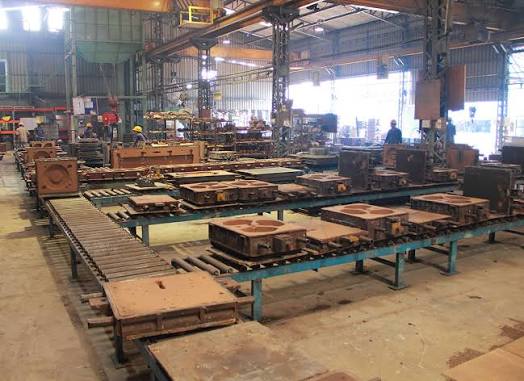
Product quality is a critical factor in iron casting manufacturing because industrial components must meet specific requirements for strength, dimensions, durability, and performance. Whether castings are used in heavy machinery, automotive systems, agricultural equipment, or industrial pumps, variations in material composition or production conditions can affect their reliability. Maintaining consistent quality requires careful control throughout the entire manufacturing process, from raw material selection to final inspection.
Achieving reliable results involves more than checking finished components. Manufacturers must establish standardized production procedures, monitor important process parameters, and identify potential defects before products reach customers. An experienced Iron Castings Manufacturer uses a combination of material testing, process monitoring, skilled engineering, and inspection methods to maintain consistent product standards across different production batches.
1. Careful Selection and Inspection of Raw Materials
<AsyncImage query=”iron foundry raw pig iron steel scrap raw materials inspection” aspectRatio=”16:9″ width=”100%”/>
Raw material quality directly influences the mechanical properties and performance of finished iron castings. Differences in chemical composition or material condition can affect hardness, strength, machinability, and casting behavior.
Manufacturers begin quality management by selecting suitable raw materials according to the required iron grade and component specifications.
Important materials may include pig iron, steel scrap, recycled iron, and alloying elements. Each material must be evaluated to ensure it is appropriate for the intended production process.
Common material inspection activities include:
- Checking incoming material condition.
- Verifying supplier documentation.
- Analyzing chemical composition.
- Separating materials according to grade.
- Monitoring contamination and unwanted elements.
Careful material preparation helps reduce variations before the melting process begins.
2. Maintaining Accurate Chemical Composition
The chemical composition of molten iron has a significant influence on the properties of the final casting. Elements such as carbon, silicon, manganese, sulfur, and phosphorus must be controlled according to the selected material grade.
Different iron types require different compositional ranges. For example, gray iron and ductile iron have distinct metallurgical requirements that influence their graphite structure and mechanical behavior.
Manufacturers use chemical analysis equipment, such as optical emission spectrometers, to evaluate molten metal samples.
If the composition does not meet the required specifications, adjustments may be necessary before pouring. These adjustments must be made carefully because excessive or insufficient alloying elements can affect the finished component’s properties.
Consistent chemical control helps manufacturers maintain predictable material characteristics across production batches.
3. Controlling Melting Temperature and Furnace Conditions
<AsyncImage query=”industrial iron foundry induction furnace molten metal melting process” aspectRatio=”16:9″ width=”100%”/>
Melting is one of the most important stages in iron casting production. Temperature variations can influence metal fluidity, mold filling, solidification, and the formation of defects.
Manufacturers use suitable temperature measurement equipment to monitor furnace conditions and ensure molten iron reaches the required processing range.
Important control measures include:
- Monitoring furnace temperature.
- Maintaining suitable melting conditions.
- Checking molten metal before pouring.
- Managing holding time.
- Following established operating procedures.
- Maintaining furnace equipment regularly.
Temperature control must be appropriate for the selected iron grade, casting geometry, and production method. Excessive temperatures or unsuitable holding conditions can create additional metallurgical and production challenges.
4. Using Consistent Mold Preparation Procedures
Molds determine the external shape and surface characteristics of iron castings. Their quality also influences dimensional accuracy, metal flow, and the likelihood of certain casting defects.
Manufacturers maintain consistent mold quality by controlling molding materials, preparation methods, compaction, and mold dimensions.
For sand casting, important factors include sand grain characteristics, moisture content, bonding strength, and permeability.
Poorly prepared molds may contribute to surface defects, gas-related problems, metal penetration, or dimensional variations.
Standardized mold preparation procedures help ensure that each production cycle begins with suitable and repeatable conditions.
5. Improving Mold and Core Design
<AsyncImage query=”iron sand casting mold and core preparation industrial foundry” aspectRatio=”16:9″ width=”100%”/>
Complex iron castings may require cores to create internal cavities, passages, and other detailed features. The accuracy and stability of these cores are important for maintaining the final component geometry.
Manufacturers evaluate mold and core designs according to the casting’s dimensions, wall thickness, internal features, and expected metal flow.
Several engineering factors require attention:
Gating design: The gating system controls how molten iron enters the mold and helps manage flow conditions.
Riser placement: Risers provide additional molten metal to compensate for shrinkage during solidification.
Core positioning: Proper core placement helps maintain internal dimensions and prevent unwanted movement.
Mold strength: The mold must withstand the pressure and temperature associated with pouring.
Computer-aided design and casting simulation can help identify potential problems before production begins.
6. Standardizing the Pouring Process
The pouring stage must be controlled carefully to ensure that molten iron fills the mold properly. Variations in pouring temperature, speed, and technique can affect casting quality.
Manufacturers establish procedures that define suitable pouring conditions for different component designs and materials.
Important considerations include:
- Maintaining the required metal temperature.
- Using suitable ladles and pouring equipment.
- Controlling the pouring rate.
- Avoiding unnecessary turbulence.
- Following safe handling procedures.
- Ensuring molds are ready before pouring.
Automated pouring systems can improve repeatability in suitable production environments. However, proper supervision remains necessary to monitor operating conditions and address unexpected problems.
7. Managing Cooling and Solidification Conditions
After molten iron enters the mold, it begins to cool and solidify. This stage influences the internal structure, dimensional stability, and potential formation of defects.
Uneven cooling can contribute to internal stresses, shrinkage cavities, and other casting problems. Manufacturers therefore consider cooling conditions during mold design and production planning.
Factors affecting solidification include:
- Component wall thickness.
- Casting geometry.
- Mold material properties.
- Pouring temperature.
- Riser and feeding arrangements.
- Cooling conditions after pouring.
Casting simulation software can help engineers understand how molten metal is expected to solidify and identify areas that may require design adjustments.
Controlling this stage is essential for producing components with consistent internal and external quality.
8. Applying Appropriate Cleaning and Finishing Processes
<AsyncImage query=”iron casting shakeout cleaning shot blasting grinding foundry finishing process” aspectRatio=”16:9″ width=”100%”/>
Once the metal has solidified and cooled sufficiently, the casting is removed from the mold. It may contain attached sand, gates, risers, flash, or surface irregularities that need to be removed.
Manufacturers use suitable cleaning and finishing methods to prepare components for inspection and further processing.
Common operations include:
- Shakeout to separate castings from molding materials.
- Removal of gates and risers.
- Shot blasting or other cleaning methods.
- Grinding and deburring.
- Surface preparation.
- Additional machining where required.
These operations must be performed carefully to avoid damaging the casting or removing too much material from important areas.
Consistent finishing procedures also help maintain a uniform appearance across production batches.
9. Using Heat Treatment When Required
Some iron castings require heat treatment to achieve specific material properties or improve their performance.
Depending on the material and application, heat treatment may help relieve residual stresses, improve machinability, or modify mechanical characteristics.
Common processes include stress relieving, annealing, and other application-specific thermal treatments.
The appropriate process depends on the iron grade, component design, required properties, and applicable specifications.
Manufacturers must control heating temperatures, holding periods, and cooling conditions carefully. Inadequate temperature control can result in inconsistent material properties.
Not every iron casting requires heat treatment, so the process should be selected according to engineering requirements rather than applied automatically.
10. Conducting Dimensional Inspection
Dimensional accuracy is essential when iron castings must fit with other mechanical components. Variations in critical dimensions can cause alignment issues, assembly difficulties, or additional machining work.
Manufacturers use suitable measurement tools to verify that components meet their approved drawings and tolerances.
Inspection equipment may include:
- Vernier calipers.
- Micrometers.
- Height gauges.
- Coordinate measuring machines.
- Laser scanning systems.
- Precision gauges and fixtures.
Critical features such as mounting surfaces, bore diameters, wall thicknesses, and connection points may require additional inspection.
Using consistent measurement procedures helps manufacturers identify dimensional variations and maintain repeatability across production batches.
11. Testing Mechanical Properties
<AsyncImage query=”industrial foundry iron casting hardness tensile strength mechanical testing laboratory” aspectRatio=”16:9″ width=”100%”/>
Visual appearance alone cannot confirm whether an iron casting has the mechanical properties required for its intended application.
Manufacturers may perform mechanical testing to evaluate the material’s behavior under specific conditions.
Depending on the product specification, tests may include:
Tensile testing: Measures properties such as tensile strength and elongation.
Hardness testing: Evaluates resistance to localized deformation or indentation.
Impact testing: Assesses the material’s response to sudden loading when required by the application.
Metallographic examination: Helps evaluate graphite structure, matrix characteristics, and other metallurgical features.
Test results can be compared with relevant material standards and customer requirements.
For consistent results, manufacturers must use appropriate test specimens, calibrated equipment, and established testing procedures.
12. Detecting Internal and Surface Casting Defects
Iron casting defects can affect product appearance, dimensional accuracy, and structural performance. Some defects are visible on the surface, while others occur internally and require specialized inspection methods.
Common defects include:
- Porosity.
- Shrinkage cavities.
- Sand inclusions.
- Cold shuts.
- Misruns.
- Cracks.
- Surface irregularities.
Manufacturers use different inspection techniques depending on the component’s design and acceptance criteria.
Visual inspection is useful for identifying many surface problems. Magnetic particle testing can help detect certain surface and near-surface discontinuities in suitable ferromagnetic materials. Ultrasonic and radiographic testing may be used to evaluate internal conditions.
The objective is not only to identify defective castings but also to understand the production causes so that corrective measures can be introduced.
13. Implementing Statistical Process Control
Statistical process control helps manufacturers monitor production data and identify variations before they develop into larger quality problems.
Instead of relying exclusively on final inspection, manufacturers collect measurements throughout production and analyze whether important parameters remain within acceptable limits.
Examples of monitored variables include:
- Chemical composition.
- Metal temperature.
- Mold properties.
- Component dimensions.
- Mechanical test results.
- Defect rates.
- Production cycle times.
Control charts and other statistical methods can help identify unusual patterns and distinguish normal process variation from conditions that require investigation.
This approach supports preventive quality management and helps manufacturers improve process consistency over time.
14. Training Employees and Maintaining Standard Procedures
Technology and inspection equipment are important, but employee knowledge remains essential in iron casting manufacturing.
Foundry workers, engineers, machine operators, and quality inspectors must understand the procedures relevant to their responsibilities.
Training should cover:
- Material handling and identification.
- Furnace and pouring operations.
- Mold preparation.
- Equipment operation.
- Inspection techniques.
- Workplace safety.
- Defect identification and reporting.
Manufacturers can also use written operating procedures and inspection checklists to reduce differences between shifts and production teams.
Regular training helps employees recognize potential problems and follow established manufacturing standards more consistently.
15. Maintaining Equipment and Calibrating Inspection Instruments
Equipment condition can directly affect product quality. Worn machinery, unstable furnace controls, or inaccurate measurement instruments may introduce variations into the manufacturing process.
Preventive maintenance helps reduce unexpected equipment problems and supports reliable production conditions.
Manufacturers should maintain important equipment such as furnaces, molding machines, pouring systems, conveyors, and finishing machinery.
Inspection instruments also require periodic calibration or verification according to their intended use and applicable quality procedures.
Maintaining accurate equipment and measurement systems helps ensure that production decisions are based on dependable information.
16. Maintaining Traceability and Production Records
Traceability allows manufacturers to connect finished components with relevant production information. This is particularly important when products are used in applications with strict quality requirements.
Production records may include:
- Raw material batches.
- Chemical analysis results.
- Production dates and batch numbers.
- Furnace and pouring information.
- Inspection results.
- Heat treatment records.
- Nonconformance reports.
- Corrective actions.
If a quality issue is discovered, traceability helps manufacturers identify potentially affected batches and investigate the cause.
Accurate records also support customer communication, quality audits, and continuous improvement activities.
17. Continuous Improvement in Iron Casting Manufacturing
Maintaining consistent product quality requires ongoing evaluation rather than relying on a fixed set of procedures.
Manufacturers should regularly review production performance, inspection results, customer feedback, and recurring defect patterns.
When a problem is identified, the production team can investigate its root cause and introduce corrective measures.
For example, repeated porosity may require reviewing mold permeability, moisture levels, venting, or metal handling conditions. Dimensional variations may require adjustments to tooling, process parameters, or machining procedures.
Continuous improvement helps manufacturers strengthen production controls and respond to changing customer requirements.
Conclusion
Consistent product quality in iron casting manufacturing depends on controlling every important stage of production. Careful raw material selection, accurate chemical composition, stable melting conditions, proper mold design, controlled pouring, and suitable cooling procedures all contribute to reliable cast components.
Manufacturers must also combine dimensional inspection, mechanical testing, defect detection, employee training, equipment maintenance, and production traceability. These practices help identify problems early and reduce variations between manufacturing batches.
By applying systematic quality management and continuously improving production processes, iron casting manufacturers can deliver components that meet industrial specifications and provide dependable performance in their intended applications.