
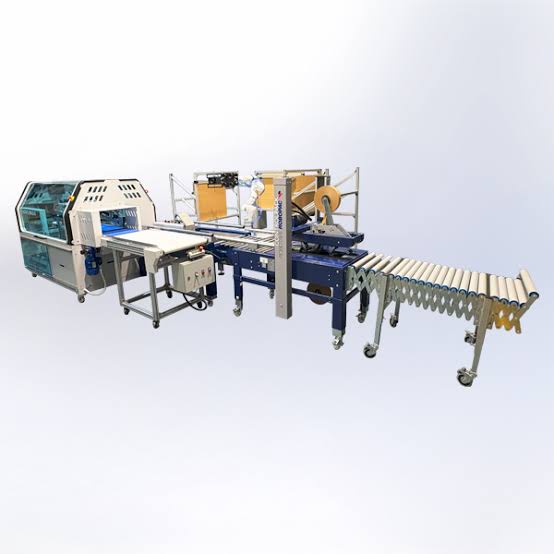
Modern manufacturing relies on efficient packaging operations to prepare products for storage, transportation, and distribution. As production requirements become more demanding, businesses are adopting advanced machinery and automation technologies to improve accuracy, reduce manual work, and maintain consistent output. Packaging systems have therefore become an essential part of many industrial production environments.
Automated Packaging Lines integrate multiple machines, mechanical components, sensors, and control technologies to perform packaging tasks in a coordinated sequence. From feeding and filling to sealing, labeling, inspection, and palletizing, each component contributes to the overall performance of the system. Understanding these components and their functions helps manufacturers select suitable equipment and build efficient packaging operations.
Understanding the Structure of Automated Packaging Systems
An automated packaging system consists of interconnected equipment designed to move products through different packaging stages with minimal manual intervention. Each machine performs a specific task while coordinating with other equipment to maintain a continuous production process.
The configuration depends on the type of product, packaging material, required production capacity, and industry standards. A beverage manufacturer, for example, may require bottle rinsing, filling, capping, and labeling equipment, while a food processing facility may need weighing, pouch filling, sealing, and carton packaging machinery.
A properly designed system ensures that individual machines operate together rather than functioning as isolated production units.
1. Conveyor Systems for Product Transportation
Conveyor systems are among the most important components of an automated packaging line. They transport products, containers, and packaging materials between different machines without requiring constant manual movement.
Conveyors help maintain a consistent product flow and reduce unnecessary handling during production.
Common Types of Conveyor Systems
- Belt conveyors: Use continuous belts to transport products across different production stages.
- Roller conveyors: Move cartons, boxes, and other packaged products using rotating rollers.
- Chain conveyors: Suitable for transporting heavier products and containers in industrial environments.
- Slat conveyors: Use connected plates or slats to move products through specific packaging operations.
- Modular plastic conveyors: Provide flexible configurations and are commonly used in industries with strict cleaning requirements.
The appropriate conveyor depends on product weight, dimensions, production speed, and factory layout.
2. Automatic Feeding and Product Handling Equipment
Feeding systems introduce products or containers into packaging machinery in an organized manner. Their primary purpose is to maintain a steady supply of materials and prevent interruptions caused by inconsistent product positioning.
Automatic feeders can handle bottles, cans, pouches, cartons, and individual products.
Product Orientation Systems
Some products must be positioned correctly before entering filling, wrapping, or labeling equipment. Orientation systems use mechanical guides, rotating mechanisms, or sensors to arrange products in the required direction.
Robotic Pick-and-Place Equipment
Robotic arms can pick products from one location and place them into containers, trays, or packaging units. These systems are useful for products that require precise positioning or careful handling.
Automated feeding and handling equipment improves workflow consistency while reducing repetitive manual activities.
3. Filling and Dosing Machines
Filling machines are essential for packaging operations involving liquids, powders, granules, and other measurable products. They dispense predetermined quantities into containers or packages.
Different filling technologies are designed to handle different product characteristics.
Liquid Filling Machines
Liquid filling equipment is used for beverages, oils, sauces, detergents, and other fluid products. Depending on the liquid’s properties, manufacturers may use gravity, piston, pump, or flow-meter-based filling methods.
Powder Filling Machines
Powder filling equipment handles materials such as flour, spices, milk powder, and industrial powders. Auger filling systems are commonly used to measure and dispense controlled quantities.
Granule Filling Machines
These machines are designed for products such as rice, sugar, seeds, and small solid materials. Depending on the application, they may use volumetric cups or weighing systems.
Accurate filling helps maintain product consistency, reduce material waste, and support packaging quality standards.
4. Sealing and Closing Equipment
Sealing and closing machines protect packaged products by creating secure closures. Proper sealing helps prevent leakage, contamination, moisture exposure, and damage during transportation.
The required technology depends on the packaging format and material.
Common sealing technologies include:
- Heat sealing: Uses controlled heat and pressure to join compatible packaging materials.
- Induction sealing: Creates a seal on suitable containers using electromagnetic induction.
- Vacuum sealing: Removes air from packages before sealing to support product preservation.
- Capping machines: Automatically apply and tighten caps on bottles and containers.
- Carton sealing machines: Close and secure cardboard boxes using adhesive tape or other sealing methods.
Selecting appropriate sealing equipment is important for maintaining package integrity throughout storage and distribution.
5. Automatic Labeling and Coding Systems
Labeling equipment applies product labels accurately and consistently. Labels communicate essential information, including product names, ingredients, instructions, barcodes, and regulatory details.
Modern labeling machines can handle different container shapes and packaging formats.
Types of Labeling Equipment
- Pressure-sensitive labeling machines.
- Wrap-around labeling systems.
- Front-and-back labeling machines.
- Sleeve labeling equipment.
- Top and bottom labeling systems.
Coding equipment complements labeling operations by printing manufacturing dates, expiration dates, batch numbers, and identification codes.
Advanced systems can also integrate barcode readers and verification equipment to confirm that the correct information is applied.
6. Inspection and Quality Control Technologies
Quality control equipment helps identify defective products before they move to the final packaging stages. Automated inspection reduces dependence on manual checking and supports consistent production standards.
Machine Vision Systems
Machine vision technology uses cameras and image-processing software to inspect products and packages. It can identify missing labels, incorrect positioning, damaged packaging, and printing defects.
Checkweighers
Checkweighers automatically measure package weights and identify products that fall outside predetermined weight limits.
Metal Detectors
Metal detection equipment identifies unwanted metallic contaminants in suitable product applications. It is particularly important in food processing and other industries with strict contamination-control requirements.
X-Ray Inspection Systems
X-ray inspection technology can identify certain foreign materials and internal packaging defects that conventional visual inspection may not detect.
These technologies help improve product quality while reducing the risk of defective packages reaching customers.
7. Cartoning and Case Packing Machines
After individual products have been packaged, secondary packaging equipment organizes them into cartons, boxes, and shipping cases.
Cartoning machines form cartons, insert products, and close the packages automatically. Case packers arrange finished products into larger shipping containers.
These machines are commonly used in food, beverage, pharmaceutical, cosmetics, and consumer goods manufacturing.
Automating secondary packaging reduces manual handling and prepares products more efficiently for warehousing and distribution.
8. Robotic Palletizing and Depalletizing Systems
Palletizing is the process of arranging packaged products onto pallets for transportation and storage. Traditionally, this task requires considerable manual labor, especially in high-volume manufacturing environments.
Robotic palletizers use programmed movements to position cartons, bags, or containers in predetermined arrangements.
Depalletizing systems perform the reverse operation by removing products from pallets and transferring them to production or packaging equipment.
Key benefits include:
- Consistent product stacking patterns.
- Reduced repetitive lifting activities.
- Better utilization of available warehouse space.
- Faster handling of finished products.
- Improved coordination between packaging and logistics operations.
Robotic palletizing systems can also be integrated with conveyor equipment and warehouse management processes.
9. Programmable Logic Controllers and Automation Software
Programmable Logic Controllers (PLCs) are central to the operation of many automated packaging systems. They receive information from sensors and other devices, process programmed instructions, and control connected machinery.
For example, a PLC can coordinate conveyor movement with filling operations to ensure that containers are correctly positioned before dispensing begins.
Automation software provides additional capabilities for managing production sequences, equipment settings, and operating conditions.
These technologies help manufacturers maintain synchronized operations and respond to changing production requirements.
10. Human-Machine Interfaces and Monitoring Systems
Human-Machine Interfaces (HMIs) allow operators to interact with automated equipment through touchscreens, control panels, and graphical displays.
Operators can use these interfaces to:
- Start and stop equipment.
- Adjust machine settings.
- Monitor production speed.
- Review system alarms.
- Check operating conditions.
- Identify equipment faults.
Some advanced packaging facilities also use Supervisory Control and Data Acquisition (SCADA) systems to monitor multiple machines and production processes from a centralized interface.
These technologies make it easier to manage complex packaging operations and improve production visibility.
11. Sensors and Safety Technologies
Sensors provide important information about the position, condition, and movement of products and machinery. They help packaging systems operate accurately and respond to changing conditions.
Common sensor technologies include:
Photoelectric Sensors
These sensors detect objects using light and are frequently used to identify containers moving along conveyor systems.
Proximity Sensors
Proximity sensors detect nearby objects without requiring physical contact. They help monitor product positioning and machine movements.
Pressure Sensors
Pressure sensors monitor pressure levels in pneumatic systems, filling equipment, and other machinery.
Temperature Sensors
Temperature sensors monitor operating temperatures in equipment such as heat sealers and thermal processing systems.
Safety technologies also play an important role. Emergency stop buttons, protective guards, safety light curtains, and interlocking devices help protect employees and equipment during operation.
12. Industrial Internet of Things and Smart Packaging Technologies
Modern packaging equipment increasingly uses connected technologies to improve production monitoring and equipment management.
The Industrial Internet of Things (IIoT) connects machinery, sensors, and control systems so that operational information can be collected and analyzed.
This technology supports several applications:
- Real-time equipment performance monitoring.
- Production data collection and reporting.
- Predictive maintenance planning.
- Identification of production bottlenecks.
- Remote equipment diagnostics.
- Improved coordination between production departments.
Artificial intelligence and advanced data analytics can further support quality inspection and operational decision-making.
Although these technologies offer considerable potential, successful implementation requires reliable connectivity, appropriate software, and trained personnel.
Factors to Consider When Selecting Packaging Equipment
Choosing suitable machinery requires an understanding of both current production requirements and future business objectives.
Manufacturers should evaluate the following factors before investing in packaging equipment:
- Product characteristics: Consider product size, shape, weight, texture, and physical properties.
- Packaging format: Determine whether products require bottles, pouches, cartons, bags, or other packaging materials.
- Production capacity: Select machinery capable of meeting expected output requirements.
- Automation compatibility: Ensure that individual machines can communicate and operate together.
- Available space: Evaluate factory dimensions, conveyor arrangements, and equipment accessibility.
- Maintenance requirements: Consider cleaning procedures, spare parts, technical support, and servicing schedules.
- Future expansion: Choose equipment that can accommodate additional products or increased production volumes.
A thorough evaluation helps businesses avoid equipment mismatches and develop more efficient packaging operations.
Maintenance and Integration for Long-Term Performance
Even advanced packaging equipment requires regular maintenance to maintain reliable performance. Mechanical wear, sensor problems, electrical faults, and incorrect machine settings can affect production efficiency.
Preventive maintenance should include regular inspections, cleaning, lubrication, calibration, and replacement of damaged components.
Integration is equally important. Each machine should be configured to communicate effectively with connected equipment, ensuring that products move smoothly between packaging stages.
Manufacturers should also train operators to recognize common equipment problems and follow established maintenance procedures.
A coordinated maintenance and integration strategy can reduce unexpected downtime and extend equipment service life.
Conclusion
Automated packaging systems depend on several interconnected components and technologies to achieve efficient production. Conveyors, feeding equipment, filling machines, sealing systems, labeling units, inspection technologies, robotic palletizers, and industrial control systems each contribute to the overall packaging process.
Understanding how these technologies work together allows manufacturers to select appropriate equipment, improve production coordination, reduce material waste, and maintain consistent packaging quality. As robotics, artificial intelligence, and connected manufacturing technologies continue to advance, packaging systems are becoming more flexible and intelligent.
Businesses researching integrated packaging equipment and modern production configurations can also explore the solutions and industry applications associated with Techflow Pack when evaluating their automation requirements.