
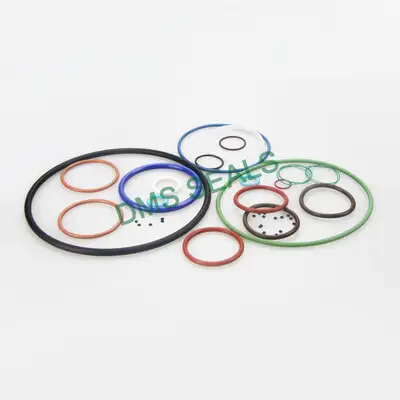
O-rings are widely used in industrial equipment to prevent fluid and gas leakage, maintain pressure, and protect machinery from performance-related problems. While standard sizes meet the needs of many applications, specialized equipment often requires sealing components with precise dimensions, particular material properties, or non-standard specifications. In these situations, selecting the right supplier becomes especially important.
A capable O Ring Seal Supplier should be able to understand technical requirements, recommend suitable materials, and support custom production with consistent quality. Evaluating a supplier’s manufacturing capabilities, inspection procedures, and technical communication can help businesses obtain O-rings that fit their equipment and perform reliably under actual operating conditions.
Why Custom O-Ring Sizes and Specifications Matter
Standard O-rings are manufactured according to commonly used dimensions and specifications. However, not every machine or sealing assembly follows standard designs. Older equipment, specialized machinery, and custom-engineered systems may require components that differ from commonly available sizes.
Using an incorrectly sized O-ring can cause several problems:
- Insufficient compression and poor sealing contact
- Excessive stretching during installation
- Twisting or displacement inside the groove
- Premature wear and material damage
- Fluid or gas leakage
- Unnecessary equipment maintenance
Custom manufacturing allows buyers to specify dimensions and material characteristics according to the requirements of their equipment. This can improve compatibility and reduce the need to modify existing components.
Define Your Technical Requirements Before Contacting Suppliers
The first step in choosing a supplier is preparing accurate product information. Clear specifications help manufacturers understand the application and determine whether the requested O-ring can be produced.
Dimensional Requirements
O-ring dimensions generally include inside diameter and cross-sectional thickness. These measurements determine how the seal fits within its installation groove.
Buyers should provide accurate measurements and specify acceptable tolerances. If possible, supplying an engineering drawing or an existing sample can help reduce misunderstandings.
Material Requirements
The elastomer must be suitable for the operating environment. Important considerations include fluid compatibility, temperature range, pressure, and exposure to environmental conditions.
Common material options include:
- NBR: Frequently used with many petroleum-based oils and fuels.
- FKM: Often selected for elevated-temperature applications and resistance to oils, fuels, and certain chemicals.
- EPDM: Suitable for many water, steam, ozone, and weather-exposure applications.
- Silicone: Offers flexibility across a broad temperature range.
- Neoprene: Provides a useful balance of properties for selected industrial environments.
- Polyurethane: Often considered where abrasion resistance and mechanical strength are important.
The exact compound should be selected according to the application rather than relying only on the general material category.
Hardness and Performance Requirements
Hardness affects how an O-ring responds to compression and pressure. It is commonly measured using the Shore A scale for elastomers.
Buyers should also consider compression set, tensile strength, elongation, and resistance to wear. These properties help determine whether the selected material is appropriate for the intended service conditions.
Evaluate the Supplier’s Custom Manufacturing Capabilities
Not every supplier has the equipment, tooling, or technical experience required to produce specialized O-rings. Buyers should confirm that a potential supplier can handle the requested dimensions, material, and production volume.
Support for Non-Standard Dimensions
Ask whether the supplier can manufacture O-rings outside commonly available size ranges. Some applications require unusual inside diameters, cross-sectional profiles, or specific dimensional tolerances.
The supplier should be able to review drawings, measurements, and samples before confirming production feasibility.
Molding Technology
O-rings are commonly produced using compression, injection, or transfer molding.
- Compression molding: Shapes rubber compound inside a heated mold under pressure.
- Injection molding: Injects prepared rubber compound into closed mold cavities and can support efficient repeat production.
- Transfer molding: Moves compound from a separate chamber into mold cavities under pressure.
The appropriate method depends on product design, material, production quantity, and manufacturing requirements.
Tooling and Production Flexibility
Custom products may require dedicated molds or modifications to existing tooling. Buyers should ask whether tooling development is available, how long it may take, and whether the supplier can maintain the same specifications for future orders.
This is particularly important for businesses that expect recurring purchases or plan to increase production volumes.
Check Quality Control and Dimensional Inspection
Custom O-rings must meet the agreed specifications consistently. A product that looks correct may still have dimensional or material variations that affect sealing performance.
A reliable supplier should have documented inspection procedures covering important production stages.
Dimensional Verification
Inside diameter and cross-sectional thickness should be measured against the approved drawing or specification. Suitable measuring instruments help identify products that fall outside the required tolerances.
Visual Inspection
Finished O-rings should be checked for defects such as:
- Surface cracks or cuts
- Air bubbles and voids
- Excessive molding flash
- Incomplete molding
- Uneven surfaces
- Visible contamination
These defects can interfere with sealing contact or indicate problems during production.
Material Testing
Depending on the application, testing may include hardness, tensile strength, elongation, compression set, and aging resistance. These checks help confirm whether the rubber compound has the required physical properties.
For specialized applications, additional testing may be necessary to assess chemical compatibility or performance under simulated operating conditions.
Review Standards and Technical Documentation
Documentation helps buyers verify that custom O-rings meet the agreed requirements. When comparing suppliers, ask what records are available for materials, production batches, and finished-product inspections.
Relevant references include:
- ISO 3601: Covers important O-ring requirements, including dimensions and related specifications.
- ISO 9001: Provides a framework for quality management systems and controlled business processes.
The applicable requirements depend on the product and its intended use. Buyers should confirm whether a supplier’s certifications and testing procedures are relevant to the specific order.
For custom products, approved drawings, material specifications, hardness requirements, and inspection criteria should be documented before production begins.
Assess Technical Support and Communication
Custom manufacturing involves more technical coordination than purchasing standard products. Suppliers should be willing to discuss the application and clarify specifications before accepting an order.
A useful technical discussion may cover:
- The equipment and sealing arrangement.
- Operating temperature and pressure.
- The fluid or gas in contact with the O-ring.
- Required dimensions and tolerances.
- Material and hardness preferences.
- Expected production quantities.
- Testing and documentation requirements.
A supplier that asks relevant questions can help identify missing information and reduce the risk of specification errors. Clear communication is also important when revisions are needed during product development.
Consider Sample Production Before Bulk Ordering
For a new or specialized O-ring design, sample evaluation can help confirm whether the proposed product meets the application’s requirements.
A sample allows buyers to check dimensions, installation fit, material characteristics, and compatibility with the equipment. Where practical, testing should take place under conditions that represent actual operation.
Before approving full production, confirm that the sample matches the agreed specifications. The approved sample and its technical details can then serve as references for repeat orders.
Compare Pricing, Lead Times, and Production Capacity
Custom O-ring quotations can vary because of differences in material, tooling, production methods, inspection requirements, and order quantities.
Instead of comparing unit prices alone, buyers should review the complete quotation.
| Factor | What to evaluate |
|---|---|
| Material | Elastomer type, grade, and hardness |
| Dimensions | Required measurements and tolerances |
| Tooling | Whether new molds or modifications are needed |
| Production quantity | Minimum order and bulk production capacity |
| Quality control | Inspection and testing included |
| Lead time | Sample development and production schedule |
| Documentation | Specifications and test reports |
| Repeat orders | Ability to maintain approved requirements |
Production capacity also matters. A supplier should be able to support the expected order volume without creating unnecessary delays or compromising quality.
Understand Packaging and Storage Requirements
Rubber products can deteriorate if they are exposed to unsuitable storage conditions. Excessive heat, direct sunlight, ozone sources, contamination, and mechanical deformation may affect O-ring properties.
Ask how custom products are packaged and whether storage recommendations are provided. Packaging should protect the seals during transportation and help preserve their condition until installation.
For businesses that maintain spare-parts inventories, proper storage practices can help prevent damage before the products are used.
Warning Signs to Watch for When Choosing a Supplier
Certain issues may indicate that a supplier is not well suited to custom manufacturing requirements.
- Unclear technical specifications: The supplier cannot confirm dimensions, tolerances, or material details.
- Limited material knowledge: Recommendations are made without considering operating conditions.
- No defined inspection process: There is little information about how finished products are checked.
- Unrealistic delivery promises: Production timelines are offered without reviewing tooling or material availability.
- Poor documentation: Approved drawings and product requirements are not recorded clearly.
- Inconsistent communication: Technical questions remain unanswered or specifications change without confirmation.
Recognizing these warning signs early can help businesses avoid delays, product mismatches, and unnecessary costs.
Build a Long-Term Relationship with the Right Supplier
Once a custom O-ring has been approved, maintaining a consistent supply becomes an important part of procurement planning. Businesses should work with suppliers that can reproduce the approved dimensions, material formulation, and quality requirements for future orders.
Keeping records of drawings, material grades, inspection results, and sample approvals makes repeat purchasing easier. Regular supplier reviews can also help assess product consistency, delivery performance, and responsiveness to technical issues.
A dependable long-term relationship can reduce repeated development work and support more predictable maintenance and production schedules.
Conclusion
Choosing an O-ring supplier for custom sizes and specifications requires careful evaluation of technical expertise, material options, manufacturing processes, dimensional control, and quality assurance. Accurate application information and clearly documented requirements are essential for developing a product that fits correctly and performs as intended.
By reviewing production capabilities, requesting samples when appropriate, and comparing suppliers beyond their quoted prices, businesses can make more informed sourcing decisions. The right manufacturing partner can help deliver custom sealing components that meet equipment requirements and support reliable industrial operations.