
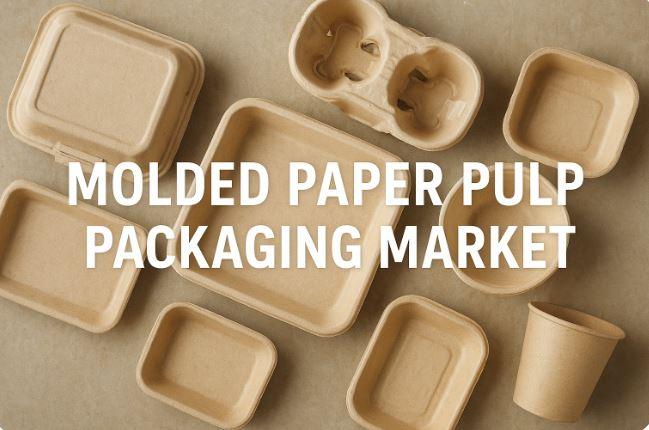
As environmental concerns continue to grow across global industries, businesses are under increasing pressure to adopt sustainable packaging solutions. Traditional plastic packaging has long been criticized for its environmental impact, including long decomposition times and contribution to landfill waste. In response, companies are turning toward renewable, recyclable, and biodegradable alternatives that align with eco-friendly goals.
Among these solutions, custom molded packaging has emerged as a key driver of sustainable transformation in the packaging industry. In this space, custom molded packaging plays an important role in helping businesses reduce environmental impact while maintaining strong product protection and efficiency.
The Shift Toward Eco-Friendly Packaging
The global packaging industry is undergoing a major shift as sustainability becomes a central business priority. Governments are introducing stricter regulations on single-use plastics, while consumers increasingly prefer brands that demonstrate environmental responsibility.
This shift has encouraged companies to rethink their packaging strategies. Instead of relying on plastic-based materials, many are adopting fiber-based alternatives that are recyclable and biodegradable. Molded fiber packaging has become one of the most practical solutions in this transition.
What Makes Custom Molded Packaging Sustainable
Custom molded packaging is typically made from recycled paper, cardboard, and natural fibers. These materials are processed into pulp and molded into packaging shapes that fit specific product requirements.
Its sustainability comes from several key characteristics:
- Made from recycled and renewable raw materials
- Fully recyclable and biodegradable
- Low environmental impact during production
- Reduced reliance on plastic-based materials
- Supports circular economy principles
These features make it a strong alternative for companies aiming to reduce their carbon footprint.
How Custom Molded Packaging Reduces Environmental Impact
Custom molded packaging supports eco-friendly goals in multiple ways across its lifecycle.
1. Use of Recycled Materials
Most molded fiber packaging is produced from recycled paper waste, reducing the need for virgin raw materials and helping conserve natural resources.
2. Waste Reduction in Design
Because it is custom-shaped, packaging is designed to fit products precisely. This reduces excess material use and minimizes packaging waste.
3. Lower Carbon Emissions
Production processes for molded fiber packaging typically consume less energy compared to plastic manufacturing, resulting in lower carbon emissions.
4. Biodegradability
Unlike plastic, molded fiber packaging breaks down naturally over time, reducing long-term environmental pollution.
5. Recyclability
After use, the packaging can re-enter recycling streams, supporting a circular lifecycle.
Customization and Sustainable Efficiency
One of the major advantages of custom molded packaging is its ability to combine sustainability with efficiency. Custom design ensures that packaging is optimized for each product, which reduces unnecessary material use.
This precision not only improves environmental performance but also enhances logistics efficiency. Lightweight packaging reduces transportation emissions and shipping costs, further contributing to sustainability goals.
Industry Applications Supporting Green Goals
Custom molded packaging is widely used across industries that are actively working toward sustainability targets.
Electronics Industry
Protects devices while replacing plastic inserts with recyclable fiber alternatives.
Cosmetics Industry
Provides eco-friendly packaging solutions that align with sustainable branding strategies.
Food and Beverage Industry
Offers safe, hygienic, and compostable packaging options.
Healthcare Industry
Supports secure transport of medical equipment using environmentally responsible materials.
E-commerce Sector
Reduces packaging waste in high-volume shipping operations.
Manufacturing Practices That Support Sustainability
Sustainable packaging is not only about materials but also about how they are produced. Manufacturers of molded fiber packaging often adopt eco-friendly production methods such as:
- Recycling water used in manufacturing processes
- Using energy-efficient machinery
- Minimizing production waste
- Optimizing fiber usage for efficiency
These practices ensure that environmental responsibility is maintained throughout the entire production cycle.
Lianpack’s Role in Sustainable Packaging Development
Companies like Lianpack contribute to global sustainability efforts by developing molded fiber packaging solutions designed for environmental efficiency. Their focus on custom molded packaging helps businesses transition away from plastic while maintaining product safety and performance.
By integrating recycled materials and efficient manufacturing processes, they support industries in achieving long-term eco-friendly packaging goals.
The Future of Eco-Friendly Packaging
The demand for sustainable packaging is expected to continue growing as environmental awareness increases worldwide. Future innovations will likely focus on improving material strength, moisture resistance, and production efficiency.
Emerging trends include:
- Increased use of agricultural waste fibers
- Expansion of fully compostable packaging solutions
- Greater automation in manufacturing
- Smarter design systems to reduce material usage
These advancements will further strengthen the role of molded fiber packaging in global sustainability efforts.
Conclusion
Custom molded packaging plays a vital role in supporting eco-friendly packaging goals by combining sustainability, efficiency, and product protection. Its use of recycled materials, biodegradable properties, and customizable design makes it a strong alternative to traditional plastic packaging.
As industries continue to prioritize environmental responsibility, companies like Lianpack are helping drive this transformation by offering innovative molded fiber solutions. With growing global demand for sustainable packaging, custom molded packaging will remain an essential part of the shift toward a greener future.