
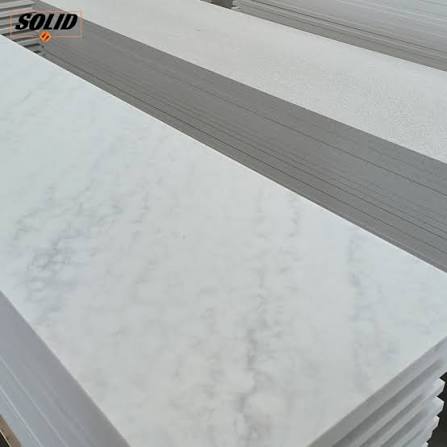
The global demand for solid surface materials continues to increase as construction companies, interior designers, furniture manufacturers, and commercial developers seek reliable materials for modern projects. Solid surfaces are widely used in kitchen countertops, bathroom vanity tops, reception desks, wall panels, laboratory furniture, and other interior applications. As China has developed into an important manufacturing and export destination, its solid surface suppliers are increasingly focused on meeting international quality expectations.
For overseas buyers, product appearance and competitive pricing are not the only factors that matter. Materials must also meet relevant technical specifications, safety requirements, and performance expectations for their intended applications. Manufacturers working in the Solid Surfaces China market can address these requirements through controlled production processes, material testing, quality management systems, and systematic product inspections. Understanding these practices helps international buyers evaluate suppliers and make more confident purchasing decisions.
1. Understanding International Quality Standards for Solid Surfaces
International quality standards provide guidelines and testing methods for evaluating products, manufacturing systems, and material performance. They help buyers compare suppliers and determine whether products are suitable for specific applications.
However, there is no single universal certification that automatically guarantees the quality of every solid surface product. Requirements vary depending on material composition, application, and destination market.
Common areas of evaluation include:
- Material composition and consistency
- Dimensional accuracy
- Surface appearance and finishing
- Mechanical performance
- Resistance to stains and chemicals
- Water absorption
- Fire performance, where applicable
- Environmental and indoor air quality considerations
- Manufacturing quality management
Reliable suppliers should understand which requirements apply to their products and provide relevant documentation to support their claims.
2. Selecting High-Quality Raw Materials
Material quality begins with the selection of appropriate raw materials. Solid surface products commonly contain resin systems, mineral fillers, pigments, and other additives.
The quality and proportions of these components influence the finished material’s appearance, physical characteristics, and fabrication properties.
Chinese manufacturers can support product consistency by establishing clear purchasing specifications for incoming materials.
Important raw material control measures include:
Resin verification: Manufacturers should confirm that the resin type and specifications match the approved product formulation.
Mineral filler inspection: Fillers should meet the required quality and consistency criteria to support stable production.
Pigment control: Proper pigment selection and measurement help maintain consistent colors across manufacturing batches.
Additive management: Additional ingredients should be measured and controlled according to the approved formulation.
Maintaining accurate material records also helps manufacturers identify the source of potential production variations.
3. Implementing Standardized Manufacturing Processes
Consistent manufacturing procedures are essential for producing solid surface materials that meet established specifications.
The production process typically includes raw material preparation, mixing, deaeration, molding, curing, cooling, cutting, and surface finishing.
Each stage requires suitable operating conditions and process controls.
For example, accurate mixing helps distribute resin, fillers, and pigments evenly. Controlled curing supports the development of the intended material structure, while precision cutting helps achieve the required sheet dimensions.
Manufacturers can improve consistency by establishing documented production procedures and monitoring important processing parameters.
Standardized manufacturing also makes it easier to identify production problems and implement corrective measures when necessary.
4. Following ISO 9001 Quality Management Principles
ISO 9001 is one of the most widely recognized international standards for quality management systems. It provides a framework for organizations to manage processes, monitor performance, address customer requirements, and improve operational consistency.
Solid surface manufacturers may use ISO 9001 principles to organize their quality management activities.
Important practices include:
- Documenting manufacturing procedures
- Establishing quality objectives
- Monitoring production performance
- Maintaining supplier evaluation procedures
- Managing nonconforming products
- Recording inspection results
- Implementing corrective actions
- Reviewing customer feedback
An ISO 9001 certification can demonstrate that a company operates a quality management system within its certified scope.
However, it does not independently prove that every product meets a particular technical performance requirement. Buyers should also request product-specific testing and inspection documentation.
5. Conducting Regular Product Performance Testing
Product testing allows manufacturers to evaluate whether solid surface materials meet the performance requirements established for their intended applications.
Different tests may be necessary depending on the formulation and end use.
Common testing areas include:
Stain Resistance
Solid surface products used for kitchen countertops and bathroom installations may be exposed to food, beverages, cosmetics, and household cleaning substances.
Stain resistance testing helps evaluate how easily these materials can be cleaned after exposure to specified substances.
Water Absorption
Water absorption testing measures how much moisture a material absorbs under defined conditions.
This characteristic can be particularly relevant for countertops, vanity tops, and other installations exposed to regular moisture.
Heat Resistance
Solid surfaces may experience contact with warm objects or exposure to elevated temperatures during everyday use.
Heat-related testing helps determine how materials respond under specified temperature conditions. Buyers should also follow the manufacturer’s recommendations because heat resistance does not mean that every product can withstand direct contact with extremely hot cookware.
Mechanical Performance
Mechanical tests can evaluate characteristics such as flexural strength, impact resistance, and other relevant physical properties.
These results help buyers understand whether a material is appropriate for particular structural or fabrication requirements.
Chemical Resistance
Commercial and laboratory environments may expose surfaces to cleaning agents and other chemicals.
Testing can help establish which substances are compatible with the material and which may cause discoloration or surface damage.
6. Maintaining Dimensional Accuracy and Surface Consistency
Dimensional accuracy is important for solid surface sheets because variations can create difficulties during fabrication and installation.
Manufacturers should establish acceptable tolerances for sheet length, width, thickness, and flatness.
Precision cutting and calibration equipment can help maintain consistent dimensions throughout production.
Surface inspections are equally important. Finished sheets should be examined for unacceptable scratches, cracks, bubbles, discoloration, and other visible imperfections.
Quality control teams may use measuring instruments, visual inspection procedures, and approved reference samples to evaluate finished products.
For large projects, maintaining dimensional and color consistency across multiple batches is particularly important.
7. Controlling Color and Pattern Consistency
Solid surfaces are frequently selected for their decorative qualities. Architects, furniture manufacturers, and interior designers often require consistent colors and patterns across multiple sheets.
Color variations can become noticeable when several sheets are installed together, particularly in large commercial interiors.
Manufacturers can control this issue through standardized pigment measurements, formulation records, production monitoring, and approved color references.
For customized products, buyers should approve a physical sample before bulk production begins.
A reliable supplier should also explain how it manages repeat orders and whether differences between production batches can be minimized.
8. Meeting Environmental and Indoor Air Quality Requirements
Environmental performance is becoming increasingly important in the international construction industry.
Buyers may need to evaluate material composition, chemical emissions, manufacturing practices, and relevant environmental documentation.
Depending on the destination market and project requirements, applicable considerations may include:
- Volatile organic compound emissions
- Formaldehyde emissions, where relevant to the product category
- Chemical safety information
- Environmental product declarations
- Responsible material sourcing
- Manufacturing waste management
- Energy efficiency
For example, GREENGUARD certification evaluates chemical emissions from products and can be relevant when indoor air quality is an important purchasing consideration.
Environmental certifications should be checked carefully to confirm that they apply to the specific product being purchased. A manufacturer’s general environmental statement should not be treated as proof of product certification.
9. Addressing Fire Safety and Building Regulations
Certain construction and commercial projects require surface materials to meet specific fire performance requirements.
The applicable requirements depend on the product, building type, installation location, and destination country’s regulations.
Manufacturers may provide fire test reports based on recognized testing methods. For example, EN 13501-1 is a European classification standard used to classify the fire performance of construction products and building elements.
Buyers should verify that the relevant classification applies to the exact material and installation conditions.
It is also important to understand that a test result for one formulation or thickness cannot automatically be applied to every product manufactured by the same company.
10. Using Third-Party Testing and Independent Certification
Independent testing organizations can provide additional confidence when evaluating solid surface products.
Third-party laboratories conduct tests using specified methods and issue reports describing the results.
This can be especially valuable for international buyers who cannot visit the manufacturing facility or directly supervise production.
Independent verification may cover:
- Physical and mechanical properties
- Chemical resistance
- Stain resistance
- Water absorption
- Fire performance
- Chemical emissions
- Other application-specific requirements
When reviewing a laboratory report, buyers should check the laboratory’s accreditation, testing method, product identification, test date, and reported results.
Where relevant, laboratories accredited to ISO/IEC 17025 provide confidence in testing and calibration competence within their accredited scope.
Independent testing is particularly useful for large orders, regulated applications, and projects with strict technical specifications.
11. Implementing Quality Control at Every Production Stage
Reliable manufacturers do not wait until production is finished to identify problems. Instead, they integrate inspection procedures throughout the manufacturing process.
A typical quality control system may include the following stages:
Incoming material inspection: Raw materials are checked against approved specifications before entering production.
Mixing inspection: Material proportions and processing conditions are monitored to support formulation consistency.
Molding and curing inspection: Production conditions are reviewed to identify irregularities that could affect material quality.
Cutting and finishing inspection: Sheet dimensions, surface appearance, and edge quality are examined.
Final product inspection: Completed products are checked against the approved specifications before packaging.
This approach helps identify potential defects early and reduces the possibility of unsuitable materials reaching customers.
12. Maintaining Traceability and Production Records
Product traceability allows manufacturers to identify where materials originated and how individual production batches were processed.
Maintaining accurate production records can help suppliers investigate quality problems and improve manufacturing consistency.
Useful records may include:
- Raw material supplier information
- Material batch numbers
- Formulation records
- Production dates
- Equipment and process information
- Inspection reports
- Test results
- Packaging and shipment details
For international buyers, traceability is particularly useful when ordering customized products or purchasing materials repeatedly.
If a quality issue occurs, batch records can help identify the affected products and determine appropriate corrective actions.
13. Providing Technical Documentation to International Buyers
Professional suppliers should provide clear technical documentation to help customers understand product characteristics and compliance requirements.
Depending on the product and destination market, useful documents may include:
- Product technical data sheets
- Material composition information
- Safety data sheets, where applicable
- Product test reports
- Quality management certificates
- Environmental documentation
- Fire performance reports, where required
- Installation and maintenance guidelines
Buyers should check whether the documentation relates to the exact product being purchased.
For example, a laboratory report for one acrylic formulation should not automatically be accepted as evidence for a different polyester-based material.
Clear documentation makes it easier for contractors, architects, importers, and regulatory professionals to assess material suitability.
14. Packaging and Transportation Quality Standards
Even well-manufactured solid surface materials can become damaged if they are packaged or transported improperly.
Chinese suppliers serving international customers should use packaging systems appropriate for the dimensions, weight, and characteristics of their products.
Important protective measures include:
- Surface protection against scratches
- Reinforced corner and edge protection
- Suitable cushioning materials
- Stable pallet arrangements
- Appropriate wooden crates when required
- Clear shipping and handling labels
Before shipment, buyers should confirm that the packaging meets the agreed requirements.
Pre-shipment inspections can also verify product quantities, visible quality, packaging condition, and shipping documentation.
15. How International Buyers Can Verify Supplier Quality Claims
Although manufacturers may advertise certifications and high-quality production capabilities, buyers should independently verify important claims before placing large orders.
A practical evaluation process includes:
- Review company credentials: Check the manufacturer’s business background and relevant certification records.
- Request product samples: Evaluate material appearance, texture, and fabrication characteristics.
- Examine technical documents: Review product specifications and relevant laboratory test reports.
- Confirm testing relevance: Make sure the documents cover the exact product formulation and application.
- Evaluate factory capabilities: Request production information or arrange a factory visit.
- Establish inspection criteria: Agree on measurable quality requirements before production begins.
- Arrange independent inspections: Consider third-party verification for large or technically demanding orders.
These steps help buyers distinguish between general marketing claims and verifiable manufacturing capabilities.
16. The Importance of Continuous Quality Improvement
International quality expectations change as construction technologies, regulations, and customer requirements evolve.
Chinese solid surface manufacturers must therefore continue improving their production methods and quality management practices.
Continuous improvement may involve upgrading machinery, refining material formulations, training employees, improving inspection procedures, and reviewing customer feedback.
Manufacturers can also use production data to identify recurring defects and reduce unnecessary material waste.
For international suppliers, these improvements can support more consistent products and stronger customer relationships.
Businesses that prioritize quality improvement are better positioned to adapt to changing market requirements and serve customers with different technical expectations.
Conclusion
Chinese solid surface suppliers can meet international quality expectations through careful raw material selection, standardized manufacturing processes, product performance testing, documented quality management, and systematic inspection procedures.
Certifications such as ISO 9001, relevant laboratory reports, environmental documentation, and application-specific performance testing provide useful evidence when evaluating manufacturers. However, buyers should always confirm that these documents apply to the exact products and manufacturing facilities involved.
For international businesses, choosing a supplier should involve more than reviewing product catalogs and comparing prices. Requesting samples, verifying technical information, establishing inspection standards, and reviewing export procedures can help reduce procurement risks.
By working with manufacturers that prioritize consistent production and transparent quality management, distributors, contractors, and designers can source solid surface materials with greater confidence and build reliable supply relationships for future projects.