
Modern manufacturing facilities require packaging equipment that can deliver consistent performance, handle increasing production volumes, and maintain product quality. As businesses move toward automated production environments, selecting suitable carton packaging machinery has become an important part of improving operational efficiency. The right equipment can simplify packaging processes, reduce manual handling, and support reliable product distribution.
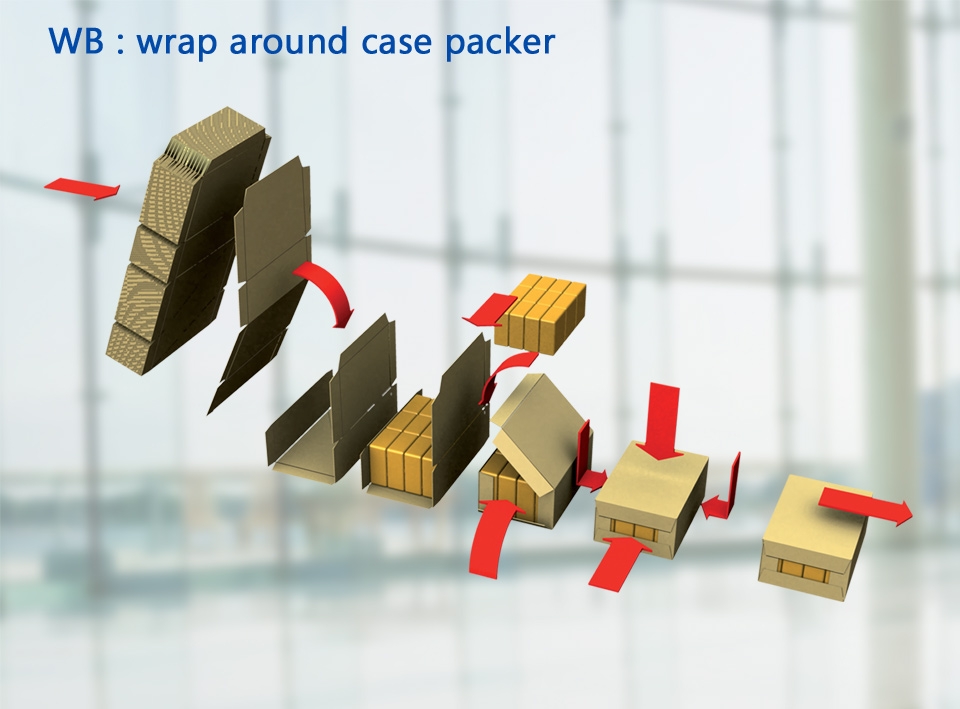
A Wrap Around Case Packer is designed to form corrugated cardboard cases directly around grouped products through an automated folding and sealing process. However, modern machines can differ significantly in their operating speed, control systems, product compatibility, and automation capabilities. Understanding the essential features helps manufacturers choose equipment that matches their production requirements and long-term business objectives.
1. High-Speed Packaging Performance
Production speed is one of the first features manufacturers should evaluate when selecting automated case packing equipment. A machine should be capable of handling the required packaging volume without creating delays in the overall production line.
Modern systems coordinate product feeding, grouping, cardboard blank positioning, folding, and sealing to maintain a continuous workflow.
When comparing machine speeds, manufacturers should consider:
- Required cases per minute.
- Average daily production volume.
- Number of operating shifts.
- Product feeding consistency.
- Expected production increases.
It is important to distinguish between maximum advertised speed and actual operating performance. Product characteristics, carton dimensions, and machine changeovers can influence achievable output.
2. Flexible Product Handling Capabilities
Manufacturing facilities may handle products with different shapes, dimensions, and weights. A modern case packer should accommodate the products used in the facility without compromising packaging accuracy.
For example, beverage bottles, cans, jars, cartons, and household containers may require different grouping arrangements and handling mechanisms.
Look for equipment that offers suitable product guides, adjustable handling components, and compatible grouping configurations. This flexibility can help manufacturers manage changing packaging requirements without making major modifications to their production lines.
3. Automatic Corrugated Blank Feeding
Automatic cardboard blank feeding is an essential feature because it reduces manual intervention during carton preparation.
Modern machines use dedicated blank magazines and feeding mechanisms to supply flat corrugated sheets to the packaging section.
An effective feeding system should:
- Separate individual cardboard blanks accurately.
- Maintain consistent blank positioning.
- Support the required cardboard dimensions.
- Minimize feeding errors and material jams.
- Allow convenient material replenishment.
Reliable blank feeding helps maintain consistent carton formation and reduces unnecessary production interruptions.
4. Accurate Product Grouping and Alignment
Before a carton is formed, individual products must be arranged into the correct case configuration. Accurate grouping is essential for maintaining packaging quality and preventing product displacement.
Modern case packing systems use mechanical guides, sensors, and synchronized transfer mechanisms to position products correctly.
The grouping system should support the required number of products per case and maintain consistent spacing throughout the packaging cycle.
Proper alignment also helps ensure that the cardboard blank folds correctly around the product group.
5. Efficient Carton Folding and Sealing Mechanisms
The folding and sealing sections directly influence the strength and appearance of finished shipping cases.
A modern machine should provide controlled folding operations that position cardboard panels and flaps accurately. Depending on the carton design, the sealing section may use hot-melt adhesive or another suitable sealing method.
Important features to evaluate include:
- Consistent folding accuracy.
- Reliable flap positioning.
- Controlled adhesive application.
- Compatibility with specified corrugated materials.
- Easy access for inspection and cleaning.
Proper folding and sealing help create structurally sound cases that can withstand normal warehouse handling and transportation conditions.
6. Advanced Control and Monitoring Systems
Modern packaging equipment increasingly uses programmable control systems to coordinate machine operations and monitor production performance.
A user-friendly control interface allows operators to manage operating parameters, adjust settings, and identify potential problems.
Useful control features may include:
- Touchscreen operator interfaces.
- Programmable machine settings.
- Production status monitoring.
- Fault notifications and diagnostic information.
- Sensor-based process control.
- Safety interlocks and emergency stop functions.
These capabilities help operators manage the equipment more effectively and respond to operational issues before they cause extended downtime.
7. Quick and Convenient Changeover
Manufacturers that handle multiple product formats need equipment that can accommodate different carton dimensions and product arrangements.
Frequent manual adjustments can increase downtime and affect production schedules. For this reason, convenient changeover capabilities are an important consideration.
Depending on the machine design, useful features may include adjustable guides, accessible setup points, stored operating recipes, and simplified adjustment procedures.
Faster changeovers can help manufacturers move between production formats with fewer interruptions.
8. Compact Design and Easy Maintenance Access
Factory floor space is often limited, particularly in facilities with multiple production and packaging machines.
A compact equipment layout can help manufacturers use available space more effectively. However, machine dimensions should never be evaluated without considering operator access, material replenishment, and maintenance requirements.
Maintenance accessibility is equally important. Components that are easy to inspect and service can simplify routine maintenance and reduce the time required for certain repairs.
Manufacturers should review the complete machine layout before installation to ensure sufficient space for safe operation and servicing.
9. Integration with Existing Packaging Equipment
A modern case packer should work efficiently with other machines in the production environment.
Integration with upstream and downstream equipment helps maintain a consistent flow of products throughout the packaging process.
Common integration points include:
- Filling and labeling machines.
- Product inspection systems.
- Conveyor belts and transfer mechanisms.
- Coding and marking equipment.
- Case inspection systems.
- Automatic palletizing systems.
Control compatibility and conveyor synchronization should be reviewed during equipment selection. Proper integration helps prevent product accumulation and reduces bottlenecks between production stages.
10. Energy Efficiency and Material Optimization
Operating expenses are an important consideration when selecting packaging machinery. Manufacturers should evaluate equipment efficiency alongside production capacity and packaging quality.
Energy consumption may depend on motor specifications, operating speed, machine configuration, and production schedules.
Material optimization is also important. Wrap-around systems use flat corrugated blanks that are formed around grouped products during the packaging cycle. Selecting appropriately sized blanks can help avoid excessive cardboard use while maintaining the necessary carton strength.
Businesses should compare energy requirements and material consumption under realistic operating conditions rather than relying only on general efficiency claims.
11. Reliable Safety Features
Operator safety should be a priority when choosing automated packaging equipment.
Modern machines should include appropriate protective measures to reduce exposure to moving components and other mechanical hazards.
Depending on the design, important safety features may include:
- Emergency stop buttons.
- Protective guards and access doors.
- Safety interlocks.
- Clearly marked operating controls.
- Appropriate electrical protection.
- Safe maintenance access.
Manufacturers should also ensure that machine installation and operation follow applicable workplace safety requirements.
12. Strong Maintenance and Technical Support
Even well-designed packaging machinery requires regular servicing to maintain reliable performance.
Before purchasing equipment, manufacturers should evaluate the maintenance requirements and technical support available from the supplier.
Important considerations include spare parts availability, maintenance documentation, operator training, troubleshooting assistance, and warranty arrangements.
A clear preventive maintenance plan can help identify worn components, feeding problems, and sealing issues before they cause significant production interruptions.
How to Select Features Based on Your Production Needs
Not every manufacturing facility requires the same combination of machine features. The ideal configuration depends on production volume, product specifications, packaging materials, and existing automation levels.
A practical selection process should include the following steps:
- Analyze current operations: Identify packaging bottlenecks and areas where manual intervention creates delays.
- Define production targets: Establish the required packaging speed and expected future capacity.
- Review product specifications: Confirm dimensions, weight, fragility, and grouping requirements.
- Evaluate carton requirements: Check cardboard grade, blank dimensions, and case configurations.
- Assess integration needs: Review compatibility with existing production and packaging equipment.
- Compare maintenance requirements: Consider service accessibility, spare parts, and technical support.
- Review total ownership costs: Evaluate purchase, installation, energy, maintenance, and operating expenses.
This approach helps manufacturers prioritize features that deliver practical operational value rather than paying for unnecessary capabilities.
Conclusion
A modern wrap-around case packing machine should offer more than high-speed carton formation. Features such as accurate product grouping, automatic blank feeding, reliable folding and sealing, flexible changeovers, advanced controls, and production line integration all contribute to efficient packaging operations.
Manufacturers should evaluate these features according to their actual production requirements, available factory space, and long-term operating objectives. Selecting properly configured equipment and maintaining it regularly can help improve packaging consistency, reduce downtime, and support dependable manufacturing performance.