
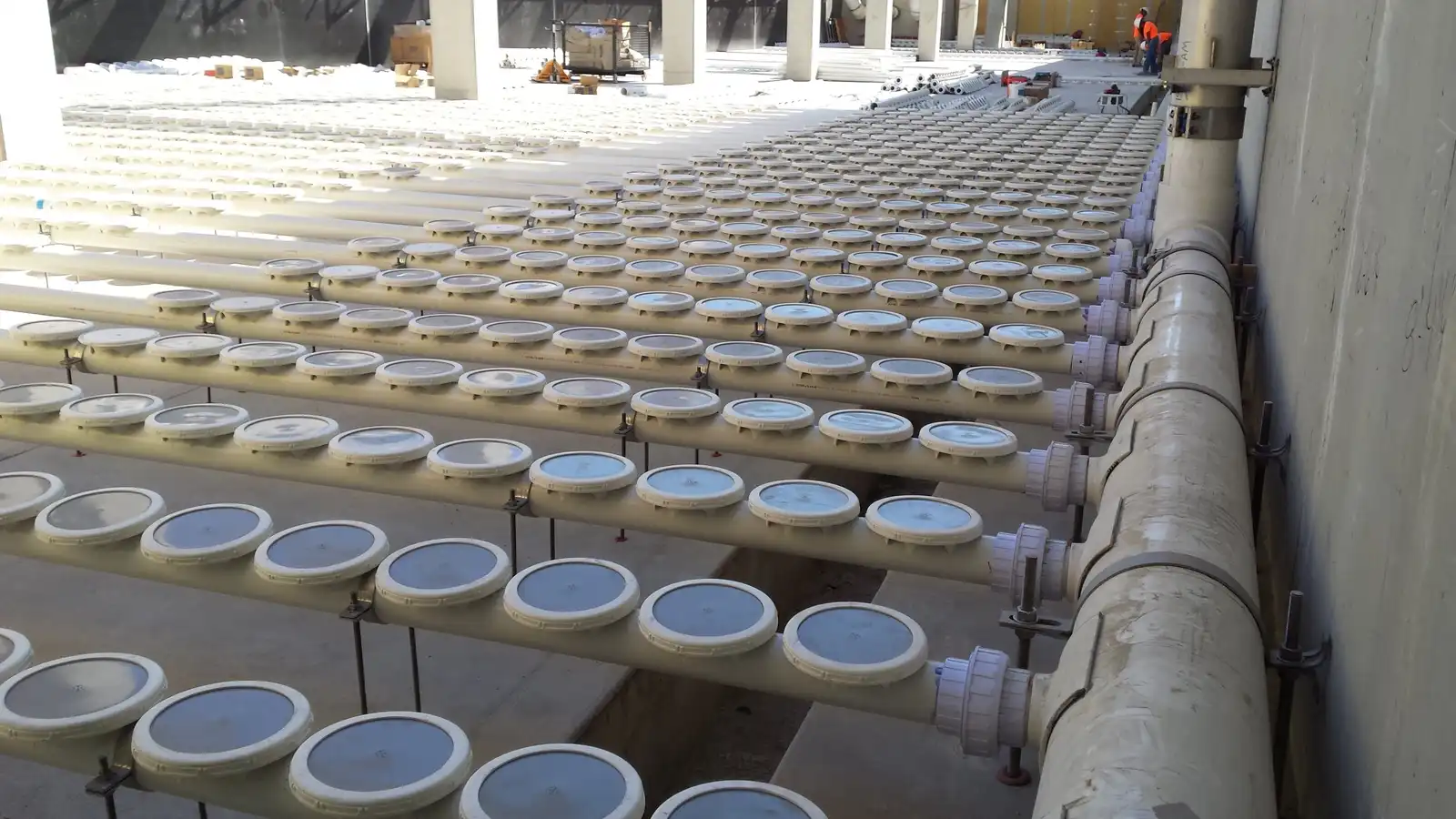
Biological wastewater treatment depends heavily on the availability of oxygen to support the microorganisms responsible for breaking down organic pollutants. In aerobic treatment systems, maintaining sufficient dissolved oxygen is essential for biological activity, effective pollutant removal, and stable plant operation. However, supplying oxygen efficiently can be challenging, particularly in treatment facilities handling large wastewater volumes or fluctuating organic loads.
A widely used solution for improving aeration performance is the Disc Diffuser Aerator, which introduces air into wastewater through a specially designed membrane surface. It produces numerous small air bubbles that rise through the water, allowing oxygen to transfer into the liquid. This process supports microbial growth, improves biological treatment conditions, and helps wastewater facilities maintain consistent treatment performance while managing energy consumption.
What Is a Disc Diffuser Aerator?
A disc diffuser aerator is an aeration device installed at the bottom of a wastewater treatment tank. It typically consists of a circular support body and a flexible membrane containing multiple small openings.
When compressed air enters the diffuser, the membrane openings release air bubbles into the surrounding wastewater. These bubbles rise toward the water surface while transferring oxygen into the liquid.
Disc diffusers are commonly used in activated sludge systems, biological treatment reactors, and other aerobic wastewater treatment applications.
Depending on their membrane design, they are generally available in two main configurations:
- Fine-bubble disc diffusers: Produce relatively small bubbles that provide a larger gas-liquid contact area and generally higher oxygen transfer efficiency.
- Coarse-bubble disc diffusers: Produce larger bubbles that provide stronger mixing and are useful in applications where solids suspension is important.
The appropriate diffuser type depends on treatment requirements, wastewater characteristics, tank dimensions, and energy efficiency objectives.
How Does a Disc Diffuser Aerator Work?
The working principle of a disc diffuser aerator is based on introducing compressed air into wastewater and allowing oxygen to transfer from the rising bubbles into the surrounding liquid.
The process involves several stages.
1. Compressed Air Supply
An air blower supplies compressed air through a network of pipelines connected to the diffusers installed at the bottom of the treatment tank.
The blower must provide sufficient airflow and pressure to overcome the water depth, pipeline resistance, and diffuser operating pressure.
2. Air Distribution Through the Membrane
Compressed air enters the diffuser body and spreads across the flexible membrane.
As air pressure increases, the membrane openings release air into the wastewater. The design of these openings influences bubble size, airflow distribution, and aeration performance.
3. Formation of Air Bubbles
The diffuser produces multiple bubbles that move upward through the wastewater.
Fine bubbles generally provide a greater total surface area for a given volume of air compared with larger bubbles. This creates more opportunities for oxygen to transfer into the surrounding water.
4. Oxygen Transfer into Wastewater
As the bubbles rise, oxygen moves from the air into the liquid.
This increases dissolved oxygen availability, allowing aerobic microorganisms to carry out biological oxidation and break down organic pollutants.
The actual oxygen transfer rate depends on bubble size, water depth, temperature, dissolved oxygen concentration, and wastewater characteristics.
5. Support for Biological Treatment
Once dissolved oxygen is available, microorganisms use it to consume biodegradable organic matter.
This process helps reduce biochemical oxygen demand (BOD) and chemical oxygen demand (COD). Adequate oxygen also supports nitrifying bacteria involved in ammonia removal.
Major Benefits of Using Disc Diffuser Aerators
Disc diffuser aerators offer several advantages for wastewater treatment facilities. Their effectiveness depends on proper equipment selection, installation, and operating conditions.
1. Improved Oxygen Transfer Efficiency
Fine-bubble disc diffusers create numerous small bubbles with a relatively large combined surface area.
This increases the contact area between air and wastewater, supporting effective oxygen transfer and helping maintain suitable dissolved oxygen levels.
2. Better Biological Treatment Performance
Aerobic microorganisms require oxygen to break down organic contaminants.
By maintaining sufficient oxygen availability, disc diffusers help create suitable conditions for microbial activity, supporting more consistent biological treatment and pollutant removal.
3. Potential Energy Savings
Aeration is often one of the largest energy-consuming processes in wastewater treatment plants.
Efficient oxygen transfer can reduce the amount of air required to achieve a particular oxygen demand. This may lower blower energy consumption when the system is properly designed and controlled.
However, actual energy savings depend on diffuser condition, blower efficiency, operating pressure, and wastewater characteristics.
4. Uniform Air Distribution
Disc diffusers can be arranged across the tank floor to distribute air throughout the treatment zone.
Proper spacing helps reduce poorly aerated areas and supports more consistent biological conditions.
5. Compact Installation
Their circular design allows disc diffusers to be installed in different tank configurations.
Multiple units can be connected to an air distribution network, making them suitable for both new wastewater treatment installations and selected aeration system upgrades.
6. Versatile Applications
Disc diffuser aerators are used in municipal sewage treatment, industrial wastewater treatment, biological reactors, and other processes requiring controlled aeration.
Their availability in different sizes and membrane materials allows facilities to select equipment according to their specific operating conditions.
Main Components of a Disc Diffuser Aeration System
An effective aeration system includes several interconnected components that work together to supply and distribute air.
Diffuser Membrane
The membrane contains small openings through which compressed air enters the wastewater.
Common membrane materials include EPDM and silicone. Material selection depends on chemical exposure, temperature, wastewater composition, and expected service life.
Support Body
The support body provides structural strength and holds the membrane in position.
It is designed to distribute air across the membrane surface and maintain stable diffuser operation.
Air Blower
The blower supplies the compressed air required for aeration.
Its capacity must be selected according to the oxygen demand, diffuser pressure requirements, and total airflow needed by the treatment system.
Air Distribution Pipelines
Pipelines transport compressed air from the blower to individual diffuser units.
Proper pipe sizing and arrangement help maintain balanced airflow throughout the treatment tank.
Control Valves and Monitoring Equipment
Valves regulate airflow to different sections of the aeration system.
Dissolved oxygen sensors and airflow monitoring instruments help operators adjust aeration according to changing treatment requirements.
Fine Bubble vs. Coarse Bubble Disc Diffusers
Selecting the correct bubble size is important for achieving the desired balance between oxygen transfer and mixing.
| Feature | Fine Bubble Diffuser | Coarse Bubble Diffuser |
|---|---|---|
| Bubble size | Smaller | Larger |
| Oxygen transfer | Generally higher | Generally lower |
| Mixing effect | Moderate | Stronger |
| Air requirement | Often lower for equivalent oxygen transfer under suitable conditions | May require higher airflow |
| Common applications | Aerobic biological treatment | Mixing and applications with higher solids concerns |
Fine-bubble diffusers are commonly selected when oxygen transfer efficiency is a priority. Coarse-bubble diffusers may be more appropriate when stronger mixing or reduced susceptibility to certain fouling conditions is required.
The final selection should consider the complete treatment process rather than oxygen transfer alone.
Applications of Disc Diffuser Aerators in Wastewater Treatment
Disc diffuser aerators are used in several biological treatment processes because of their ability to supply oxygen and support effective mixing.
Municipal Sewage Treatment Plants
Municipal wastewater contains organic matter generated by residential and commercial activities.
Disc diffusers supply oxygen to aerobic treatment tanks, helping microorganisms break down organic pollutants and improve effluent quality.
Industrial Wastewater Treatment
Industries such as food processing, textiles, pharmaceuticals, and chemical manufacturing generate wastewater with varying oxygen demands.
Disc diffuser systems can provide controlled aeration for biological treatment, provided that toxic or inhibitory substances are appropriately managed.
Activated Sludge Systems
In conventional activated sludge treatment, aeration supports suspended microbial growth and maintains the dissolved oxygen required for biological oxidation.
Disc diffusers are commonly installed at the bottom of aeration tanks to distribute oxygen throughout the treatment volume.
Moving Bed Biofilm Reactor Systems
MBBR systems use carrier media to support attached microbial growth.
Disc diffusers can supply oxygen and maintain carrier movement in aerobic reactors, helping microorganisms remain in contact with wastewater.
Biological Nutrient Removal
Aerobic treatment zones use oxygen to support nitrification, which converts ammonia into nitrate.
Disc diffuser aeration systems can help maintain the oxygen conditions needed for this biological process. Separate anoxic zones are generally used when denitrification is required.
Factors That Influence Disc Diffuser Performance
The efficiency of a disc diffuser aerator depends on several operating and design parameters.
Bubble Size
Smaller bubbles generally provide more surface area for oxygen transfer. However, bubble size can change because of membrane condition, airflow rate, and diffuser design.
Water Depth
Greater submergence generally increases the time bubbles remain in contact with wastewater and can improve oxygen transfer.
However, deeper installation also increases the pressure that blowers must overcome.
Airflow Rate
Airflow must be selected according to the biological oxygen demand and mixing requirements.
Excessive airflow can waste energy, while insufficient airflow may reduce dissolved oxygen and affect microbial activity.
Wastewater Characteristics
Industrial wastewater may contain oils, surfactants, suspended solids, and chemicals that affect bubble behavior and oxygen transfer.
These characteristics should be considered when selecting diffuser materials and operating conditions.
Membrane Condition
Over time, diffuser membranes may experience fouling, scaling, wear, or damage.
Changes in membrane condition can increase pressure requirements and reduce aeration efficiency.
Maintenance Practices for Long-Term Aeration Efficiency
Routine maintenance helps prevent diffuser problems and maintain reliable oxygen transfer.
Important maintenance activities include:
- Inspecting membranes for cracks, damage, and deterioration.
- Monitoring blower pressure and airflow.
- Checking pipelines and connections for air leaks.
- Inspecting diffusers for uneven bubble distribution.
- Cleaning membranes according to manufacturer recommendations.
- Monitoring dissolved oxygen levels in different tank locations.
- Checking valves and airflow control equipment.
Regular performance monitoring can help operators identify fouling or pressure changes before they significantly affect treatment efficiency.
How Disc Diffuser Aerators Support Sustainable Wastewater Treatment
Efficient aeration contributes to better biological treatment and more responsible energy management.
When oxygen transfer is optimized, microorganisms can break down organic pollutants effectively without unnecessary air supply. This helps treatment plants balance biological performance with electricity consumption.
Disc diffuser systems can also support improved nutrient treatment by maintaining suitable aerobic conditions for nitrifying bacteria.
In addition, effective aeration helps reduce the risk of oxygen-deficient conditions that can disrupt biological treatment and affect final effluent quality.
However, the overall sustainability of an aeration system depends on diffuser durability, blower efficiency, maintenance practices, and appropriate process control.
Conclusion
A disc diffuser aerator improves oxygen transfer in biological wastewater treatment by releasing air through a membrane and creating bubbles that transfer oxygen into the surrounding water. This supports aerobic microorganisms responsible for breaking down organic pollutants and maintaining effective biological treatment conditions.
With benefits such as improved oxygen distribution, efficient aeration, flexible installation, and potential energy savings, disc diffuser systems are an important component of modern wastewater treatment plants. Selecting suitable membrane materials, airflow capacity, diffuser spacing, and operating conditions is essential for achieving reliable performance and maintaining long-term treatment efficiency.