

Grinding is a crucial process in many industries, used to reduce particle size and improve material properties for further processing. Two common methods used are wet grinding and dry grinding, each with distinct mechanisms, advantages, and applications. Understanding the differences between them helps manufacturers choose the right approach for their production needs.
A wet grinding mill is often preferred when fine particle size, uniform dispersion, and controlled processing conditions are required. Many industries rely on a Wet Grinding Mill because it delivers consistent results, especially when working with complex or sensitive materials.
What Is Wet Grinding?
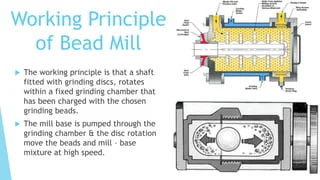
Wet grinding involves processing materials in a liquid medium, typically water or another solvent. The solid particles are suspended in this liquid, forming a slurry that is then milled using grinding media such as beads or balls.
Key characteristics of wet grinding include:
- Processing materials in a liquid state
- Reduced dust formation
- Better temperature control during milling
- Improved particle dispersion
This method is widely used when precision and uniformity are critical.
What Is Dry Grinding?
Dry grinding, on the other hand, processes materials without any liquid medium. The material is ground in a dry state using mechanical force, impact, or compression.
Key characteristics of dry grinding include:
- No liquid involved in the process
- Higher dust generation
- Greater heat buildup
- Suitable for coarse to medium particle size reduction
Dry grinding is often used when moisture-sensitive materials are involved or when downstream processing does not require suspension.
Key Differences Between Wet and Dry Grinding
1. Grinding Medium
- Wet grinding: Uses a liquid medium to form a slurry
- Dry grinding: Processes materials without any liquid
The presence of liquid in wet grinding significantly affects how particles interact and break down.
2. Particle Size and Uniformity
Wet grinding generally produces finer and more uniform particles due to better dispersion and reduced friction. Dry grinding may result in a broader particle size distribution.
3. Heat Generation
- Wet grinding helps dissipate heat effectively through the liquid medium
- Dry grinding often generates more heat due to friction
This makes wet grinding more suitable for heat-sensitive materials.
4. Dust Control
Wet grinding minimizes dust formation, making it safer and cleaner for industrial environments. Dry grinding, however, can produce significant airborne particles that require additional filtration systems.
5. Energy Efficiency
Wet grinding is often more energy-efficient for fine particle production, while dry grinding may require more energy for achieving similar fineness levels.
Applications of Wet Grinding
Wet grinding is widely used in industries that require high precision and uniform dispersion, such as:
- Pharmaceuticals for drug formulation
- Paints and coatings for pigment dispersion
- Food processing for smooth textures
- Cosmetics for stable emulsions
- Chemicals for fine suspensions
These applications benefit from the controlled environment provided by wet milling systems.
Applications of Dry Grinding
Dry grinding is typically used in applications where liquid processing is not suitable, including:
- Cement and construction materials
- Mineral processing
- Bulk material size reduction
- Some food powders and spices
It is favored when moisture could negatively affect the final product.
Advantages of Wet Grinding Over Dry Grinding
Wet grinding offers several advantages that make it the preferred choice in many industries:
- Produces finer and more consistent particles
- Reduces dust and improves workplace safety
- Enhances material dispersion and stability
- Prevents overheating during processing
These benefits make wet grinding particularly valuable for high-precision applications.
Conclusion
Both wet and dry grinding methods play important roles in industrial processing, but they serve different purposes. Wet grinding is ideal for achieving fine, uniform particles and stable dispersions, while dry grinding is better suited for bulk size reduction without the use of liquids.
For industries that require precision, consistency, and high-quality dispersion, a wet grinding mill remains the most effective solution. By understanding the differences between these two methods, manufacturers can select the right process to optimize efficiency and product quality.