
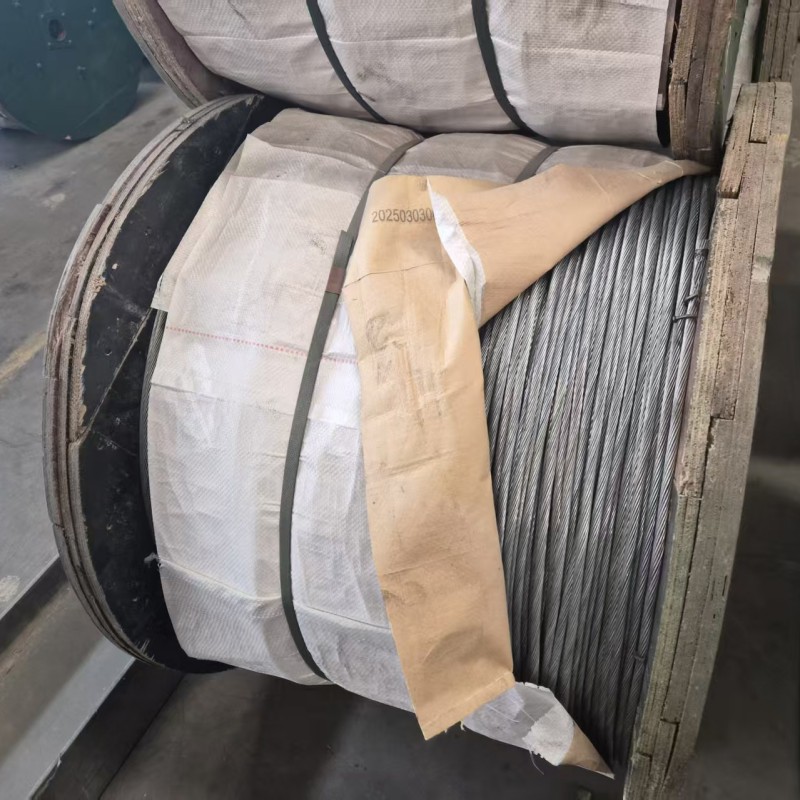
A steel wire installed outdoors faces a slow but persistent challenge: the environment. Rainwater, airborne pollutants, humidity, and temperature fluctuations can all contribute to corrosion. Once rust begins to weaken exposed steel, the consequences may extend beyond appearance. A support cable can lose mechanical reliability, maintenance costs can rise, and replacement work may become necessary long before the planned service life of an installation.
Hot-dip galvanizing addresses this problem through a metallurgical coating process that protects steel with zinc. When applied to stranded wire, the treatment helps shield the individual steel wires while preserving the product’s usefulness in tension-bearing applications. Hot Dipped Galvanized Stranded Wire is therefore considered for infrastructure, utility networks, construction projects, and other installations where mechanical strength must be combined with resistance to outdoor exposure.
What Happens During Hot-Dip Galvanizing?
Hot-dip galvanizing is not simply a layer of paint applied to a steel surface. It is a controlled process in which prepared steel is immersed in molten zinc. The zinc reacts with the iron in the steel to form a series of zinc-iron alloy layers, usually covered by an outer zinc layer.
The result is a bonded metallic coating rather than a loose surface covering. This distinction helps explain why hot-dip galvanized products are widely used in outdoor infrastructure.
For stranded wire, the details of the manufacturing process matter. The coating method, wire preparation, zinc bath conditions, and final product requirements all influence coating uniformity and performance. Buyers should confirm whether the product is galvanized as individual wires before stranding or treated through another specified manufacturing route. The distinction can affect coating characteristics and suitability.
How Zinc Protects Steel From Corrosion
Steel corrodes when its surface reacts with oxygen and moisture. In environments containing salts or industrial contaminants, this process can become more aggressive.
Zinc protects steel through two complementary mechanisms.
Barrier protection: The coating separates the underlying steel from direct contact with moisture and oxygen. As long as the coating remains sufficiently intact, it slows the conditions that allow rust to develop.
Sacrificial protection: Zinc is more electrochemically active than iron. If a small area of steel becomes exposed, the surrounding zinc can corrode preferentially under suitable conditions, helping protect the exposed steel.
This sacrificial effect is particularly valuable around minor scratches or damaged areas. It does not mean that large coating losses can be ignored, however. Severe damage, prolonged immersion, and aggressive chemical exposure may still require repair or replacement.
Why Stranded Construction Adds Practical Value
The protective coating explains the corrosion resistance, but the wire arrangement determines how the product behaves mechanically.
Stranded wire consists of multiple steel wires laid together in a defined pattern. Compared with a single solid steel member, this construction can provide greater flexibility during handling and installation.
That flexibility is useful when a cable needs to follow a particular route, connect to an anchoring arrangement, or accommodate the geometry of a support system. It also makes the product suitable for applications where tensile forces are carried through a strand rather than a rigid bar.
The number of wires, their individual diameters, and the stranding pattern influence the finished product’s properties. These details should be selected according to the intended load and installation method.
Where Durability Makes a Difference
Hot-dip galvanized stranded wire is useful in projects where steel remains exposed to weather or where access for frequent maintenance is limited. Its role varies from one industry to another.
Utility Poles and Overhead Line Support
<AsyncImage query=”overhead utility pole galvanized steel guy strand wire support” aspectRatio=”16:9″ width=”100%”/>
Utility poles must remain stable while supporting overhead cables and equipment. Wind, uneven ground conditions, and mechanical tension can place significant forces on pole structures.
Galvanized steel strand is commonly used in suitable guying arrangements to help stabilize poles. The zinc coating provides additional protection against outdoor exposure, while the strand construction supplies the required tensile properties when correctly specified.
For these installations, the complete assembly matters. Anchor rods, clamps, fittings, and foundations must all be compatible with the design loads.
Telecommunications Infrastructure
Communication towers and antenna structures are often located in open areas where wind and rain are unavoidable. Guy wires may be used to provide stability and distribute structural forces to ground anchors.
Hot-dip galvanized strands can be suitable for specified support arrangements because they combine tensile strength with a protective zinc coating. The strand’s breaking strength, coating specification, and compatibility with tower hardware should be verified before installation.
Construction and Structural Projects
Construction projects may use galvanized strands in selected tensioning, bracing, and support applications. Outdoor exposure makes corrosion protection especially important when steel components are expected to remain in place for extended periods.
However, ordinary galvanized strand is not automatically suitable for prestressed concrete, structural tendons, or lifting operations. Those applications require products manufactured and certified for their specific purpose. Engineers should verify the applicable product standard rather than relying on a general material description.
Agricultural Fencing and Enclosures
Fencing systems are exposed to rain, soil moisture, sunlight, and physical contact with animals or equipment. Galvanized steel wire products are widely used in agricultural settings because zinc coatings can help slow rust formation.
Stranded versions may be appropriate for certain tensioned support and enclosure systems. Selection should account for fence length, tension, post spacing, expected mechanical loads, and local weather conditions.
Industrial and Outdoor Facilities
Industrial sites may use steel strands in support, bracing, and other mechanical installations. In outdoor locations, a galvanized surface can help reduce corrosion-related deterioration.
The environment must still be assessed carefully. Facilities near chemical processing areas, coastal sites, or locations with heavy industrial emissions may require a more demanding coating specification or an alternative corrosion protection system.
Hot-Dip Galvanizing Compared With Other Protective Methods
Not all corrosion protection methods behave in the same way. The most appropriate choice depends on the product, exposure conditions, expected service life, and maintenance plan.
| Protection method | How it works | Main consideration |
|---|---|---|
| Hot-dip galvanizing | Forms a zinc and zinc-iron coating through immersion in molten zinc | Provides barrier and sacrificial protection |
| Electro-galvanizing | Deposits zinc using an electrical process | Coating thickness and application requirements differ |
| Paint coating | Creates a protective film over the steel | Performance depends on surface preparation and coating maintenance |
| Polymer coating | Covers the steel with a synthetic protective layer | Can provide useful isolation but may be damaged by abrasion |
| Stainless steel | Uses alloy composition to resist corrosion | Material cost and grade selection require consideration |
Hot-dip galvanizing is often attractive for outdoor steel components because of its bonded coating and sacrificial protection mechanism. Nevertheless, it is not automatically the best option for every environment. Highly aggressive chemical conditions or specialized applications may require a different material or a combined protection system.
Factors That Determine the Service Life of the Coating
A galvanized strand does not have one universal service life. Its durability depends on how quickly the zinc coating is consumed and whether mechanical damage exposes the steel.
Several factors influence this process:
- Atmospheric conditions: Humidity, rainfall, and airborne pollutants affect zinc corrosion rates.
- Salt exposure: Coastal air and de-icing salts can accelerate coating consumption.
- Industrial contamination: Certain chemicals and pollutants may be particularly aggressive toward zinc.
- Water retention: Areas where moisture remains trapped may experience more rapid deterioration.
- Mechanical abrasion: Repeated rubbing, impact, or contact with sharp surfaces can damage the coating.
- Coating thickness: The amount of zinc available influences how long protection may be maintained under a given exposure.
For this reason, product specifications should identify the coating requirements and relevant test methods. A strand intended for an ordinary inland environment may not be appropriate for a coastal or industrial site.
How to Assess Product Quality Before Purchase
Two galvanized strands may look similar but differ in strength, wire construction, and coating characteristics. A purchasing decision should be based on measurable specifications.
Verify the Steel Strand Construction
Check the number of wires, individual wire diameter, overall strand diameter, and lay configuration. These characteristics influence mechanical performance and compatibility with fittings.
Review Tensile Requirements
Confirm the specified tensile strength or minimum breaking force. The product must be appropriate for the loads expected in service, with the necessary engineering safety factors.
Examine the Zinc Coating Specification
Ask the supplier for coating thickness or mass requirements, coating uniformity information, and applicable test results. The required zinc protection should reflect the environment in which the strand will be installed.
Request Manufacturing Documentation
Technical data sheets and inspection certificates help establish whether a product meets the project specification. For critical infrastructure, traceability and documented quality control are especially important.
Confirm Compatibility With Accessories
A strand’s performance can be compromised by unsuitable clamps, sockets, anchors, or other fittings. Confirm that the accessories are designed for the strand’s construction and intended loading conditions.
Installation Practices That Preserve the Protective Layer
Even a high-quality galvanized coating can be damaged by careless handling. Installation procedures should protect both the mechanical structure of the strand and its zinc surface.
Before use, inspect the product for kinks, broken wires, crushed sections, and visible coating damage. Store it away from standing water, corrosive chemicals, and unnecessary contact with abrasive materials.
During installation, avoid dragging the strand over rough surfaces or forcing it around tight corners. Use fittings designed for the product, and follow the manufacturer’s recommendations for termination and tensioning. If the installation requires cutting, any exposed ends should be treated according to the applicable project specification and approved repair method.
A few practical precautions can make a substantial difference:
- Use suitable handling equipment to prevent crushing or deformation.
- Maintain the specified bend radius.
- Avoid unnecessary twisting during unreeling and installation.
- Protect the strand from sharp edges and repeated friction.
- Check clamps and anchor points for correct seating.
- Inspect damaged coating areas and arrange approved repairs where necessary.
Inspection Should Not Be Overlooked
Galvanizing reduces corrosion risk, but it does not remove the need for maintenance. Periodic inspections help identify deterioration before it becomes a structural concern.
Inspect accessible sections for rust staining, coating loss, broken wires, deformation, and loose connections. Pay particular attention to areas around clamps and anchors, where movement and water retention can create additional stress.
Inspection frequency should reflect the importance of the installation and the severity of its environment. A support system in a coastal industrial facility may need closer attention than a comparable installation in a mild inland climate.
Where the strand supports a safety-critical structure, qualified personnel should determine whether observed damage affects its continued use.
A Note on Safety-Critical Applications
The phrase galvanized stranded wire covers products with different constructions and intended uses. A general-purpose strand should not be assumed suitable for overhead lifting, bridge tendons, prestressed concrete, or other specialized load-bearing functions.
These applications may require controlled manufacturing tolerances, particular tensile properties, specialized coatings, and compliance with dedicated standards. Substitution should only occur after the design requirements have been reviewed and approved by a qualified engineer.
Likewise, galvanized steel strand should not be selected as an electrical grounding conductor merely because it is metallic. Electrical earthing systems have their own material, conductivity, corrosion, and regulatory requirements.
Durability Begins With the Right Specification
The appeal of hot-dip galvanized stranded wire lies in a combination of properties: steel provides tensile strength, the stranded structure supports practical installation, and the zinc coating helps resist corrosion through barrier and sacrificial protection.
These qualities make it a useful option for specified utility, telecommunications, construction, agricultural, and industrial support applications. Its actual service performance, however, depends on coating quality, environmental exposure, correct fittings, and installation workmanship.
The most effective approach is to treat galvanized strand as an engineered component rather than a generic steel cable. Confirm its construction, mechanical rating, coating specification, and applicable standards before purchase. With the right product and a suitable inspection plan, it can provide durable service in many outdoor and industrial projects.