
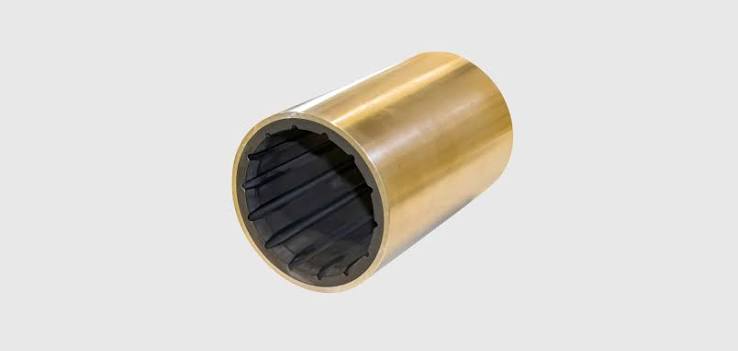
Material selection plays a critical role in the performance, durability, and reliability of modern bearing systems. In marine and industrial environments, bearings are frequently exposed to continuous moisture, changing temperatures, mechanical loads, and potentially corrosive substances. These conditions make it essential to use materials that can withstand demanding operating environments while maintaining low friction and effective lubrication.
Modern Water Lubricated Bearings are manufactured using a variety of materials, including rubber, engineering polymers, thermoplastics, and advanced composite compounds. Each material offers different mechanical and chemical properties that influence bearing performance. Understanding these materials helps engineers select suitable solutions for marine propulsion systems, industrial pumps, hydroelectric equipment, and other water-based applications.
Why Material Selection Matters in Water Lubricated Bearings
Unlike conventional oil-lubricated systems, water lubricated bearings operate using water as their primary lubricating medium. Since water has a relatively low viscosity, the bearing material must provide suitable friction characteristics and withstand operating conditions where direct surface contact may occur.
The material must also maintain its structural properties during prolonged exposure to water.
Several factors influence material selection:
- Wear resistance: Helps prevent premature deterioration during continuous operation.
- Corrosion resistance: Protects against damage caused by freshwater, seawater, and chemical exposure.
- Mechanical strength: Allows the bearing to withstand radial and axial loads.
- Friction characteristics: Supports smooth shaft movement and efficient operation.
- Dimensional stability: Helps maintain appropriate bearing clearance.
- Water compatibility: Ensures the material performs reliably in the intended operating environment.
Selecting the correct material can improve equipment reliability and reduce unexpected maintenance requirements.
1. Rubber Materials
Rubber is one of the commonly used materials in water lubricated bearing applications, particularly in marine propulsion systems.
Its flexibility and vibration-absorbing properties make it suitable for equipment that experiences continuous movement and mechanical disturbances.
Key Properties of Rubber Bearings
Rubber bearing materials offer several useful characteristics:
- Good flexibility under mechanical loads.
- Effective vibration and noise absorption.
- Resistance to continuous water exposure.
- Suitable wear performance in properly designed applications.
- Ability to accommodate certain shaft alignment variations.
Different rubber compounds can provide different levels of hardness, elasticity, and chemical resistance.
Common Applications
Rubber-lined bearings are frequently considered for marine propeller shafts, water pumps, and other rotating equipment operating in wet environments.
Their ability to absorb vibration can also help reduce mechanical noise during operation.
However, the selected rubber compound must be compatible with water temperature, chemical composition, and expected operating loads.
2. Engineering Plastics
Engineering plastics have become increasingly important in modern bearing manufacturing because they can combine low friction, dimensional stability, and resistance to water exposure.
Materials such as polyamide and other specialized engineering polymers may be used depending on the application.
Advantages of Engineering Plastics
Engineering plastic bearing materials can provide:
- Good resistance to moisture.
- Relatively low friction characteristics.
- Lightweight construction.
- Useful mechanical strength.
- Resistance to certain chemicals.
- Reduced maintenance requirements in suitable applications.
These properties make engineering plastics useful in selected industrial pumps and water-handling machinery.
Important Considerations
Not every engineering plastic is suitable for continuous water exposure. Some materials may absorb moisture, experience dimensional changes, or lose mechanical strength under particular temperature conditions.
Therefore, engineers must evaluate material specifications before selecting a polymer for demanding applications.
3. Thermoplastic Materials
Thermoplastics are another important category of materials used in modern bearing designs.
They can be processed into different shapes and configurations, allowing manufacturers to produce components with specific dimensional and performance requirements.
Depending on their formulation, thermoplastics can offer good chemical resistance, wear characteristics, and dimensional stability.
Common Thermoplastic Options
Polyethylene (PE): Certain grades provide low-friction properties, chemical resistance, and suitability for water-related applications.
Polyoxymethylene (POM): Also known as acetal, this material offers dimensional stability, stiffness, and good wear characteristics in appropriate operating conditions.
Polyetheretherketone (PEEK): A high-performance engineering thermoplastic known for its mechanical strength, thermal stability, and chemical resistance.
Where Thermoplastics Are Used
Thermoplastic bearing materials can be found in industrial pumps, water circulation equipment, and specialized marine machinery.
The appropriate grade depends on operating pressure, shaft speed, temperature, and the characteristics of the surrounding water.
4. Composite Materials
Composite materials combine two or more material components to achieve performance characteristics that may be difficult to obtain using a single material.
In water lubricated bearing manufacturing, composites can be engineered to improve mechanical strength, wear resistance, and dimensional stability.
Benefits of Composite Bearing Materials
Some important advantages include:
- Improved load-bearing capabilities.
- Enhanced resistance to mechanical wear.
- Better dimensional stability.
- Potentially improved friction characteristics.
- Greater flexibility in material design.
Depending on their composition, composite materials may incorporate polymer matrices, reinforcing fibers, and specialized additives.
Industrial Applications
Composite bearings are useful in selected marine propulsion systems, industrial machinery, and water-handling equipment that operates under demanding conditions.
Their material properties can be adjusted to meet specific application requirements, making them valuable for specialized bearing designs.
5. Stainless Steel Components
Although water lubricated bearing surfaces commonly use nonmetallic materials, stainless steel is frequently used in supporting components and related mechanical assemblies.
Its corrosion resistance makes it useful in equipment exposed to moisture and certain marine environments.
Important Characteristics
Stainless steel can provide:
- High mechanical strength.
- Resistance to many forms of corrosion.
- Structural stability.
- Good durability.
- Suitability for demanding mechanical assemblies.
However, corrosion resistance varies according to stainless steel grade and environmental conditions. Certain seawater applications may require specialized marine-grade alloys.
Proper material pairing is also important to prevent excessive wear or undesirable interactions between the shaft and bearing surfaces.
6. Ceramic and Advanced Hybrid Materials
Advanced bearing technology has encouraged the development of specialized ceramic and hybrid material solutions.
Ceramics are known for their hardness, wear resistance, and chemical stability. Certain ceramic materials may be useful in applications involving abrasive particles or demanding chemical environments.
Hybrid designs combine different material types to balance strength, friction, and wear performance.
However, ceramics can be brittle compared with rubber and polymers, so their suitability depends on impact loads, installation conditions, and the overall bearing configuration.
These materials are generally selected for specialized applications rather than used as universal replacements for conventional bearing materials.
Comparison of Common Water Lubricated Bearing Materials
The following table highlights the general characteristics of commonly considered materials.
| Material | Main Characteristics | Common Applications |
|---|---|---|
| Rubber | Flexible, vibration-absorbing, water-resistant | Marine shafts and pumps |
| Engineering plastics | Lightweight, low friction, chemical resistance | Industrial pumps |
| Thermoplastics | Wear resistance and processing flexibility | Water-handling machinery |
| Composite materials | Strength, durability, and customizable properties | Marine and industrial equipment |
| Stainless steel | Mechanical strength and corrosion resistance | Shafts and supporting components |
| Ceramics | Hardness and wear resistance | Specialized machinery |
The actual performance of each material depends on its grade, formulation, manufacturing quality, and operating conditions.
Factors Affecting Material Performance
Even high-quality bearing materials can experience premature deterioration if operating conditions are unsuitable.
Several environmental and mechanical factors should be considered during material selection.
1. Water Quality
Water may contain sand, sediment, minerals, chemicals, and other suspended particles. These contaminants can increase abrasive wear and damage bearing surfaces.
In applications involving contaminated water, engineers should consider suitable materials and filtration arrangements.
2. Operating Temperature
Temperature affects the mechanical properties of rubber, polymers, and composite materials.
High temperatures may reduce material strength or dimensional stability, while low temperatures can affect flexibility in certain compounds.
The selected material must remain suitable across the equipment’s expected operating temperature range.
3. Mechanical Loading
Continuous radial and axial loads can gradually affect bearing surfaces.
Materials must have sufficient strength and wear resistance to support the intended mechanical loads without excessive deformation.
4. Shaft Speed
Rotational speed influences friction, heat generation, and lubrication-film development.
Material selection should account for the operating speed range and the bearing’s ability to maintain suitable lubrication conditions.
5. Chemical Exposure
Seawater, wastewater, and industrial fluids may contain substances that affect certain materials.
Chemical compatibility should always be evaluated before choosing a bearing material for specialized environments.
How Manufacturers Select the Right Bearing Material
Selecting the correct material involves evaluating the complete operating requirements rather than focusing on a single property.
Manufacturers generally consider several important stages:
- Application analysis: Identify the equipment type, operating environment, and mechanical requirements.
- Load evaluation: Determine the expected radial and axial forces.
- Material assessment: Compare available materials based on strength, wear resistance, and water compatibility.
- Dimensional design: Establish the required bearing dimensions and operating clearance.
- Performance testing: Evaluate material behavior under representative operating conditions.
- Quality inspection: Check dimensional accuracy, surface finish, and manufacturing consistency.
This systematic approach helps ensure that the finished bearing meets the requirements of its intended application.
Maintenance Tips for Longer Material Service Life
Proper maintenance helps preserve bearing materials and maintain reliable machinery performance.
Some useful practices include:
- Regularly inspect bearing surfaces for unusual wear.
- Maintain appropriate water circulation.
- Remove excessive sediment and contaminants.
- Monitor vibration and operating temperature.
- Check shaft alignment and bearing clearance.
- Follow recommended inspection and replacement schedules.
Operators should also investigate unusual noise or changes in operating performance, as these may indicate material deterioration or lubrication problems.
Future Developments in Water Lubricated Bearing Materials
Bearing material technology continues to evolve as manufacturers work toward improved durability, reduced friction, and better environmental performance.
Several developments are influencing modern bearing design.
Advanced Polymer Formulations: New polymer compounds are being developed to improve wear resistance and maintain mechanical stability in demanding environments.
High-Performance Composites: Specialized composite materials offer opportunities to improve load capacity and extend service life.
Improved Manufacturing Processes: Precision molding, machining, and material processing techniques help produce bearings with more consistent dimensions and surface characteristics.
Sustainable Material Development: Manufacturers are increasingly exploring material options and production methods that support environmental objectives.
These developments may expand the range of applications where water lubricated bearing technology can be used effectively.
Conclusion
The materials used in modern water lubricated bearings have a direct influence on their performance, durability, and suitability for different operating environments. Rubber, engineering plastics, thermoplastics, composites, stainless steel, and advanced ceramics each offer specific advantages for particular applications.
Choosing the right material requires careful consideration of water quality, mechanical loads, shaft speed, temperature, and chemical exposure. Proper engineering, manufacturing quality, and regular maintenance are equally important for achieving reliable operation.
Specialized manufacturers such as Techemer contribute to the development of bearing solutions designed for marine and industrial requirements. As material technology advances, water lubricated bearings are expected to remain an important option for equipment that requires dependable performance in water-based operating environments.