

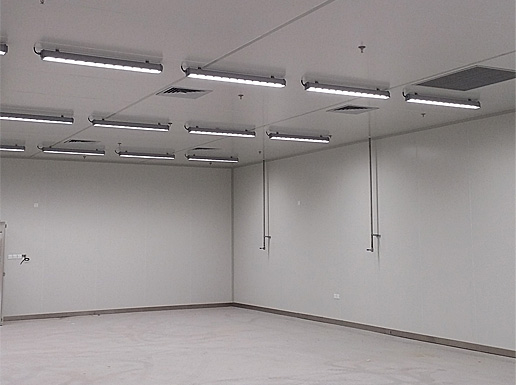
Cleanrooms are essential environments for industries where contamination control is critical. Among the various cleanroom classifications defined by international standards, ISO 5 represents one of the highest levels of cleanliness commonly used in industrial and research applications. Understanding ISO 5 cleanroom particle count limits is important for manufacturers, engineers, and quality professionals who must ensure compliance, product safety, and process reliability. These limits define how clean the air must be and help organizations maintain consistent environmental conditions.
ISO cleanroom standards are established by ISO 14644-1, which classifies cleanrooms based on the concentration of airborne particles. ISO 5 cleanrooms allow only a very small number of particles per cubic meter of air, making them suitable for extremely sensitive operations. Facilities that implement an ISO 5 Cleanroom do so to protect high-value products and processes from microscopic contaminants. These cleanrooms rely on advanced filtration systems, strict airflow control, and disciplined operational practices to maintain compliance with particle count limits at all times.
What Particle Count Limits Mean in ISO 5 Cleanrooms
Particle count limits refer to the maximum allowable number of airborne particles of specific sizes within a defined volume of air. For ISO 5 cleanrooms, these limits are particularly strict. According to ISO standards, an ISO 5 environment permits no more than 3,520 particles of 0.5 micrometers or larger per cubic meter of air. Larger particles are even more tightly controlled, ensuring an exceptionally clean atmosphere.
These limits are not arbitrary. They are based on the understanding that particles at the microscopic level can cause significant problems in sensitive processes. In pharmaceutical manufacturing, particles may carry microorganisms. In electronics production, they can damage circuitry. By defining clear numerical thresholds, ISO 5 standards provide a measurable way to assess and maintain cleanliness.
Why ISO 5 Particle Limits Are So Strict
The strict particle count limits of ISO 5 cleanrooms are driven by the risks associated with contamination. In many applications, even a single particle can compromise an entire batch or system. For example, in sterile drug manufacturing, airborne particles can introduce bacteria or endotoxins. In semiconductor fabrication, particles can cause defects that render chips unusable.
ISO 5 limits are designed to minimize these risks by creating an environment where contamination is statistically unlikely. Achieving this level of control requires precise engineering, continuous monitoring, and strict adherence to cleanroom protocols. The result is a stable environment that supports high-quality outcomes and regulatory compliance.
How Particle Counts Are Measured and Monitored
Particle counts in ISO 5 cleanrooms are measured using specialized instruments called airborne particle counters. These devices sample air and count particles based on size categories defined by ISO standards. Measurements are taken at multiple locations within the cleanroom to ensure uniform cleanliness.
Monitoring is not a one-time activity. ISO 5 cleanrooms require routine testing and ongoing environmental monitoring to verify that particle levels remain within acceptable limits. Any deviation from the standard may indicate issues with filtration systems, airflow patterns, or operational practices. Early detection allows corrective actions before contamination affects products or processes.
Role of HEPA Filtration and Airflow Control
Maintaining ISO 5 particle count limits depends heavily on high-efficiency particulate air filtration. HEPA filters used in ISO 5 cleanrooms are capable of removing at least 99.97 percent of particles as small as 0.3 micrometers. These filters are integrated into ceiling systems that deliver clean air uniformly across the workspace.
Airflow control is equally important. ISO 5 cleanrooms typically use unidirectional, or laminar, airflow to sweep particles away from critical areas. This controlled movement of air prevents particles from settling or recirculating, helping the cleanroom consistently meet particle count requirements.
Industries That Depend on ISO 5 Particle Control
Several industries rely on ISO 5 cleanrooms because of their stringent particle limits. Pharmaceutical and biotechnology companies use them for aseptic processing and sterile filling. Medical device manufacturers depend on them for assembling implantable products. The semiconductor industry requires ISO 5 environments for wafer fabrication and microelectronics assembly.
Research laboratories, optics manufacturing, and aerospace applications also benefit from ISO 5 particle control. In each case, the cleanroom’s ability to maintain low particle counts directly impacts product quality, safety, and performance.
Importance of Compliance and Documentation
Compliance with ISO 5 particle count limits is not just a technical requirement but also a regulatory and quality obligation. Documentation of testing results, maintenance activities, and corrective actions is essential. Regulatory authorities and auditors often review these records to confirm that cleanroom conditions are properly controlled.
Consistent compliance demonstrates a company’s commitment to quality and risk management. It also helps build trust with customers and regulatory bodies by showing that products are manufactured in a controlled and validated environment.
In conclusion, ISO 5 cleanroom particle count limits define one of the highest standards of cleanliness used in modern industry. By understanding these limits and the systems that support them, organizations can better protect sensitive processes, ensure compliance, and maintain exceptional quality across critical applications.