

Self-service kiosks have become increasingly popular in retail, hospitality, and other customer-facing industries. These kiosks allow customers to place orders, make payments, check in, or access information independently, improving efficiency and reducing wait times. While the software of a self-service kiosk drives its core functionality, POS peripherals are essential for enhancing interaction, processing transactions, and ensuring smooth operations.
The Role of POS Peripherals in Self-Service Kiosks
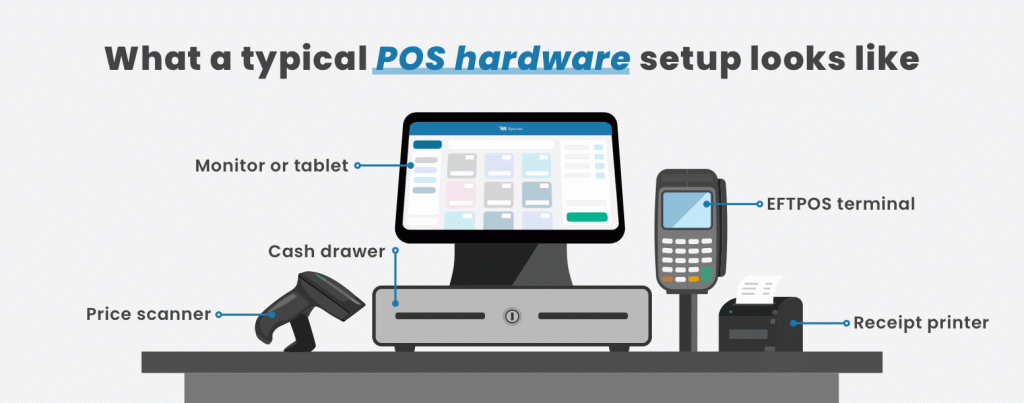
POS peripherals are hardware devices that support and extend the capabilities of point-of-sale systems, and they are equally critical for self-service kiosks. These devices include barcode scanners, receipt printers, payment terminals, cash drawers, and customer-facing displays.
Professional POS Peripherals providers ensure that these devices integrate seamlessly with kiosk software. Proper integration enables kiosks to handle a wide range of functions, from scanning products to printing receipts, completing secure payments, and updating inventory in real time. This combination of software and hardware provides an efficient, reliable, and user-friendly self-service experience.
Key POS Peripherals Used in Self-Service Kiosks
Barcode Scanners
Barcode scanners in kiosks allow customers to quickly scan products, loyalty cards, or coupons. This feature streamlines the ordering process, reduces manual input errors, and ensures accurate product identification. Modern scanners often support multiple code formats and high-speed scanning, which is crucial for busy retail environments.
Receipt Printers
Receipt printers provide customers with transaction records, confirming purchases and offering itemized receipts. In self-service kiosks, thermal receipt printers are commonly used due to their speed, reliability, and low maintenance. Some printers also support custom messaging, branding, or QR codes for loyalty programs, enhancing marketing and customer engagement.
Payment Terminals
Secure payment terminals are critical components of self-service kiosks. They allow customers to pay using credit cards, debit cards, mobile wallets, or contactless payment methods. Integrated EMV chip card readers, NFC-enabled terminals, and secure PIN pads ensure transactions are safe, quick, and compliant with industry standards.
Cash Handling Components
While many self-service kiosks are cashless, some still offer cash payment options using cash dispensers or cash acceptors. These peripherals securely handle bills and coins, automatically providing change and updating the POS system to maintain accurate records.
Customer-Facing Displays
Customer-facing displays guide users through the transaction process, show product details, confirm scanned items, and display payment information. They also provide visual prompts, advertisements, or loyalty rewards, making the self-service experience more intuitive and engaging.
Integration and Connectivity
POS peripherals in self-service kiosks rely on seamless connectivity with the kiosk software. Most devices communicate through USB, Ethernet, Bluetooth, or Wi-Fi connections. Proper integration ensures that scanned items update inventory in real time, payment terminals communicate securely with financial institutions, and receipts are printed immediately after the transaction.
Kiosk management software often provides a central control system to monitor peripheral performance, detect errors, and schedule maintenance. This helps businesses minimize downtime, maintain smooth operations, and provide a consistent customer experience.
Benefits of Using POS Peripherals in Kiosks
Integrating POS peripherals into self-service kiosks offers several benefits for both businesses and customers:
- Increased Efficiency: Scanners, printers, and payment terminals reduce transaction time, allowing more customers to be served with fewer staff.
- Accuracy: Automatic product identification, inventory updates, and transaction recording minimize human errors.
- Enhanced Customer Experience: Clear displays, fast payment processing, and immediate receipts improve satisfaction and encourage repeat visits.
- Operational Insights: Data collected by peripherals provides insights into sales trends, inventory levels, and customer preferences, supporting informed business decisions.
- Security: Modern payment terminals and cash-handling peripherals protect financial data and reduce the risk of theft or fraud.
Future Developments
POS peripherals in self-service kiosks are evolving to include AI-enabled analytics, facial recognition for loyalty programs, and touchless interaction. These developments aim to further enhance speed, personalization, and security, creating a more streamlined and convenient experience for customers.
Conclusion
The integration of POS Peripherals with self-service kiosks is a vital factor in modern retail and hospitality operations. Barcode scanners, receipt printers, payment terminals, cash handling devices, and customer-facing displays work together to improve efficiency, accuracy, and security while providing a seamless user experience.
By investing in high-quality peripherals and ensuring proper integration with kiosk software, businesses can optimize self-service operations, reduce staffing requirements, and enhance customer satisfaction. As technology continues to advance, the role of POS peripherals in self-service kiosks will become even more sophisticated, enabling smarter, faster, and more secure transactions.