
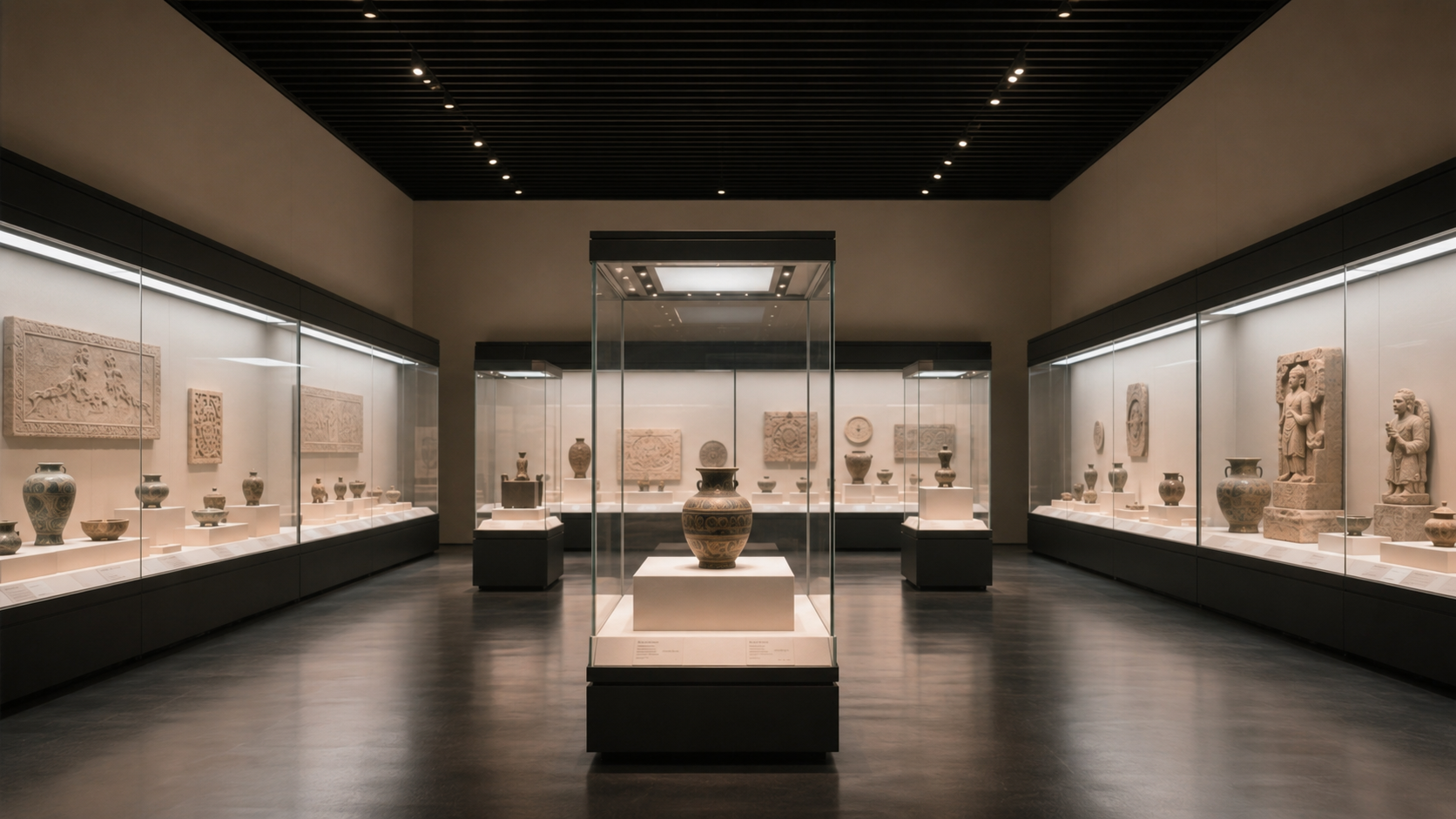
Some museum artifacts are highly sensitive to changes in humidity, temperature, dust, and air quality. For these collections, a standard display enclosure may not provide sufficient environmental stability. Climate-controlled display cases are designed to create a more controlled space around the artifact while maintaining clear visibility for visitors.
Experienced Museum Showcase Manufacturers can develop display cases that incorporate sealing, environmental-control materials, monitoring equipment, and specialized construction. The exact approach depends on the artifact, exhibition conditions, and conservation requirements.
Understanding the Environmental Requirements
The first step in creating a climate-controlled case is identifying what the artifact needs. Different materials respond differently to environmental changes.
Paper, textiles, wood, metals, photographs, paintings, and archaeological objects may each have different sensitivities. Curators and conservators can provide the environmental parameters that the showcase needs to support.
Building a Controlled Enclosure
A climate-controlled display case starts with an enclosure designed to limit uncontrolled exchange between the interior and surrounding room.
Manufacturers may pay particular attention to:
- Panel connections
- Door interfaces
- Glazing joints
- Gaskets
- Seals
- Service openings
- Structural connections
Reducing unnecessary air leakage can make it easier to maintain a stable internal environment.
Using Appropriate Sealing Systems
Seals and gaskets are important components of an environmentally controlled case. They help close gaps around doors and other removable sections of the enclosure.
The choice of sealing material should consider durability, compatibility, compression characteristics, and the environmental requirements of the display.
Incorporating Humidity Control
Humidity management is often one of the most important aspects of climate-controlled exhibition cases. Excessive or fluctuating moisture can affect certain organic and inorganic materials.
Depending on the project, passive humidity buffering materials or active control systems may be incorporated into the case. The selected approach should correspond with the conservation strategy established for the artifact.
Supporting Temperature Stability
Temperature can influence both the artifact and the environmental conditions inside the showcase. Sudden changes may be particularly undesirable for sensitive collections.
Manufacturers can consider the enclosure’s construction, lighting configuration, ventilation requirements, and surrounding conditions when developing a display case intended to support stable temperatures.
Managing Air Exchange
Air exchange between the showcase and the surrounding gallery can influence the internal environment. A carefully designed enclosure can reduce uncontrolled airflow while allowing required service or environmental-control functions.
For specialized displays, airflow characteristics may be considered during the engineering stage to ensure that the environmental system operates as intended.
Adding Environmental Monitoring
Monitoring equipment can help museum staff understand the conditions inside a showcase. Depending on the project, sensors may measure temperature, relative humidity, or other environmental parameters.
Data from these systems can help staff identify changes and determine whether adjustments or maintenance are required.
Integrating Passive Control Materials
Not every climate-controlled case requires complex mechanical equipment. Some displays can use passive methods to moderate environmental fluctuations.
Buffering materials may be placed within designated areas of the enclosure to absorb or release moisture gradually. This approach can be useful when the conservation requirements and exhibition conditions are appropriate for passive control.
Designing for Active Climate Control
More demanding collections may require active environmental systems. These can include specialized humidity-control equipment, filtration, or other technical components.
Active systems need sufficient space, appropriate access, power provisions, and reliable maintenance procedures. These requirements should be considered before the case is manufactured.
Controlling Internal Lighting Conditions
Lighting is closely connected to environmental management because fixtures can contribute heat to an enclosed space. Climate-controlled cases therefore need to account for the type, placement, and intensity of illumination.
LED lighting is commonly considered for enclosed displays because its heat characteristics can be easier to manage than some traditional lighting technologies. Lighting levels should still be established according to conservation requirements.
Selecting Suitable Glazing
Glazing must provide visibility while supporting the environmental and conservation goals of the enclosure. Depending on the artifact, museums may consider options that provide UV filtering, reduced reflection, or other performance characteristics.
The glazing must also be properly fitted and sealed so that it works as part of the complete environmental enclosure.
Providing Service Access
Climate-control equipment and monitoring devices need periodic inspection and servicing. A showcase should therefore provide controlled access to technical components without requiring unnecessary disturbance of the artifact.
Well-planned service compartments can make maintenance more practical while keeping technical hardware discreet.
Considering Internal Air Volume
The size of the enclosed space can influence environmental management. A larger internal volume may require a different control strategy from a small case containing a single artifact.
Manufacturers can consider the dimensions of the display area, the number of objects, internal equipment, and required environmental parameters during the design process.
Testing Before Exhibition
Before an artifact is placed inside, the showcase may need to be inspected and tested. This can include checking seals, monitoring equipment, doors, environmental-control systems, and other components.
Allowing sufficient testing time gives museum teams an opportunity to confirm that the case is operating according to the project’s specifications.
Planning for Long-Term Maintenance
Environmental control is not a one-time feature. Sensors may require calibration, passive materials may need replacement or regeneration, and active equipment may require periodic servicing.
Maintenance access should therefore be included in the initial design. A system that is easy for authorized staff to inspect can support more consistent long-term operation.
Matching Technology to the Collection
The most technically complex solution is not necessarily appropriate for every artifact. A showcase should provide the level of environmental control actually required by the collection.
For some objects, a well-sealed enclosure with passive buffering may be appropriate. Others may require active control, continuous monitoring, or specialized filtration.
Coordinating With Conservation Teams
Climate-controlled showcases should be developed in consultation with conservation professionals. They can identify acceptable environmental ranges and explain the specific risks associated with the materials being displayed.
The manufacturer can then translate these requirements into enclosure construction, sealing, monitoring, and environmental-control features.
Evaluating the Manufacturer
When selecting a manufacturer, museums can ask about previous climate-controlled projects, environmental-control options, testing procedures, monitoring systems, and maintenance requirements.
DG Display Showcase can be assessed alongside other suppliers based on its ability to develop customized display solutions that address the environmental, structural, and presentation requirements of a particular exhibition.
Final Thoughts
Climate-controlled display cases combine enclosure design with environmental management to create a more stable setting for sensitive museum collections. Sealing, humidity control, temperature considerations, monitoring, lighting, glazing, and serviceability all contribute to the overall solution.
By defining conservation requirements early and coordinating closely with the manufacturer, museums can develop display cases that support artifact protection while maintaining the clear and professional presentation expected in a modern exhibition.