
Commercial and industrial lighting projects require more than simply selecting fixtures with adequate brightness. Factors such as energy consumption, operating conditions, installation requirements, maintenance, and long-term performance all influence the success of a lighting system. LED lighting manufacturers play an important role in helping businesses address these requirements through suitable lighting technologies and production capabilities.
For businesses planning large-scale lighting installations, working with an LED Lighting Manufacturer can provide access to products designed for different environments and project requirements. From warehouses and factories to offices, retail facilities, and outdoor areas, manufacturers can support projects by offering lighting solutions that align with practical application needs.
Understanding Project-Specific Lighting Requirements
Commercial and industrial facilities can have very different lighting requirements. An office may prioritize visual comfort and consistent illumination, while a manufacturing plant may require high-output fixtures capable of operating reliably in demanding environments.
Manufacturers consider factors such as ceiling height, mounting conditions, operating hours, ambient temperatures, and required light distribution when developing or selecting LED products. This helps ensure that fixtures are appropriate for their intended application.
Supporting Energy-Efficient Lighting Projects
Energy consumption is an important consideration for facilities that operate lighting systems for extended periods. LED technology is widely used in commercial and industrial environments because it can provide efficient illumination compared with many traditional lighting technologies.
Manufacturers contribute to energy-efficiency goals by developing fixtures with appropriate optical designs, LED components, drivers, and thermal management systems. Selecting the right combination can help projects meet illumination requirements without unnecessarily increasing energy consumption.
Providing Solutions for Different Commercial Spaces
Commercial properties can include offices, retail stores, hotels, educational facilities, healthcare buildings, and other environments. Each application may require a different approach to light distribution, appearance, control, and installation.
LED manufacturers may provide a broad range of fixture formats, including:
- Panel and linear lights for offices
- Downlights for retail and hospitality spaces
- High-bay fixtures for large facilities
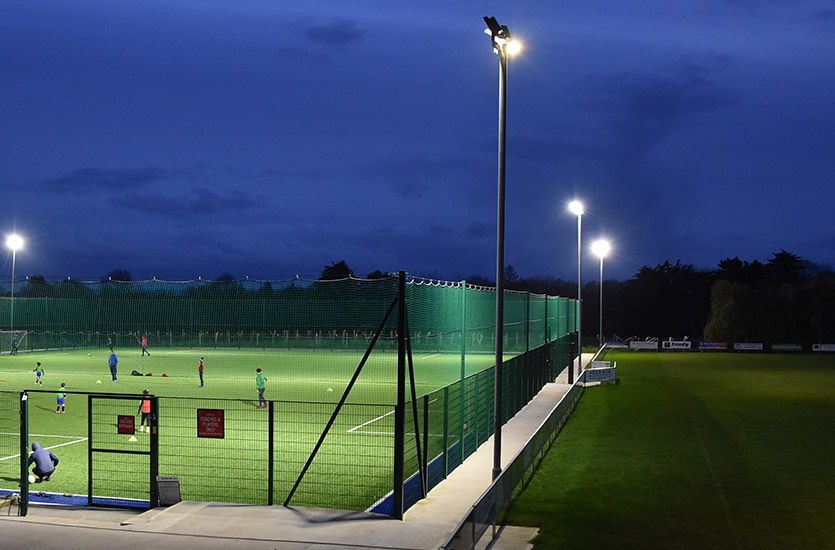
- Floodlights for outdoor areas
- Track and directional lighting for commercial displays
- Weather-resistant fixtures for demanding environments
This range allows project planners to select products based on the specific characteristics of each space.
Meeting Industrial Lighting Demands
Industrial facilities often present more challenging operating conditions. Manufacturing plants, warehouses, workshops, and logistics centers may have high ceilings, dust, vibration, temperature variations, or extended operating schedules.
LED lighting manufacturers address these conditions through fixture designs that can provide suitable durability, heat management, protection ratings, and light output. Proper product selection can contribute to consistent illumination in areas where reliable visibility is important for daily operations.
Supporting Large-Scale Lighting Projects
Commercial and industrial projects often involve hundreds or thousands of lighting fixtures. Consistency between products becomes important when installations cover large areas or multiple facilities.
Manufacturers can support large projects by maintaining standardized specifications across production batches. Consistent LED components, drivers, housing designs, and optical characteristics can make installation planning and replacement management more straightforward.
Customization for Specialized Applications
Standard lighting products may not always meet the requirements of a particular project. In such situations, manufacturers may provide customized options involving dimensions, wattage, color temperature, beam distribution, mounting methods, or control compatibility.
Customization can be particularly useful when projects involve unusual ceiling structures, specialized industrial equipment, architectural requirements, or specific illumination targets.
Quality Control and Product Reliability
Quality control is another important part of commercial and industrial lighting manufacturing. Fixtures used in professional environments need to perform consistently throughout their expected service life.
Manufacturers may use production inspections and testing procedures to evaluate factors such as electrical performance, light output, thermal behavior, component quality, and overall construction. Reliable quality control helps reduce variations between products and supports more predictable project performance.
Helping Simplify Maintenance
Maintenance requirements should be considered when designing a commercial or industrial lighting system. Fixtures installed in high ceilings or difficult-to-access areas can require additional labor and equipment when servicing is necessary.
LED manufacturers can support maintenance planning by providing durable fixture designs, replaceable components where appropriate, and product documentation. Choosing suitable products from the beginning can help project teams plan maintenance more effectively.
Supporting Lighting Controls and Smart Systems
Modern commercial and industrial projects increasingly incorporate lighting controls to improve operational flexibility. Depending on the application, systems may include occupancy sensors, daylight controls, dimming functions, timers, or centralized management platforms.
Manufacturers can develop or supply LED fixtures that are compatible with relevant control technologies. This allows lighting systems to be integrated more effectively into broader building-management strategies.
Considering Environmental Operating Conditions
The environment in which a fixture operates can significantly affect its performance. Indoor office lighting, outdoor parking illumination, cold-storage facilities, and high-temperature industrial areas may require very different product characteristics.
LED manufacturers consider environmental factors when designing fixtures, including heat dissipation, moisture exposure, dust protection, and operating temperature. Project teams can then select products that are better suited to their intended installation conditions.
Supporting Project Planning and Product Selection
Manufacturers can also contribute to the planning stage by providing technical information about products. Specifications such as lumen output, wattage, color temperature, beam angle, dimensions, mounting options, and protection ratings help engineers and contractors compare suitable fixtures.
Clear product documentation can make it easier for project stakeholders to coordinate lighting specifications with electrical plans, architectural layouts, and installation requirements.
The Importance of Choosing Suitable Manufacturing Partners
The success of a commercial or industrial lighting project depends on more than the appearance of individual fixtures. Product consistency, technical specifications, application suitability, quality control, and ongoing availability can all influence the overall result.
Working with an experienced manufacturer gives project teams a way to evaluate lighting products based on documented requirements rather than relying solely on general product descriptions. This approach can help create lighting systems that are practical, consistent, and appropriate for their intended environments.
Conclusion
LED lighting manufacturers support commercial and industrial projects by combining product development, manufacturing expertise, quality control, customization, and technical information. Their role extends from producing individual fixtures to helping address the varied requirements of large and specialized lighting installations.
By considering factors such as energy efficiency, operating conditions, installation requirements, maintenance, controls, and product consistency, businesses can make more informed decisions when planning professional LED lighting systems.