
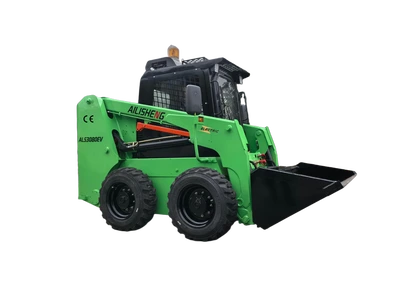
Choosing an electric skid steer loader involves more than comparing prices, battery capacity, and lifting performance. Product quality, manufacturing standards, safety features, and certification requirements all influence equipment reliability and long-term operating costs. For construction companies, landscaping contractors, agricultural businesses, and material-handling operators, evaluating these factors before purchasing can help prevent costly equipment failures and compliance issues.
Working with a qualified Electric Skid Steer Loaders Supplier can help buyers understand product specifications, quality-control procedures, and the documentation needed for their market. However, suppliers differ in manufacturing capabilities, inspection processes, and technical support. Understanding what to verify allows buyers to make informed decisions and select equipment that meets their operational needs.
Why Product Quality Matters in Electric Skid Steer Loaders
Electric skid steer loaders operate in demanding environments where equipment may experience frequent starts, repeated lifting cycles, uneven surfaces, dust, vibration, and changing weather conditions. Poorly manufactured components can increase maintenance requirements, reduce productivity, and create safety risks.
Product quality depends on several interconnected factors, including structural strength, electrical-system reliability, hydraulic performance, battery management, and assembly consistency.
When evaluating a machine, buyers should pay attention to the following areas:
- Structural integrity: The frame, lift arms, attachment mounting points, and chassis should be designed for the machine’s intended loads and operating conditions.
- Electrical reliability: Motors, controllers, wiring, connectors, and protective systems should be appropriately specified and assembled.
- Battery performance: The battery should provide suitable usable capacity, dependable power delivery, and effective temperature and charging management.
- Hydraulic performance: Pumps, hoses, valves, and cylinders should deliver consistent performance within their rated operating limits.
- Operator safety: Controls, visibility, access points, protective structures, and emergency procedures should support safe operation.
- Serviceability: Components should be accessible for inspection, maintenance, and repair.
A reliable loader should demonstrate consistent performance across these areas rather than excelling in only one specification.
Essential Quality Factors to Evaluate Before Buying
1. Manufacturing Standards and Production Consistency
A supplier’s manufacturing process can reveal a great deal about the consistency of its equipment. Buyers should ask how the manufacturer controls production quality, inspects incoming components, and verifies completed machines.
Important areas to investigate include welding quality, component fit, electrical assembly, hydraulic connections, and final inspection procedures.
A manufacturer with documented production controls is generally better positioned to identify defects and maintain consistency across different units. Ask whether each machine undergoes an inspection before shipment and whether inspection records are available.
If you are purchasing several machines, also determine whether the supplier can maintain consistent specifications and quality across the entire order.
2. Battery and Electrical-System Quality
The battery and electrical system are central to an electric skid steer loader’s performance. Their quality affects runtime, charging efficiency, reliability, and the machine’s suitability for different operating environments.
Ask the supplier to provide detailed information about battery chemistry, rated capacity, usable energy, charging requirements, and expected service life. Clarify how the battery management system monitors temperature, voltage, current, and charging conditions.
You should also investigate the quality and protection of the electric motor, controller, wiring harnesses, connectors, and charging equipment.
Useful questions include:
- Does the battery management system provide protection against relevant electrical faults?
- What operating temperature range is recommended?
- What testing or documentation is available for the battery and charger?
- How are electrical faults diagnosed and repaired?
- Are replacement batteries and critical electrical components available?
Battery performance claims should be assessed in context. Runtime varies with load, attachment choice, terrain, ambient temperature, and operating intensity, so advertised figures should not be treated as guaranteed results under every condition.
3. Hydraulic System and Load-Handling Performance
Although electric power replaces the conventional combustion engine, hydraulic components remain important in many skid steer loader designs. Hydraulic quality influences lifting capability, attachment performance, and control responsiveness.
Request specifications for hydraulic flow, operating pressure, rated operating capacity, lifting height, and attachment compatibility. Ask how the manufacturer verifies these ratings and whether the machine is tested under representative working conditions.
Check that hoses, fittings, cylinders, and valves are appropriate for the specified pressure and duty cycle. Poor hydraulic components may lead to leakage, inconsistent performance, or unnecessary maintenance.
It is equally important to understand rated operating capacity. Buyers should not assume that a loader can safely handle its tipping load as a routine working load. Follow the manufacturer’s operating limits and guidance for stability, attachment weight, and ground conditions.
Understanding Certifications and Compliance Documents
Certifications and compliance documents can help buyers determine whether equipment has been assessed against relevant standards or regulatory requirements. However, not every certificate has the same purpose, and a document that is valid in one market may not satisfy the requirements of another.
Before ordering an electric skid steer loader, identify the destination country’s regulations and the standards applicable to the machine and its electrical components.
Common Standards and Documents to Check
| Standard or document | What it helps establish | What buyers should verify |
|---|---|---|
| ISO 9001 | Quality management system requirements | Whether the certificate is valid and covers the relevant organization and activities |
| CE marking, where applicable | Conformity with applicable European Union requirements | The applicable legislation, supporting technical documentation, and declaration of conformity |
| Machinery safety standards | Safety principles and requirements relevant to machinery | Which specific standards apply to the machine and its intended use |
| Battery and charger test documentation | Evidence of testing against specified electrical or battery requirements | The exact product model, test scope, issuing laboratory, and applicable standard |
| EMC documentation | Assessment of electromagnetic compatibility where required | Whether the equipment meets the applicable requirements for its intended market |
| Shipping and transport documentation | Compliance with relevant transport and logistics requirements | Which rules apply to the battery and shipment route |
These items are not interchangeable. For example, ISO 9001 relates to a quality management system; it does not independently certify that a particular loader is safe or suitable for every application. Similarly, CE marking is relevant to products covered by applicable EU legislation and should be supported by the required conformity documentation.
Buyers should also avoid assuming that a supplier needs every listed document for every transaction. Requirements depend on the product configuration, destination market, and applicable laws.
What to Verify on a Certificate
A certificate should be examined rather than accepted solely because the supplier has provided a scanned copy.
Check the following details:
- Issuing organization: Confirm who issued the document and whether the organization is appropriately accredited or authorized for the relevant activity.
- Validity period: Review the issue date, expiry date where applicable, and any stated conditions.
- Company identity: Ensure that the company name and manufacturing or operating location match the relevant business.
- Product scope: Confirm whether the document applies to the exact model, component, factory, or management system being offered.
- Applicable standard: Check the standard’s title, edition, and relevance to the product.
- Verification method: Where possible, confirm the certificate through the issuing organization’s official verification service.
For a CE-marked product, ask for the applicable EU declaration of conformity and supporting information required for the specific machine. A logo or general statement of compliance is not a substitute for the documentation required by law.
How Suppliers Should Demonstrate Product Quality
A supplier’s claims are more convincing when supported by specific, verifiable evidence. Buyers should request documentation that relates directly to the machine they intend to purchase.
Pre-Delivery Inspection
Ask whether each loader undergoes a pre-delivery inspection. Depending on the model, this process may include checks of the following:
- Frame, lift arms, welds, and attachment mounting points
- Hydraulic hoses, cylinders, fittings, and visible leakage
- Battery installation, connectors, charging system, and electrical controls
- Steering, braking, travel functions, and operator controls
- Safety interlocks, warning indicators, and emergency functions
- Rated lifting and operating performance within approved test procedures
Request an inspection checklist or report when available. For larger orders, clarify how individual units will be inspected and documented.
Functional and Performance Testing
Functional testing helps establish whether the equipment operates as intended before delivery. The supplier should be able to explain which tests are performed, what criteria are used, and whether the results are recorded.
Ask for evidence covering relevant performance characteristics, such as lifting functions, travel operation, hydraulic response, charging behavior, and safety-system operation.
Do not rely on test results without understanding their scope. A successful basic function check does not necessarily establish long-term durability, and a short demonstration cannot guarantee performance under every working condition.
Traceability and Technical Documentation
Good documentation helps owners maintain equipment throughout its service life. Ask whether the supplier provides a model-specific operator manual, maintenance instructions, parts catalog, wiring diagrams where appropriate, and recommended inspection schedules.
Serial numbers and component identification records can also make warranty claims and replacement-part orders easier to manage.
If the supplier offers software-based diagnostics or electronic control systems, clarify how fault codes are interpreted and whether technical support is available when problems arise.
Questions to Ask an Electric Skid Steer Loader Supplier
Before placing an order, use the following questions to evaluate the supplier’s approach to quality and compliance.
1. Which quality management systems are used in production?
Ask whether the manufacturer operates a documented quality management system and whether any claimed certification can be independently verified.
2. What testing does every machine undergo before shipment?
Request details about inspections, functional tests, acceptance criteria, and available records.
3. Which safety standards apply to the specific model?
The supplier should identify relevant standards and explain how the machine’s design and documentation address them.
4. Can you provide model-specific compliance documents?
Confirm that certificates, declarations, and test reports relate to the exact model and configuration you intend to buy.
5. What battery safety and performance information is available?
Request battery specifications, charging instructions, applicable test documentation, and guidance on operating conditions.
6. How are defects and warranty claims handled?
Ask about warranty duration, coverage exclusions, repair procedures, response times, and the availability of replacement components.
7. Are spare parts and technical support available in my market?
Determine whether support is local, regional, or provided remotely, and ask about realistic parts-delivery times.
8. Can you provide references or a demonstration?
A demonstration or customer reference can help you assess machine performance and the supplier’s ability to support customers after delivery.
Red Flags to Watch for When Evaluating Suppliers
Some warning signs deserve additional investigation before a purchase proceeds.
- Unverifiable certificates: Documents contain unclear company names, missing product details, or issuing organizations that cannot be verified.
- Vague technical specifications: The supplier cannot explain battery capacity, rated operating capacity, hydraulic requirements, or charging conditions.
- Unsupported performance promises: Runtime, lifting ability, or service life is guaranteed without explaining test conditions or operating limits.
- Unclear warranty terms: Coverage is described verbally but is not documented in the sales agreement.
- Limited technical support: The supplier cannot explain how customers obtain parts, troubleshooting assistance, or warranty repairs.
- Pressure to pay before verification: The supplier discourages reasonable technical checks or refuses to provide agreed documentation before purchase.
A single missing document does not automatically mean that a supplier is unreliable. Some documents may not be relevant to the destination market or particular configuration. The important point is whether the supplier can explain the applicable requirements and provide credible evidence for its claims.
Balancing Product Quality, Certification, and Cost
The cheapest machine is not always the most economical choice over its useful life. A loader with appropriate safety features, reliable electrical components, accessible replacement parts, and responsive technical support may provide better overall value than a lower-priced alternative.
To compare quotations, evaluate several factors together:
| Evaluation area | Key consideration |
|---|---|
| Purchase price | Does the quotation clearly identify included equipment and accessories? |
| Build quality | Are manufacturing controls and inspection procedures documented? |
| Compliance | Does the machine have the documents required for the destination market? |
| Battery system | Are capacity, charging requirements, and operating limitations clearly explained? |
| Maintenance | Are service intervals, parts, and repair procedures available? |
| Warranty | Are coverage, exclusions, and claim processes clearly defined? |
| After-sales support | Can the supplier provide practical assistance throughout ownership? |
For a fair comparison, use the same operating requirements and expected service period for every supplier. Include electricity, scheduled maintenance, likely wear items, downtime, and potential battery replacement when estimating total ownership cost.
Final Thoughts
Evaluating an electric skid steer loader supplier requires a careful review of product quality, technical specifications, safety features, certifications, and after-sales support. Buyers should verify that documents apply to the specific machine, understand which standards are relevant to their market, and request evidence of testing and quality control rather than relying on general marketing claims.
A dependable supplier should be able to explain the equipment’s capabilities and limitations, provide relevant documentation, and outline how maintenance and warranty issues will be handled. By combining these checks with a realistic assessment of operating costs and application requirements, businesses can reduce purchasing risks and choose an electric skid steer loader that supports safe, reliable, and productive operations.