
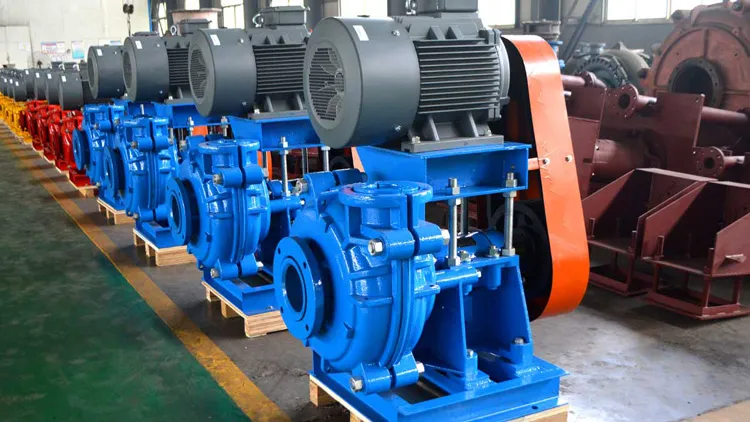
Selecting the right slurry pump supplier can have a significant impact on equipment reliability, maintenance requirements, energy consumption, and long-term operating costs. Because slurry pumps often handle abrasive and solids-laden materials, choosing equipment based only on basic specifications can create problems later.
A dependable Slurry Pump Supplier should be evaluated on more than price and product availability. Engineering expertise, material selection, manufacturing quality, testing, spare-parts support, and technical assistance are all important considerations when making a purchasing decision.
Choosing Based Only on Price
One of the most common mistakes is selecting a supplier solely because it offers the lowest initial price. A lower purchase cost does not necessarily mean lower overall operating expenses.
A pump that uses unsuitable materials or requires frequent maintenance can become more expensive over time. Buyers should consider energy consumption, wear-part replacement, downtime, and expected service life alongside the initial price.
Ignoring Slurry Characteristics
Slurry is not a uniform type of fluid. Particle size, hardness, concentration, density, temperature, and chemical composition can vary considerably between applications.
Failing to provide accurate slurry information can result in inappropriate pump selection. Before requesting quotations, buyers should collect reliable data about the material being transported and share it with potential suppliers.
Focusing Only on Flow and Head
Flow rate and head are essential pump-selection parameters, but they are not the only ones that matter. A pump may meet basic hydraulic requirements while still being poorly suited to the slurry itself.
Particle characteristics, solids concentration, operating speed, wear conditions, suction requirements, and temperature should also be evaluated. A complete assessment provides a better basis for equipment selection.
Overlooking Material Selection
Material selection has a direct effect on component life. Abrasive particles can quickly damage components that are not designed for the expected conditions.
Buyers should ask why specific materials are recommended for impellers, liners, casings, shafts, and other components. The selected materials should provide an appropriate balance of abrasion resistance, corrosion resistance, toughness, and cost.
Failing to Check Manufacturing Quality
A pump can have appropriate specifications but still perform poorly if manufacturing quality is inconsistent. Casting defects, inaccurate machining, poor assembly, and dimensional problems can affect reliability.
Ask potential suppliers about their manufacturing processes, inspection procedures, material verification, and quality-control standards. These details can provide useful insight into the consistency of the equipment being supplied.
Not Asking About Testing
Testing is an important part of verifying pump quality. Some buyers may focus heavily on specifications without asking how the finished equipment is tested.
Depending on the application, testing may include hydraulic performance, pressure integrity, vibration, impeller balancing, leakage, and mechanical operation. Buyers should understand which tests are performed and whether results are documented.
Neglecting Wear-Part Availability
Slurry pumps naturally experience wear, so replacement components are an unavoidable part of ownership. Failing to consider spare-parts availability can result in long maintenance delays.
Before purchasing, ask about the availability of impellers, liners, seals, bearings, shafts, and other commonly replaced components. It is also useful to understand how parts are identified and ordered.
Overlooking Maintenance Requirements
Two pumps with similar performance ratings may have very different maintenance requirements. A design that is difficult to access or service can increase labor costs and downtime.
Ask about inspection intervals, wear-part replacement, lubrication, sealing arrangements, and access to critical components. Maintenance requirements should be considered as part of the initial selection process.
Choosing Without Considering the Installation
Installation conditions can affect pump performance. Pipe configuration, suction conditions, foundation dimensions, discharge arrangement, available space, and maintenance access should all be considered.
Providing accurate installation information allows suppliers to identify potential compatibility issues before the equipment is manufactured or delivered.
Failing to Evaluate Technical Support
Technical support can become especially important when a pump operates under demanding conditions. Problems may arise during installation, commissioning, troubleshooting, or routine maintenance.
Ask suppliers what technical resources are available after purchase. Installation guidance, operating manuals, troubleshooting support, and maintenance recommendations can all contribute to smoother operation.
Ignoring Customization Requirements
Some applications cannot be served effectively by a standard pump. Unusual slurry characteristics, extreme operating conditions, or physical installation constraints may require customized equipment.
Buyers should determine whether customization is necessary and whether the supplier has the engineering capabilities to provide it. At the same time, unnecessary customization should be avoided because it can increase complexity and cost without providing meaningful benefits.
Not Comparing Total Cost of Ownership
The initial quotation provides only part of the financial picture. Long-term expenses can include energy, maintenance labor, wear components, repairs, spare parts, and production downtime.
Comparing suppliers based on total cost of ownership can reveal important differences between seemingly similar pump options. A higher initial investment may provide better value if it results in longer component life and lower operating expenses.
Failing to Review Documentation
Insufficient technical documentation can create difficulties during installation and maintenance. Buyers should confirm what information will be supplied with the equipment.
Useful documentation may include:
- Installation instructions
- Operating manuals
- Assembly drawings
- Performance curves
- Parts lists
- Maintenance guidelines
- Testing records
- Material information
Complete documentation helps operators and maintenance teams work more efficiently.
Not Considering Long-Term Support
A slurry pump may remain in service for many years, so the supplier’s ability to provide ongoing support should be considered from the beginning.
Ask whether the supplier can continue providing spare parts, technical assistance, maintenance guidance, and equipment modifications if operating conditions change. Long-term support can be valuable when planning future maintenance or process upgrades.
Relying on Unverified Claims
Supplier comparisons should be based on verifiable technical information rather than broad claims about performance or durability.
Ask for relevant specifications, testing information, material details, and application-based recommendations. Clear documentation makes it easier to compare suppliers objectively and avoid unrealistic expectations.
Final Thoughts
Choosing a slurry pump supplier requires careful evaluation of technical, operational, and commercial factors. Common mistakes such as focusing only on price, ignoring slurry characteristics, overlooking material selection, and failing to assess maintenance or technical support can lead to higher costs and reliability problems.
A better approach is to evaluate the complete equipment lifecycle. By comparing engineering capabilities, manufacturing quality, testing, wear resistance, spare-parts availability, support, and total cost of ownership, businesses can make a more informed decision and select a supplier capable of meeting their long-term pumping requirements.