
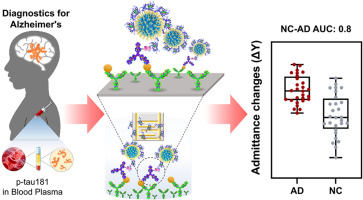
Alzheimer’s disease is a progressive neurological condition associated with changes in brain function, protein accumulation, and gradual cognitive decline. Researchers investigate a range of biological markers to understand the processes involved in the disease and identify measurable indicators of its development. One area of growing interest is the phosphorylation of tau protein, particularly at the threonine 181 position.
The p-tau 181 biomarker is studied because its levels in biological samples may reflect changes associated with Alzheimer’s-related tau pathology. By examining this marker alongside other biomarkers, imaging findings, and clinical information, researchers can investigate disease mechanisms and explore its potential contribution to earlier biological characterization and monitoring strategies.
What Is the p-tau 181 Biomarker?
Tau is a protein found mainly in neurons, where it helps stabilize microtubules. These structures support the shape of nerve cells and help transport substances within them.
Tau undergoes phosphorylation as part of normal cellular regulation. Phosphorylation involves adding phosphate groups to a protein at particular amino acid positions. One of these positions is threonine 181.
When tau is phosphorylated at this site, it is called phosphorylated tau 181, or p-tau 181. Researchers study this specific form because changes in its concentration have been associated with Alzheimer’s disease.
P-tau 181 can be measured in biological samples such as cerebrospinal fluid (CSF) and plasma, depending on the assay being used. Its research value comes from its relationship with Alzheimer’s-associated biological processes rather than from being a direct measurement of cognitive function.
Why Is p-tau 181 Important in Alzheimer’s Research?
Alzheimer’s disease is characterized by two major pathological features: amyloid-beta plaques and neurofibrillary tangles made primarily of abnormal tau.
Researchers study p-tau 181 to investigate changes in tau biology and their relationship with these disease-associated processes.
Investigating Tau-Related Pathology
Abnormal tau phosphorylation is associated with changes in the protein’s structure and behavior.
Studying p-tau 181 helps researchers examine phosphorylation patterns and explore how they relate to tau aggregation and neurofibrillary tangle formation.
Understanding Biological Changes
P-tau 181 measurements can provide information about biological processes associated with Alzheimer’s disease.
Researchers may compare concentrations across different study groups or examine changes over time to better understand relationships between tau-related pathology and other indicators of neurological health.
Supporting Biomarker Research
Biomarkers can help characterize biological processes that may not be directly observable through clinical assessment alone.
P-tau 181 is being investigated as part of broader biomarker strategies that combine measurements of tau, amyloid-beta, and neuronal injury.
How p-tau 181 Relates to Tau Pathology
Understanding the biological background of p-tau 181 helps explain why it is relevant to Alzheimer’s research.
Normal Tau Function
Under normal conditions, tau supports microtubule stability and contributes to the maintenance of neuronal structure.
Its activity is regulated by phosphorylation and dephosphorylation, which help control its interactions with microtubules and other cellular components.
Abnormal Phosphorylation
In Alzheimer’s disease, tau can undergo changes in phosphorylation patterns.
These changes may affect how tau interacts with microtubules and contribute to abnormal protein accumulation within neurons.
Neurofibrillary Tangle Formation
Abnormally modified tau can aggregate into structures known as neurofibrillary tangles.
These accumulations are a characteristic feature of Alzheimer’s pathology. Researchers investigate phosphorylated tau markers to better understand the biological events associated with their development.
P-tau 181 is one measurable indicator of tau-related changes, although its concentration does not directly quantify the number of tangles in the brain.
Where Is p-tau 181 Measured?
The choice of biological sample is an important part of biomarker research. P-tau 181 has been investigated in both cerebrospinal fluid and blood-based samples.
Cerebrospinal Fluid
Cerebrospinal fluid surrounds the brain and spinal cord and contains proteins that can provide information about neurological processes.
CSF p-tau 181 has been studied extensively in Alzheimer’s research. Measurements are often evaluated alongside amyloid-beta markers and other tau-related indicators.
Obtaining CSF generally requires a lumbar puncture, so collection is more invasive than routine blood sampling.
Plasma
Plasma is the liquid component of blood after blood cells have been removed.
Plasma p-tau 181 is an active area of research because blood collection is comparatively convenient and may support repeated measurements in larger studies.
However, the concentration of p-tau 181 in plasma can be low, making analytical sensitivity and careful assay validation particularly important.
Serum
Serum is obtained after blood has clotted. Its composition differs from plasma, and assay performance may vary between these sample types.
Researchers should confirm that a particular test has been validated for serum before using it in a study.
Laboratory Methods for Measuring p-tau 181
Reliable measurement requires an analytical method that can detect the intended phosphorylated tau form with appropriate sensitivity and specificity.
Several immunoassay technologies are used in protein biomarker research.
Enzyme-Linked Immunosorbent Assay
Enzyme-linked immunosorbent assay (ELISA) uses antibodies to recognize and bind the target protein.
An enzyme-based reaction generates a measurable signal, which is used to estimate the concentration of the analyte.
ELISA is widely used in research laboratories, although its performance depends on antibody quality, assay design, sample preparation, and validation.
Chemiluminescence Immunoassay
Chemiluminescence immunoassay (CLIA) combines antibody-based target recognition with a chemical reaction that produces light.
An appropriate analyzer measures the emitted light, and the signal is interpreted using a calibration system.
Depending on the assay design, CLIA can support sensitive quantitative measurements and automated workflows. Researchers should verify that the specific p-tau 181 reagent system is compatible with the selected analyzer.
Electrochemiluminescence Immunoassay
Electrochemiluminescence immunoassay uses an electrically initiated light-emitting reaction to generate a measurable signal.
This technology is used in several laboratory applications. Its suitability for p-tau 181 research depends on the assay’s validated performance and the instrument platform.
Key Analytical Requirements for Reliable p-tau 181 Measurement
A biomarker result is only useful when the analytical method produces dependable measurements. Several performance characteristics should be evaluated before a test is used in research.
Analytical Sensitivity
Analytical sensitivity describes the ability of a method to detect low concentrations of its target.
Important parameters include:
- Limit of blank (LoB): The highest apparent result expected from samples without the target.
- Limit of detection (LoD): The lowest concentration that can be distinguished from the blank with defined confidence.
- Limit of quantification (LoQ): The lowest concentration that can be measured with acceptable precision and accuracy.
- Analytical measurement range: The concentration interval over which the assay provides reliable quantitative results.
These parameters are particularly important for plasma studies, where p-tau 181 concentrations may be low.
Antibody Specificity
The antibody system should recognize tau phosphorylated at threonine 181.
Researchers should evaluate potential cross-reactivity with non-phosphorylated tau, other phosphorylated tau forms, and related proteins.
Good specificity helps ensure that the measured signal represents the intended target.
Precision and Reproducibility
Precision describes the consistency of repeated measurements under defined conditions.
Researchers should assess:
- Within-run precision.
- Between-run precision.
- Between-day variation.
- Reproducibility across operators or laboratories, where relevant.
Consistent analytical performance is especially important in longitudinal studies that compare biomarker measurements over time.
Accuracy and Recovery
Accuracy concerns how closely a result reflects an appropriate reference value.
Recovery experiments can help assess whether known amounts of p-tau 181 can be measured appropriately when added to representative biological samples.
These evaluations can reveal matrix-related effects and potential measurement bias.
Interference and Matrix Effects
Biological samples contain many substances that may affect immunoassay reactions.
Potential sources of interference include hemolysis, lipemia, bilirubin, heterophilic antibodies, and other matrix components.
Assay developers and laboratories should evaluate relevant interferences and follow validated sample-handling procedures.
Applications of p-tau 181 in Alzheimer’s-Related Research
P-tau 181 is being investigated across several research areas.
Biological Characterization of Alzheimer’s Disease
Researchers may use p-tau 181 measurements to study biological changes associated with Alzheimer’s disease.
The marker can be examined alongside amyloid-beta measurements, imaging results, and clinical information to build a broader understanding of disease-related processes.
Blood-Based Biomarker Studies
Blood-based testing has attracted interest because it offers a less invasive way to collect samples than lumbar puncture.
Plasma p-tau 181 is being evaluated for its potential contribution to Alzheimer’s biomarker strategies. Continued research is needed to establish its performance across different populations, settings, and assay platforms.
Clinical Trial Research
Biomarkers may help researchers characterize study participants and investigate biological changes during clinical trials.
P-tau 181 can be included in research protocols examining tau-related processes. Its usefulness for evaluating treatment-associated changes depends on the specific study design and validation of the measurement method.
Comparative Neurological Research
P-tau 181 is also studied in the context of other neurological conditions.
Comparing biomarker patterns may help researchers investigate whether particular changes are more closely associated with Alzheimer’s pathology or occur in other neurodegenerative conditions.
Interpretation requires appropriate comparison groups and consideration of other clinical and biological findings.
Comparing p-tau 181 With Other Alzheimer’s Biomarkers
Alzheimer’s research increasingly uses multiple biomarkers because each one provides information about a different biological process.
| Biomarker | Main research focus |
|---|---|
| p-tau 181 | Tau phosphorylation associated with Alzheimer’s-related pathology |
| p-tau 217 | Another phosphorylated tau form studied in Alzheimer’s research |
| p-tau 231 | Investigated in relation to early Alzheimer’s-associated changes |
| Total tau | Associated with neuronal injury |
| Amyloid-beta 42 | Related to amyloid plaque pathology |
| Amyloid-beta 40 | Often evaluated alongside amyloid-beta 42 |
| Neurofilament light chain | Associated with axonal injury and neurodegeneration |
Combining biomarkers can help researchers investigate relationships between amyloid accumulation, tau changes, and neuronal injury.
However, individual biomarkers should not be treated as independent proof of Alzheimer’s disease. Their meaning depends on the assay, population, clinical context, and other available evidence.
Factors That Can Influence p-tau 181 Results
Several factors may affect biomarker measurements and should be considered when designing research studies.
Sample Collection and Processing
Differences in collection tubes, processing time, and sample preparation may influence results.
Laboratories should establish standardized procedures and follow the requirements validated for the selected assay.
Storage and Stability
Protein stability can be affected by temperature, storage duration, and repeated freeze-thaw cycles.
Researchers should follow documented storage instructions and assess stability when working outside established conditions.
Assay Differences
Different analytical platforms may use different antibodies, calibrators, and detection systems.
Results from different methods may not be directly interchangeable without appropriate method-comparison studies.
Biological Variation
Biomarker concentrations can differ among individuals and populations.
Research studies should consider relevant biological and demographic variables when analyzing and interpreting results.
The Role of Automated CLIA Analyzers in Biomarker Research
Automated chemiluminescence analyzers can help standardize laboratory workflows by controlling procedures such as reagent dispensing, incubation, washing, and signal detection.
These features may reduce some sources of manual variation and support more consistent testing.
When evaluating a platform such as the Shine i2910 Chemiluminescence Immunoassay Analyzer, laboratories should confirm that a compatible p-tau 181 assay is available and validated for the intended application.
Important considerations include:
- Compatibility with the required reagents and assay protocols.
- Supported sample types.
- Analytical sensitivity and measurement range of the complete assay.
- Precision and reproducibility.
- Calibration and quality-control requirements.
- Testing capacity and workflow suitability.
- Maintenance and technical support.
An analyzer’s general CLIA capabilities do not automatically establish that it supports a particular p-tau 181 test. The instrument and reagent system must be evaluated together.
Challenges and Limitations in p-tau 181 Research
Although p-tau 181 is a valuable research marker, several limitations require attention.
Not a standalone diagnosis: A p-tau 181 result alone cannot establish whether an individual has Alzheimer’s disease.
Platform-dependent results: Different assays may produce different measurements because of variations in antibody design and calibration.
Sample-specific performance: An assay validated for one biological sample type may not perform identically with another.
Interpretation complexity: Biomarker levels should be considered alongside other laboratory findings, imaging, and clinical assessments.
Need for standardization: Consistent reference materials, calibration procedures, and quality-control practices remain important for comparing results across research settings.
Understanding these limitations helps prevent overinterpretation and supports more reliable scientific conclusions.
Future Directions for p-tau 181 Biomarker Research
Ongoing developments in analytical technology and neurological research may expand the ways p-tau 181 is studied.
Improved Analytical Sensitivity
Advances in antibody development and signal detection may support more reliable measurement of low-concentration biomarkers.
Broader Blood-Based Research
Researchers continue to investigate plasma biomarkers as practical tools for large-scale studies and repeated sampling.
Combined Biomarker Panels
Evaluating p-tau 181 alongside other tau, amyloid, and neuronal injury markers may provide a more comprehensive view of Alzheimer’s-related biology.
Greater Analytical Standardization
Improved calibration approaches, reference materials, and quality-assessment procedures may help increase comparability between laboratories.
These developments will require continued validation to establish the appropriate role of each measurement in research and clinical settings.
Conclusion
The p-tau 181 biomarker is an important focus of Alzheimer’s research because it provides measurable information about tau phosphorylation at threonine 181. Its relationship with Alzheimer’s-associated biological changes makes it useful for investigating tau pathology, blood-based biomarker development, and broader neurodegenerative disease studies.
Reliable results depend on appropriate analytical sensitivity, antibody specificity, precision, sample handling, calibration, and quality control. CLIA and other immunoassay technologies can support p-tau 181 measurement when the complete assay system is validated for its intended use.
By combining careful laboratory methods with other biomarkers and clinical evidence, researchers can use p-tau 181 measurements to deepen their understanding of Alzheimer’s-related changes and advance the study of neurodegenerative disease.