
Sustainable construction has become an important priority as governments, developers, and building professionals look for ways to reduce environmental impact and improve energy performance. Modern buildings are expected to provide comfortable indoor environments while using fewer resources and generating less waste. Insulation plays a significant role in achieving these objectives because it helps regulate indoor temperatures and reduces the energy required for heating and cooling.
A Green Building Scheme provides a framework for encouraging environmentally responsible construction through specific performance standards, assessment criteria, and sustainability targets. These schemes often recognize the importance of energy-efficient building materials, including insulation products that contribute to better thermal performance, reduced energy consumption, and improved building durability.
Understanding Green Building Schemes
Green building schemes are certification programs or assessment frameworks designed to evaluate the environmental performance of buildings throughout different stages of their life cycle.
They generally consider factors such as energy consumption, water efficiency, material selection, indoor environmental quality, and waste management.
Depending on the certification system, buildings may receive ratings or recognition based on how effectively they meet established sustainability requirements.
Some widely recognized green building frameworks include:
- LEED: A certification system developed by the U.S. Green Building Council that evaluates building sustainability across several performance categories.
- BREEAM: An environmental assessment method originating in the United Kingdom that considers energy, materials, health, and other sustainability factors.
- EDGE: A certification system developed by the International Finance Corporation that focuses on measurable improvements in energy, water, and material efficiency.
- WELL Building Standard: A framework that emphasizes occupant health and well-being, including aspects of indoor environmental quality.
Although these systems have different assessment methods, they share an interest in improving building performance and encouraging responsible resource use.
Why Insulation Matters in Sustainable Construction
Insulation is one of the most important components of an energy-efficient building envelope and mechanical system.
Buildings exchange heat with their surroundings through walls, roofs, floors, windows, and mechanical installations. Without appropriate insulation, maintaining comfortable indoor temperatures can require substantial heating and cooling energy.
Effective insulation helps reduce this unwanted heat transfer.
Reducing Heating and Cooling Requirements
Insulated walls, roofs, pipes, and HVAC components help maintain more stable temperatures.
During summer, insulation reduces unwanted heat gain, while in winter it helps limit heat loss. This can reduce the workload on heating and cooling equipment.
Lower energy demand can contribute to reduced operational carbon emissions, particularly in buildings that rely on fossil-fuel-based energy sources.
Improving Indoor Comfort
Temperature fluctuations can make indoor spaces uncomfortable and increase reliance on air conditioning and heating systems.
Suitable insulation helps maintain more consistent indoor conditions, supporting occupant comfort in residential, commercial, and institutional buildings.
Supporting Long-Term Building Performance
Insulation can also protect building components and mechanical equipment from temperature-related stress and condensation.
When properly selected and installed, it can help reduce maintenance requirements and support the long-term performance of building systems.
How Green Building Schemes Promote Sustainable Insulation
Green building certification programs encourage developers to evaluate insulation as part of a broader sustainability strategy.
Rather than focusing only on the initial cost of materials, these schemes often consider energy performance, environmental impact, and building operation over time.
1. Encouraging Energy-Efficient Materials
Many green building frameworks assess how effectively a building reduces energy consumption.
Insulation materials with suitable thermal properties can contribute to improved energy performance by reducing heat transfer through building components and mechanical systems.
Designers may evaluate thermal conductivity, insulation thickness, and overall system performance when selecting suitable products.
2. Supporting Responsible Material Selection
Material selection can influence a building’s environmental footprint.
Some certification systems consider factors such as recycled content, responsible sourcing, product transparency, and environmental product declarations.
Manufacturers that provide reliable documentation make it easier for architects and contractors to evaluate the environmental characteristics of insulation products.
3. Promoting Better Indoor Environmental Quality
Indoor environmental quality is another important consideration in sustainable building design.
Certain certification frameworks evaluate chemical emissions from construction materials and their potential effect on indoor air quality.
Insulation products with appropriate emissions testing and environmental documentation may support these assessment requirements.
4. Reducing Operational Carbon Emissions
Heating and cooling systems account for a considerable portion of energy consumption in many buildings.
By reducing thermal losses and unwanted heat gain, effective insulation can help lower the energy required to maintain indoor comfort.
This contributes to operational carbon reduction when the building’s energy supply has associated greenhouse gas emissions.
5. Encouraging Durable Construction Materials
Long-lasting building materials can reduce the frequency of replacement and associated resource consumption.
Green building approaches often encourage consideration of material durability, maintenance requirements, and expected service life.
Selecting insulation suited to its operating environment helps support these objectives.
Types of Insulation Materials Used in Green Buildings
Different insulation materials can contribute to sustainable construction depending on their properties, manufacturing processes, and intended applications.
Mineral Wool Insulation
Mineral wool is commonly manufactured from mineral-based raw materials and is available in several forms.
It provides thermal and acoustic insulation and can offer strong fire performance depending on the specific product.
Some products also contain recycled materials, which may contribute to responsible material selection objectives.
Fiberglass Insulation
Fiberglass is widely used in walls, roofs, ceilings, and HVAC duct systems.
Its thermal properties make it useful for reducing heat transfer, while certain products incorporate recycled glass content.
Proper installation and moisture management are important for maintaining its performance.
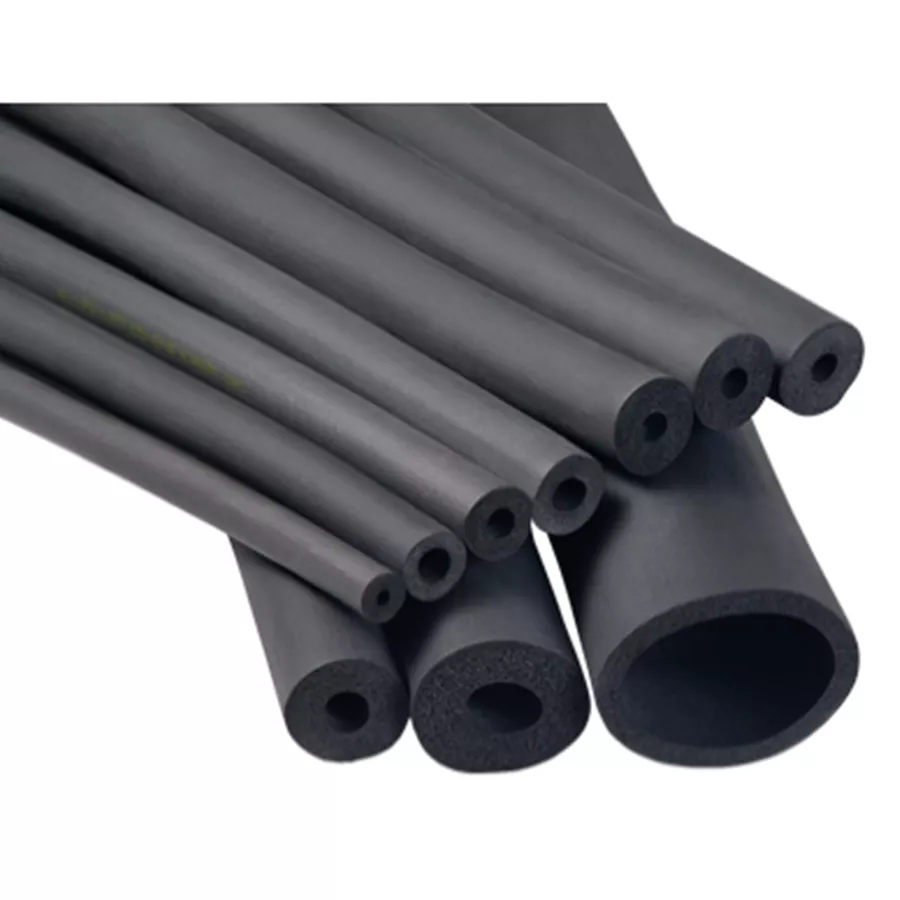
Elastomeric Rubber Foam Insulation
Flexible rubber foam insulation is commonly used in HVAC, refrigeration, and piping applications.
Its closed-cell structure helps resist water vapor penetration, making it useful for managing condensation in chilled water systems.
It can contribute to building energy efficiency by reducing unwanted heat transfer in mechanical installations.
Polyethylene Insulation
Polyethylene foam is a lightweight material used in selected plumbing, HVAC, and building applications.
Its suitability depends on temperature requirements, moisture exposure, fire regulations, and product specifications.
Cellulose Insulation
Cellulose insulation is generally manufactured using recycled paper products treated with suitable additives.
It is commonly used in building cavities and roof spaces, where it helps reduce heat transfer and can contribute to the use of recycled construction materials.
Important Insulation Factors in Green Building Projects
Choosing insulation for a certified sustainable building requires more than identifying a material with good thermal performance.
Several factors should be considered during product evaluation.
Thermal conductivity: Lower thermal conductivity generally indicates better resistance to heat transfer. Product values should be assessed alongside the required insulation thickness.
Environmental product documentation: Environmental Product Declarations (EPDs) provide information about a product’s environmental impacts across defined life-cycle stages.
Recycled content: Materials containing recycled raw materials may support certain sustainability objectives, depending on the applicable certification requirements.
Chemical emissions: Relevant emissions testing and documentation can help determine whether an insulation product meets indoor environmental quality requirements.
Fire performance: Insulation must comply with applicable building fire safety standards and project specifications.
Moisture resistance: Materials used in humid environments or chilled water systems should provide appropriate moisture protection.
Durability: Expected service life, maintenance needs, and resistance to environmental exposure influence long-term material performance.
The Role of Insulation in Energy-Efficient HVAC Systems
Heating, ventilation, and air conditioning systems are essential to maintaining comfortable indoor environments.
However, poorly insulated ducts and pipes can result in significant thermal losses.
Green building projects often place considerable emphasis on improving HVAC efficiency because mechanical systems contribute substantially to overall building energy consumption.
Insulating Chilled Water Pipes
Chilled water systems distribute cooling throughout large commercial buildings.
Suitable closed-cell rubber foam insulation helps reduce unwanted heat gain and controls condensation when correctly installed.
This protects surrounding building components and supports stable cooling performance.
Improving Duct Insulation
Air conditioning ducts may lose or gain heat as conditioned air travels through the building.
Appropriate duct insulation helps reduce these temperature changes and supports more efficient air distribution.
Reducing Thermal Losses in Heating Systems
Heating pipes can lose energy as hot water moves between equipment and occupied areas.
Insulating these pipelines helps retain heat and reduces unnecessary energy losses.
How to Choose Insulation That Supports Green Certification
Not every environmentally marketed insulation product automatically qualifies for green building credits.
The suitability of a material depends on the specific certification framework, project requirements, and supporting documentation.
Developers and contractors should consider the following steps:
- Identify the green building certification system being used.
- Review the material-related requirements and available credits.
- Compare insulation products using verified technical data.
- Request environmental documentation from manufacturers.
- Evaluate thermal performance and installation requirements.
- Check fire safety and indoor emissions information.
- Maintain product records for project assessment and certification.
Working with architects, sustainability consultants, and mechanical engineers can help ensure that insulation choices align with the building’s overall objectives.
Challenges in Adopting Sustainable Insulation Materials
Despite the benefits, selecting sustainable insulation can involve several challenges.
Initial purchase costs may be higher for certain specialized products. In addition, manufacturers do not always provide the same level of environmental documentation, making comparisons difficult.
Installation quality is another important concern. Poor workmanship can reduce the thermal performance of even high-quality insulation products.
There may also be differences between certification systems regarding recycled content, emissions, sourcing, and life-cycle assessment.
These challenges highlight the importance of evaluating insulation products using measurable performance data rather than relying solely on marketing claims.
The Future of Sustainable Insulation in Green Construction
The construction industry is moving toward more comprehensive approaches to energy efficiency and environmental responsibility.
Manufacturers are increasingly exploring improved insulation formulations, recycled raw materials, lower-impact production methods, and better environmental reporting.
At the same time, building certification programs continue to encourage greater transparency in material selection and building performance.
As these developments progress, insulation will remain an important part of strategies aimed at reducing operational energy demand and improving building sustainability.
Conclusion
Green building schemes encourage the use of sustainable and energy-efficient insulation by recognizing the importance of thermal performance, responsible material selection, indoor environmental quality, and long-term building durability.
Insulation materials such as mineral wool, fiberglass, cellulose, and elastomeric rubber foam can all contribute to sustainable construction when selected according to their intended applications and supported by appropriate technical documentation.
For architects, developers, and contractors, understanding certification requirements and evaluating material performance carefully can help create buildings that use energy more efficiently while supporting healthier and more durable environments.