
Modern industrial facilities increasingly rely on automated equipment to manage fluid movement, improve operational consistency, and reduce the need for manual intervention. In water distribution networks, manufacturing plants, and processing facilities, valves play an important role in controlling the movement of liquids through pipelines. As automation becomes more common, electrically operated valve solutions offer greater flexibility for managing these systems.
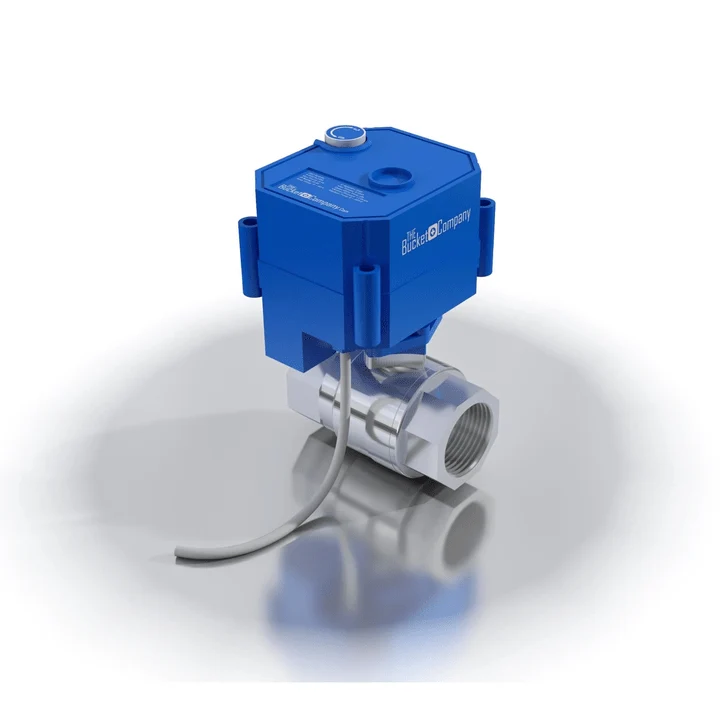
A Motorized Ball Valve combines the quarter-turn operation of a traditional ball valve with an electric actuator that opens and closes the valve automatically. This arrangement allows operators or control systems to manage fluid flow remotely, making it useful in installations where accessibility, repeatable operation, and coordinated process control are important. Understanding its construction, operating principles, and practical advantages can help engineers select the right solution for their applications.
What Is a Motorized Ball Valve?
A motorized ball valve is a flow-control device that uses an electric actuator to rotate a ball inside the valve body. The ball contains a central opening, known as a bore, that allows fluid to pass through when aligned with the pipeline.
When the actuator rotates the ball by approximately 90 degrees, the bore moves out of alignment with the pipeline, stopping the flow. This quarter-turn mechanism provides relatively simple operation and can be integrated into automated control systems.
Motorized ball valves are available in different body materials, connection types, sizes, and actuator configurations. Depending on the model, they may operate using on-off control or provide modulating functionality for applications requiring more precise flow adjustment.
How Does a Motorized Ball Valve Work?
The operation of a motorized ball valve involves two main components: the valve body and the electric actuator.
Electric Actuator Operation
The actuator contains an electric motor and a mechanical drive system that transfers rotational movement to the valve stem. When the actuator receives an electrical command, it turns the stem to move the internal ball into the required position.
Many actuators include internal limit switches that stop the motor when the valve reaches its fully open or fully closed position. This helps prevent unnecessary movement beyond the intended operating range.
Opening the Valve
When the control system sends an opening signal, the actuator rotates the ball until its bore aligns with the pipeline. Fluid can then pass through the valve.
Closing the Valve
When a closing signal is received, the actuator rotates the ball in the opposite direction. The bore moves perpendicular to the flow path, blocking the passage and isolating the downstream pipeline section.
Integration with Control Systems
Motorized ball valves can be connected to programmable logic controllers (PLCs), building management systems, industrial automation equipment, and other suitable control platforms.
Depending on the actuator design, control may involve simple open-and-close commands, position feedback, or proportional positioning signals.
Main Components of a Motorized Ball Valve
Understanding the valve’s main components helps explain how the equipment performs in automated applications.
Valve Body
The body contains the internal ball, seats, and other pressure-retaining components. Common materials include brass, stainless steel, carbon steel, and other suitable alloys.
Material selection depends on fluid compatibility, pressure, temperature, and environmental conditions.
Ball and Valve Seats
The ball is the primary flow-control element. Its central bore allows fluid to pass when aligned with the pipeline.
Seats surround the ball and help create a seal when the valve closes. Depending on the application, seats may use materials such as PTFE or other suitable polymers.
Stem
The stem connects the actuator to the ball. It transfers the actuator’s rotational movement while maintaining the required sealing arrangement around the valve body.
Electric Actuator
The actuator supplies the mechanical force needed to rotate the ball. It typically includes an electric motor, gears, control circuitry, and position-limiting components.
Position Feedback and Control Connections
Some motorized actuators include position indicators or feedback switches. These features allow a control system to identify whether the valve has reached a particular position.
More advanced models may support communication or positioning signals for integration into automated processes.
Key Benefits of Motorized Ball Valves
Motorized ball valves provide several advantages in systems where reliable and coordinated flow control is required.
1. Remote Operation
One of the most significant benefits is the ability to operate valves from a remote control station. Operators can open or close pipeline sections without physically accessing each valve.
This is particularly valuable in large facilities, underground installations, restricted areas, and systems where valves are distributed across multiple locations.
2. Improved Automation
Motorized ball valves can respond to signals from controllers, sensors, and automated equipment. This allows valve operation to become part of a coordinated process rather than depending entirely on manual actions.
For example, a water treatment system may use sensor readings and programmed sequences to control the movement of water between different processing stages.
3. Consistent Operation
Electric actuators provide repeatable movement between defined positions. This can help improve operational consistency when valves need to perform the same opening and closing sequence regularly.
Limit switches and position feedback can also help confirm that the actuator has reached its intended position.
4. Reduced Manual Work
Automated operation reduces the amount of physical effort required from maintenance and operating teams. Staff can manage multiple valves through a centralized control system, depending on the installation’s design.
This can improve workflow efficiency, particularly in facilities with many pipeline connections.
5. Compact Quarter-Turn Design
Ball valves use a relatively simple quarter-turn mechanism. When combined with a suitable electric actuator, they can provide automated operation without requiring the extended linear movement associated with some other valve designs.
This can be useful where installation space and operating arrangements are important considerations.
6. Integration with Monitoring Systems
Actuators with feedback features can provide information about valve position to a supervisory control system. This helps operators monitor equipment status and identify situations where a valve has not reached the commanded position.
The available feedback functions depend on the actuator model and control configuration.
Common Applications of Motorized Ball Valves
Motorized ball valves are used across many industries because they can support remote and automated control of liquids and, where appropriately specified, gases.
Water Treatment Plants
<AsyncImage query=”water treatment plant industrial motorized electric ball valves pipework” aspectRatio=”16:9″ width=”100%”/>
Water treatment facilities use valves to manage water movement through filtration, disinfection, storage, and distribution processes.
Motorized ball valves can automate selected pipeline connections, helping operators coordinate flow between treatment stages. Materials must be suitable for the water quality and any chemicals used in the process.
Industrial Manufacturing
<AsyncImage query=”industrial manufacturing factory electric actuated ball valve pipeline” aspectRatio=”16:9″ width=”100%”/>
Manufacturing plants often require controlled delivery of water, oils, and other process fluids. Motorized valves can be integrated into production sequences to support automated equipment operation and reduce repetitive manual tasks.
The valve and actuator must be selected according to the fluid, pressure, temperature, and duty cycle.
HVAC and Building Management
<AsyncImage query=”HVAC chilled water system electric motorized ball valve” aspectRatio=”16:9″ width=”100%”/>
Heating, ventilation, and air conditioning systems use valves to manage chilled water and hot water circulation.
Motorized ball valves can respond to control signals from thermostats and building management systems, helping coordinate the operation of heating and cooling equipment.
Agricultural Irrigation
Automated irrigation systems may use motorized valves to control water delivery to different zones. Operators can manage distribution schedules through a controller, reducing the need to manually operate every pipeline connection.
For outdoor installations, the actuator’s enclosure protection and environmental suitability are important selection factors.
Chemical Processing
Chemical processing facilities require valves that can handle specific liquids under defined pressure and temperature conditions.
Motorized ball valves may be used for automated isolation or flow management when the body, ball, seats, seals, and actuator are compatible with the process medium. Hazardous-area requirements must also be evaluated where applicable.
Types of Motorized Ball Valves
Different motorized ball valve configurations are available to suit various control requirements.
Two-Way Motorized Ball Valves
Two-way valves have one inlet and one outlet. Their main purpose is to start or stop flow through a pipeline.
They are commonly used for automated isolation in water systems, industrial equipment, and building services.
Three-Way Motorized Ball Valves
Three-way valves contain three pipeline connections and can direct fluid between different flow paths.
Depending on whether the valve uses an L-port or T-port ball configuration, it can support different switching or mixing arrangements. The correct port design must be matched to the required flow pattern.
On-Off Motorized Ball Valves
On-off models are designed to move between fully open and fully closed positions. They are suitable for applications that require automated isolation rather than continuous adjustment.
Modulating Motorized Ball Valves
Modulating models can position the ball at intermediate angles in response to an appropriate control signal. This allows more flexible flow adjustment in applications designed for proportional control.
Not every motorized ball valve supports modulation, so actuator and valve specifications should be checked carefully.
How to Choose the Right Motorized Ball Valve
Selecting a suitable valve requires an understanding of both the pipeline conditions and the electrical control requirements.
1. Identify the Fluid
Determine whether the valve will handle clean water, treated water, oil, chemicals, or another medium. The body and internal sealing materials must be compatible with the fluid.
2. Confirm the Pipeline Size
Choose a valve with a nominal diameter and connection arrangement that match the pipeline design. The valve’s flow capacity should also be suitable for the required operating conditions.
3. Check Pressure and Temperature Ratings
The valve must withstand the system’s operating pressure and temperature range. Consider potential pressure surges and temperature variations rather than relying only on normal operating values.
4. Select the Appropriate Body Material
Stainless steel, brass, and other materials offer different mechanical and corrosion-resistance characteristics. The selection should reflect the fluid, installation environment, and required service life.
5. Determine the Actuator Voltage
Electric actuators are available in different voltage configurations, including common AC and DC options. Confirm that the actuator matches the available power supply and control system.
6. Calculate Required Torque
The actuator must provide enough torque to operate the valve under the expected pressure and service conditions. Insufficient torque can cause incomplete operation, while an unsuitable actuator may increase equipment costs.
7. Choose the Control Function
Decide whether the application needs basic open-and-close operation or modulating control. Also determine whether position feedback, auxiliary switches, or other control features are necessary.
8. Review Environmental Protection
Check the actuator’s enclosure rating and suitability for moisture, dust, temperature extremes, and outdoor exposure. Hazardous-area installations may require specifically certified equipment.
9. Consider Failure and Power-Loss Behavior
Determine what should happen if electrical power is interrupted. Standard electric actuators may remain in their last position, while some specialized configurations offer fail-safe functions. The required behavior should be established during system design.
Installation and Maintenance Best Practices
Correct installation helps ensure that a motorized ball valve operates reliably and communicates properly with the control system.
Before installation, confirm the flow direction requirements, connection dimensions, pressure rating, actuator clearance, and electrical specifications. Follow the manufacturer’s instructions for mounting the actuator and connecting the valve to the pipeline.
Important practices include:
- Clean the pipeline before installation to remove debris that could damage the seats or interfere with ball movement.
- Align pipeline connections properly to avoid placing unnecessary mechanical stress on the valve body.
- Use appropriate gaskets, fittings, and sealing materials.
- Verify that the actuator is compatible with the available power supply.
- Protect electrical connections from moisture and environmental exposure.
- Test the valve through its operating range before placing the system into service.
- Confirm that control signals and position feedback work as intended.
Routine maintenance should include checking external leakage, inspecting electrical connections, reviewing actuator performance, and testing valve movement according to the manufacturer’s recommendations. Any maintenance involving the pipeline should be performed after the system has been safely isolated and depressurized.
Motorized Ball Valves vs. Manual Ball Valves
Both valve types use a rotating ball to control flow, but their operating arrangements are different.
| Feature | Motorized Ball Valve | Manual Ball Valve |
|---|---|---|
| Operation | Electric actuator | Hand lever or gearbox |
| Remote control | Available with suitable controls | Not normally available |
| Automation | Can integrate with control systems | Requires additional automation equipment |
| Manual effort | Reduced during normal operation | Requires operator involvement |
| Initial cost | Generally higher | Generally lower |
| Typical use | Automated or remote-controlled systems | Local manual isolation |
A motorized model is often preferable when valves must operate according to programmed sequences or remote commands. A manual valve may be more practical for simple installations where frequent or remote operation is unnecessary.
Common Challenges and How to Address Them
Despite their advantages, motorized ball valves must be selected and maintained correctly to avoid operating problems.
Incorrect actuator sizing: An actuator with insufficient torque may fail to complete the valve’s movement. Confirm the required torque using manufacturer specifications and appropriate design margins.
Power supply problems: Voltage fluctuations or incorrect electrical connections can interrupt operation. Verify the power supply and wiring requirements before commissioning.
Incompatible materials: Unsuitable seats, seals, or body materials may deteriorate when exposed to certain fluids. Review material compatibility before purchase.
Debris in the pipeline: Solid particles can damage sealing surfaces or obstruct movement. Appropriate filtration and pipeline cleaning can help reduce this risk.
Unsuitable control signals: A valve designed for on-off operation may not provide accurate proportional control. Match the actuator’s control capability to the system requirements.
Addressing these factors during design and installation can help improve reliability and reduce unnecessary downtime.
Conclusion
Motorized ball valves provide a practical solution for automated flow control in industrial, water treatment, HVAC, irrigation, and manufacturing systems. Their electric actuators enable remote operation, consistent positioning, and integration with modern control platforms.
Choosing the right model requires careful consideration of valve materials, pressure and temperature ratings, actuator torque, power supply, control functions, and environmental conditions. With proper selection, installation, and maintenance, motorized ball valves can support efficient operation and dependable fluid management across a wide range of applications.