
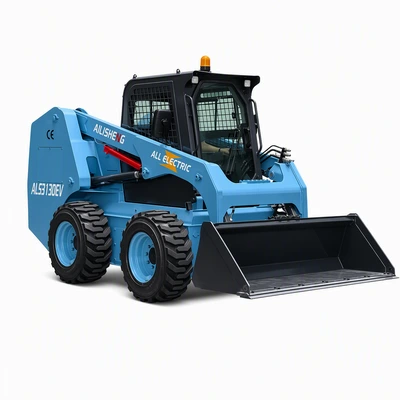
Electric construction equipment is becoming an increasingly practical option for businesses that want efficient material handling, reduced local emissions, and quieter operation. Among these machines, electric skid steer loaders are attracting attention across construction, landscaping, warehousing, and industrial applications. However, their effectiveness depends on more than motor power or battery size. Runtime, charging time, and overall productivity are influenced by several factors that buyers and operators should understand before choosing a machine.
An Electric Skid Steer uses rechargeable battery power to perform tasks such as moving materials, clearing debris, and operating compatible attachments. Its performance depends on battery capacity, workload intensity, operating conditions, charging infrastructure, and maintenance practices. By understanding these variables, businesses can plan work schedules more effectively, minimize downtime, and get better value from their equipment.
1. Battery Capacity and Usable Energy
Battery capacity is one of the most important factors affecting electric skid steer runtime. It is commonly measured in kilowatt-hours (kWh) and indicates how much energy a battery can store.
In general, a machine with a larger usable battery capacity can operate longer under similar working conditions. However, battery size alone does not determine actual runtime. Energy consumption varies according to the workload, machine configuration, attachment requirements, and operating environment.
When comparing models, buyers should consider:
- Total and usable battery capacity.
- Expected runtime under representative working conditions.
- Battery chemistry and thermal management.
- Battery warranty and expected service life.
- Availability of replacement batteries and technical support.
Manufacturers may provide runtime estimates based on particular test conditions. Businesses should ask how these estimates were calculated and whether they reflect the demands of their intended applications.
2. Workload Intensity and Operating Patterns
The type of work performed has a direct effect on how quickly an electric skid steer consumes battery energy.
Light-duty activities, such as occasional material movement across a relatively flat surface, may require less energy than continuous lifting, heavy loading, or repeated travel with full buckets.
Several operating patterns can influence energy consumption:
- Frequent lifting and lowering of heavy loads.
- Continuous travel between loading and unloading areas.
- Repeated acceleration and turning.
- Extended use of hydraulic attachments.
- Working on uneven ground or slopes.
- Long periods of demanding operation without breaks.
For example, a machine used intermittently for warehouse maintenance may achieve a different runtime from one continuously loading construction materials.
Businesses should estimate the actual work cycle rather than relying only on the number of hours the machine is expected to be switched on. Recording typical task durations, load weights, travel distances, and attachment usage can help create a more realistic operating plan.
3. Attachment Type and Hydraulic Demand
Attachments expand the versatility of electric skid steer loaders, allowing them to handle a wide range of tasks. However, different attachments place different demands on the machine’s power and hydraulic systems.
A bucket used for occasional material movement may have different energy requirements from an attachment that needs continuous hydraulic flow. Sweepers, augers, grapples, and other specialized tools can affect runtime depending on their design and workload.
Before choosing an attachment, verify:
- Compatibility with the loader’s mounting system.
- Required hydraulic flow and pressure.
- Electrical connection requirements, where applicable.
- Attachment weight and its effect on rated capacity.
- Expected energy consumption during operation.
Using an attachment that exceeds the machine’s approved specifications can reduce performance, increase wear, and create safety risks.
Selecting the correct attachment for the task can improve efficiency by reducing unnecessary handling and helping operators complete work in fewer cycles.
4. Operator Technique and Driving Habits
Operator behavior can influence battery consumption and productivity. Efficient operation involves matching machine movement, lifting actions, and attachment use to the task rather than making unnecessary movements.
Practical techniques include:
- Planning material routes before starting work.
- Avoiding unnecessary travel and repeated repositioning.
- Keeping loads within the manufacturer’s rated limits.
- Using smooth acceleration and controlled turns.
- Selecting the appropriate travel speed for the surface.
- Avoiding excessive idling when it does not serve a purpose.
- Using attachments according to the manufacturer’s instructions.
Operator training can also improve consistency and reduce avoidable wear. When several people operate the same machine, standardized procedures help establish predictable work cycles and make runtime estimates more reliable.
Efficient operating habits cannot eliminate the energy demands of heavy work, but they can help reduce waste and improve the amount of useful work completed per charge.
5. Terrain and Environmental Conditions
The working environment affects both energy consumption and machine productivity. Surface conditions, gradients, temperature, and traction requirements can all change how much energy an electric skid steer needs.
Surface Conditions
Firm, level surfaces may allow more predictable travel than loose gravel, soft soil, mud, or uneven terrain. Difficult ground conditions can increase rolling resistance and require additional power.
Operators should select tires or tracks appropriate for the site and follow the manufacturer’s guidance on terrain and operating limits.
Slopes and Uneven Ground
Working on slopes or irregular surfaces may increase energy demand and introduce additional stability concerns. The machine’s rated limits, load position, and ground conditions must be assessed before operation.
Productivity should never be improved at the expense of safe operating practices.
Temperature
Battery performance can vary with ambient temperature. Cold conditions may reduce available energy or affect charging speed, while excessive heat can increase the need for battery thermal management and may trigger protective limits.
Businesses operating in regions with extreme seasonal temperatures should review the manufacturer’s recommendations for operating, charging, and storing the battery under those conditions.
6. Charging Time and Charger Capacity
Charging time determines how quickly an electric skid steer can return to work after its battery needs replenishment. It depends on battery capacity, the charger’s power output, the battery’s current state of charge, temperature, and the charging system’s limits.
A higher-power charger may reduce charging time when the machine supports it, but charger output alone does not determine how quickly the battery can be charged. Battery management systems and manufacturer restrictions may limit charging power during parts of the charging cycle.
Before purchasing a machine, businesses should ask about:
- Compatible charger specifications.
- Typical charging time under normal conditions.
- Electrical supply requirements.
- Whether charging can be scheduled during breaks or overnight.
- Safe charging procedures and installation requirements.
- Charging performance under expected temperatures.
The best charging arrangement is one that fits the actual work schedule. Charging infrastructure should be planned before the machine arrives, especially when equipment will operate at multiple sites or in facilities with limited electrical capacity.
7. Battery State of Charge and Charging Strategy
Battery management involves more than plugging in the machine at the end of each shift. The timing and pattern of charging can affect equipment availability and long-term battery health.
Businesses should follow the manufacturer’s recommendations for charging limits, storage, and battery maintenance. Different battery chemistries and systems may have different requirements, so a universal charging rule should not be assumed.
A practical strategy may include:
- Checking battery status before each shift.
- Scheduling charging during planned breaks where appropriate.
- Keeping sufficient energy available for essential tasks.
- Monitoring battery performance over time.
- Following approved charging and storage procedures.
- Inspecting charging equipment regularly.
For operations with predictable work cycles, planned charging can reduce unnecessary downtime. Where workloads are highly variable, operators may need to monitor energy consumption more closely and adjust task schedules accordingly.
8. Maintenance and Battery Health
Maintenance influences runtime, reliability, and overall productivity. Electric skid steer loaders do not require conventional engine oil changes or fuel-system servicing, but they still need regular inspections.
Important maintenance tasks include checking hydraulic components, tires or tracks, electrical connections, attachment mounts, cooling systems, and safety features. Battery-related inspections should follow the manufacturer’s procedures and be performed by qualified personnel where necessary.
Over time, battery capacity may decline because of age, charging history, temperature exposure, and usage patterns. A battery that stores less usable energy may require more frequent charging and could affect the amount of work completed during each shift.
Businesses should monitor changes in runtime and investigate unexpected reductions. Problems may be related to battery condition, attachment demand, terrain, operating technique, or a maintenance issue.
Preventive maintenance and timely servicing can help reduce unplanned downtime and protect the machine’s long-term value.
9. Load Capacity and Material Handling Efficiency
The weight of the material being moved affects energy consumption and productivity. Repeatedly handling loads close to a machine’s limits may require more demanding operation and can increase the consequences of inefficient work cycles.
Choosing the right rated operating capacity helps ensure that the loader can perform the intended tasks without exceeding approved limits.
To improve material handling efficiency:
- Match the loader’s capacity to typical load weights.
- Choose buckets and attachments suited to the material.
- Organize loading and unloading points efficiently.
- Reduce unnecessary travel between work areas.
- Keep transport routes clear and accessible.
- Avoid overloading the machine.
A well-matched loader can complete tasks more consistently and may reduce wasted energy caused by repeated trips or unsuitable attachments.
10. How Charging and Runtime Affect Overall Productivity
Runtime and charging time are closely connected to the number of productive hours a machine can deliver during a shift.
A machine with a long runtime may still cause delays if charging takes place during peak working hours. Conversely, a machine with a shorter runtime may perform effectively when the workload is light or charging can be scheduled outside active periods.
Businesses should consider the full operating cycle, including:
- Pre-operation inspection and battery checks.
- Active material handling or construction work.
- Breaks and planned charging periods.
- Attachment changes and repositioning.
- Scheduled maintenance and unexpected downtime.
Productivity should be measured by useful work completed, not just by the number of hours the machine remains switched on.
For example, moving a defined quantity of material per shift can provide a more meaningful productivity measure than comparing runtime alone. This approach helps businesses evaluate whether a machine’s battery capacity, attachment configuration, and charging schedule meet operational targets.
11. Practical Ways to Maximize Electric Skid Steer Productivity
Businesses can improve productivity by combining appropriate equipment selection with effective work planning.
Plan Tasks Around Battery Capacity
Estimate energy requirements for the expected workload and schedule demanding tasks when the battery has sufficient charge. Keep a practical reserve based on site conditions and the manufacturer’s recommendations.
Reduce Unnecessary Travel
Arrange material storage, loading points, and unloading areas to minimize repeated journeys. A more organized worksite can improve productivity regardless of the machine’s power source.
Select Suitable Attachments
Use attachments that match the material, workload, and hydraulic requirements. Avoid equipment combinations that exceed approved limits or place unnecessary demands on the power system.
Establish a Charging Routine
Create a charging schedule that fits the work shift and available electrical infrastructure. Ensure operators know how to check battery status and follow approved charging procedures.
Train Operators
Provide training on efficient driving, safe lifting, attachment operation, battery monitoring, and daily inspections. Consistent operating practices can improve both productivity and equipment reliability.
Track Real-World Performance
Record operating hours, charging duration, energy consumption where available, workload, and maintenance events. Reviewing this information over time can help identify opportunities to improve scheduling and reduce downtime.
12. Choosing an Electric Skid Steer for Your Workload
Selecting the right machine starts with defining the work it must perform. Construction contractors may prioritize lifting capacity and hydraulic performance, while landscaping businesses may focus on terrain suitability and attachment versatility. Warehouse operators may place greater importance on compact dimensions, local emissions, and charging arrangements.
Before purchasing, compare battery capacity, expected runtime, charging time, rated operating capacity, machine dimensions, and attachment compatibility. Also evaluate warranty coverage, service support, replacement-part availability, and total cost of ownership.
Whenever possible, request performance information based on conditions similar to your intended application. A demonstration or trial can help confirm whether the machine meets the required productivity targets.
Conclusion
Electric skid steer runtime, charging time, and productivity depend on a combination of battery capacity, workload intensity, attachment demand, operator technique, terrain, temperature, charging infrastructure, and maintenance. No single specification can accurately predict performance across every application.
Businesses can get more from their equipment by choosing a machine that matches the workload, planning charging around operating schedules, maintaining battery health, and training operators in efficient work practices. Evaluating these factors together helps reduce unnecessary downtime and improve the amount of useful work completed per charge.
With realistic performance estimates and a well-planned operating strategy, an electric skid steer can be a practical solution for many construction, landscaping, and industrial applications.