
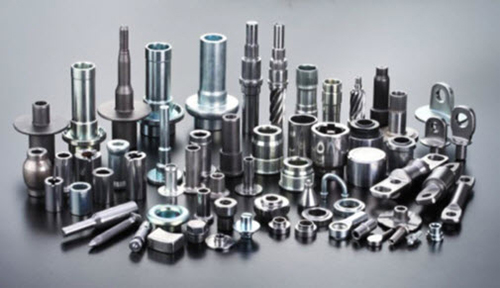
In modern manufacturing, achieving high durability and optimal material utilization is critical for producing reliable and cost-effective metal components. Cold Forged Parts are increasingly favored in industries such as automotive, aerospace, and industrial machinery due to their enhanced mechanical properties, precision, and efficiency. By shaping metal at room temperature using high-pressure dies, these components combine strength with minimal material waste.
Manufacturers benefit from using Cold Forged Parts because the forging process aligns the internal grain structure of the metal along the contours of the component. This grain flow improves structural integrity, fatigue resistance, and wear performance while reducing the likelihood of defects often associated with casting or machining processes.
The Cold Forging Process
1. Material Selection
The process begins with selecting suitable metals or alloys such as steel, aluminum, or copper. The choice depends on mechanical requirements like tensile strength, hardness, and corrosion resistance, tailored to the intended application.
2. Workpiece Preparation
Unlike hot forging, cold forging is performed at ambient temperatures, which preserves the metal’s properties. Workpieces are cleaned, cut, and sometimes pre-shaped before being positioned in precision dies. Forging without heat enhances dimensional stability and reduces energy consumption.
3. Die Design
Precision-machined dies define the final shape and tolerances of the component. Proper die design ensures efficient material flow, minimizes flash, and achieves consistent results across production batches.
4. Forging Operation
High-pressure forging forces the metal into the die cavity, causing plastic deformation. This process aligns the metal’s internal grains along the contours of the part, increasing strength, toughness, and fatigue resistance. The controlled deformation also reduces the likelihood of microcracks or other defects.
5. Flash Removal and Finishing
Excess material, known as flash, is trimmed from the component. Depending on requirements, additional finishing processes such as machining, polishing, or heat treatment may be applied to meet dimensional and surface quality standards.
Advantages of Cold Forged Parts
Enhanced Durability
The grain alignment achieved through cold forging improves mechanical properties, resulting in components that withstand heavy loads, repeated stress, and high-impact conditions. This makes them suitable for applications where reliability is critical.
Exceptional Dimensional Accuracy
Cold forging ensures minimal thermal expansion or contraction since it occurs at room temperature. Components maintain tight tolerances, reducing the need for extensive post-forging machining and ensuring consistency across large production volumes.
Superior Material Efficiency
Controlled metal flow and precise die design minimize material waste and scrap. Cold forging is highly efficient, producing high-quality components with lower material costs compared to traditional casting or machining processes.
Improved Surface Quality
Cold forged components typically have smooth surfaces with minimal defects, reducing the need for additional finishing operations. This not only improves appearance but also enhances functionality in precision applications.
Fast Production for High Volumes
Once dies are prepared, cold forging allows for rapid production of large quantities of identical parts. This scalability ensures consistent quality and shorter lead times, making it ideal for mass production environments.
Versatility
Cold forged parts can be produced in complex shapes, small sizes, and high-precision configurations. This versatility is critical in industries such as automotive for shafts, gears, and fasteners, as well as aerospace and industrial machinery for high-strength components.
Applications Across Industries
- Automotive: Suspension components, gears, shafts, and fasteners.
- Aerospace: High-strength brackets, structural parts, and connectors.
- Industrial Machinery: Couplings, hydraulic parts, and mechanical linkages.
- Consumer Goods: Durable precision components for appliances, tools, and electronics.
Conclusion
Cold Forged Parts offer a combination of durability, precision, and material efficiency, making them indispensable in modern manufacturing. By improving mechanical strength and minimizing material waste, cold forging ensures reliable, high-quality components suitable for demanding industrial applications.
For manufacturers seeking strong, efficient, and precise metal components, cold forging provides a versatile and cost-effective solution that meets the rigorous standards of today’s production environments.