

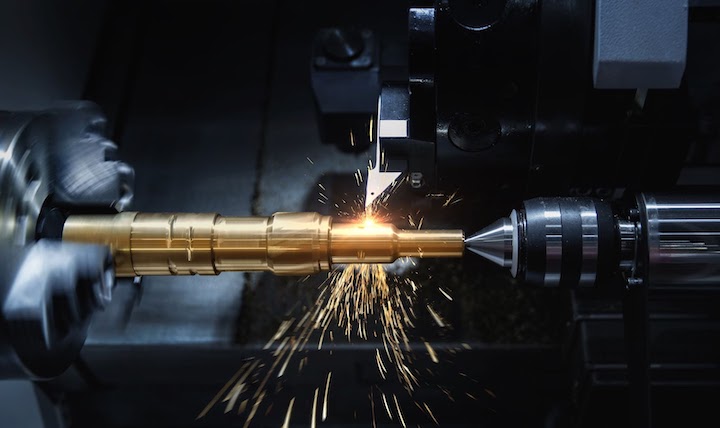
In modern manufacturing, precision and efficiency are critical for producing high-quality components. One of the most widely used machines for turning operations is the 2 axis CNC machine. This equipment combines automation, computer control, and mechanical precision to perform tasks that would be time-consuming or difficult on conventional lathes. Understanding its definition, working process, and benefits can help manufacturers optimize production and maintain consistent quality.
A 2 Axis CNC Machine is a computer-controlled lathe that operates along two primary axes: the X-axis (horizontal movement) and the Z-axis (longitudinal movement). This configuration allows the cutting tool to move precisely along these two directions, enabling accurate shaping, facing, turning, and threading of cylindrical workpieces. Unlike manual lathes, the CNC version automates these operations through programmed instructions, reducing human error and improving repeatability.
Definition and Core Components
The 2 axis CNC machine is defined by its ability to automate machining operations along two axes using digital instructions. Key components include the machine bed, spindle, tool turret, linear guides, ball screws, and the CNC control panel. The spindle holds the workpiece and rotates it at programmed speeds, while the tool turret holds multiple cutting tools and moves along the X and Z axes to execute machining operations.
The CNC controller is the brain of the machine. It interprets the G-code program, which contains the machining instructions, and sends precise commands to the motors and actuators. This integration of mechanical and electronic systems allows the machine to produce parts with tight tolerances and consistent surface finishes, which is essential in industries such as automotive, aerospace, and medical devices.
Working Process of a 2 Axis CNC Machine
The working process of a 2 axis CNC machine involves several stages, starting from design to finished product. It begins with creating a CAD (Computer-Aided Design) model of the component. The CAD model is then converted into a CAM (Computer-Aided Manufacturing) program, which generates the tool paths and G-code instructions that the CNC machine will follow.
Once the program is loaded into the machine, the workpiece is securely mounted onto the spindle, and the cutting tools are positioned on the turret. The operator then initiates the program. During operation, the spindle rotates the workpiece while the cutting tool moves along the X and Z axes according to the programmed path. The CNC controller ensures precise movement and adjusts feed rates, cutting speeds, and tool engagement to achieve the desired dimensions and surface finish.
During machining, the machine may also use coolants to reduce heat and improve tool life. The process is largely automated, but operators monitor performance, change tools when necessary, and perform quality checks on the machined parts.
Benefits of Using a 2 Axis CNC Machine
Enhanced Precision and Accuracy
One of the primary advantages of a 2 axis CNC machine is its ability to produce highly precise and consistent components. The programmed instructions allow the machine to maintain tight tolerances over repeated production runs, reducing the likelihood of defects. This level of accuracy is particularly valuable for industries that require exact specifications, such as aerospace and medical device manufacturing.
Increased Productivity
Automation enables continuous operation with minimal operator intervention. A 2 axis CNC machine can perform multiple operations, such as turning, facing, and threading, in a single setup. This reduces cycle time, eliminates repetitive manual tasks, and increases overall production efficiency. Manufacturers can meet higher demand without compromising quality.
Reduced Human Error
Manual lathe operations rely heavily on operator skill and attention, which can result in inconsistencies or mistakes. CNC machines automate movements and cutting parameters, minimizing errors caused by fatigue or human oversight. This ensures uniformity in large production batches and lowers the risk of material waste.
Flexibility in Manufacturing
Although a 2 axis CNC machine is limited to X and Z axes, it is still highly versatile for producing cylindrical components, shafts, bushings, and threaded parts. Operators can modify the G-code program to create new designs without extensive reconfiguration, making the machine suitable for both prototype development and small- to medium-scale production.
Cost Efficiency and Material Optimization
The precision of a CNC machine reduces material waste and eliminates unnecessary rework, leading to cost savings over time. Additionally, fewer operators are required to manage production, further lowering labor costs. The combination of reduced waste, efficient operation, and automation makes CNC machining a cost-effective solution for modern workshops.
Improved Safety
CNC machines are equipped with protective enclosures and automated controls, reducing the risk of accidents. Operators do not need to be in direct contact with moving tools during operation, enhancing workplace safety compared to manual lathes.
Conclusion
The 2 axis CNC machine is a fundamental tool in modern manufacturing, offering precise, efficient, and reliable machining capabilities. By automating operations along the X and Z axes, it delivers consistent quality, reduces human error, and improves production efficiency. Its versatility makes it suitable for a wide range of applications, from automotive components and industrial parts to medical and aerospace products.
Investing in a 2 axis CNC machine enables manufacturers to enhance productivity, maintain strict quality standards, and achieve long-term cost savings. Understanding its working process and benefits allows businesses to optimize their machining operations and remain competitive in a rapidly evolving industrial landscape.