

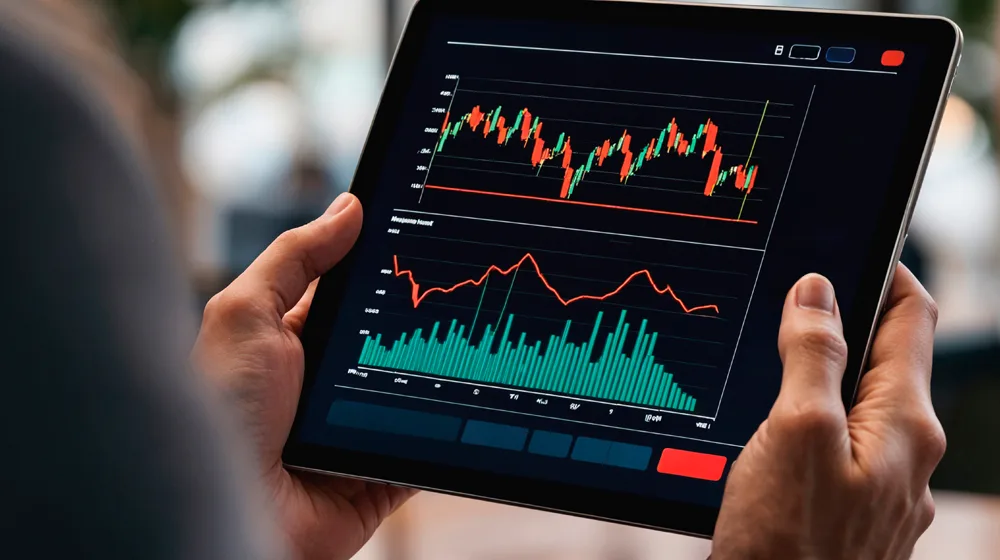
Margin is one of those terms that sounds more complicated than it actually feels once you’ve seen it in action. At first, it can seem technical, almost like something you need to calculate carefully before doing anything, but in practice, it becomes clearer just by placing a few trades.
For many people in Australia, CFD trading starts to make more sense when margin is no longer just a definition, but something they can see changing on their screen.
In simple terms, margin is the amount of money set aside to open and maintain a trade. You’re not paying the full value of the position, just a portion of it, which is why trading feels more accessible than expected at the beginning.
That’s where the idea of leverage connects to margin.
Instead of needing the full amount, you’re using a smaller balance to control a larger position. It sounds efficient, and it is, but it also means movements in the market can have a bigger impact than you might expect.
In CFD trading, this is where things start to feel different from traditional investing.
At the start, margin can feel like it’s just sitting there in the background. You open a trade, and part of your balance is used, but you don’t always think much about it unless something changes.
That usually happens when the market moves against you.
As the trade goes into a loss, your available margin starts to shrink. You might notice your free balance getting smaller, and this is where the concept begins to feel more real.
For traders in Australia, this moment is often when margin stops being theoretical and starts becoming something you actively pay attention to.
If the movement continues, you may come across something called a margin call. This is when your account no longer has enough available funds to support your open positions.
It doesn’t always come as a dramatic warning. Sometimes it’s just a notification, or in some cases, positions may begin to close automatically to prevent further losses.
In CFD trading, this is designed to protect both the trader and the platform, but it can still feel surprising if you haven’t experienced it before.
One thing that becomes clearer over time is that margin isn’t just about opening trades, it’s about maintaining them. You might have enough to enter a position, but if there isn’t enough room for price to move, that trade becomes difficult to hold.
This is why some traders prefer to leave more space in their account rather than using all available margin at once.
It creates flexibility.
For traders in Australia, this approach often feels less stressful. You’re not constantly watching how close your account is to its limit, and that can make decision making feel calmer.
A few simple habits tend to help with managing margin more comfortably:
• Avoid using your full balance on a single trade
• Keep some free margin available for movement
• Be aware of how much is tied up in open positions
• Check how your platform displays margin levels
These aren’t strict rules, but they help create a bit more breathing room.
Over time, margin becomes something you understand without needing to think about it too much. You start to recognise how much feels manageable and when things start to feel stretched.
That awareness builds gradually.
For many traders in Australia, CFD trading begins to feel more controlled once margin is no longer confusing. It stops being just a number on the screen and becomes part of how you judge whether a trade makes sense.
In the end, margin isn’t something to avoid or overanalyse. It’s simply part of how the system works, and once you’re familiar with it, it fits naturally into the way you approach each trade.