
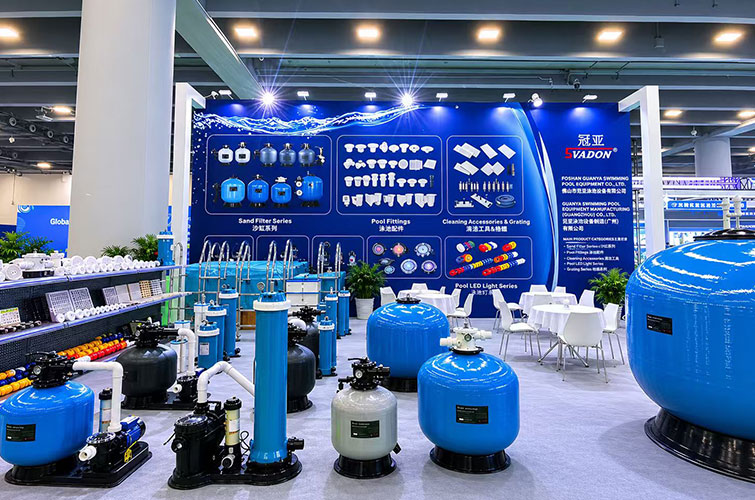
Swimming pool equipment must meet important safety, performance, and quality requirements to support reliable operation. Pumps, filters, electrical controls, heaters, and other pool components are exposed to water, pressure, chemicals, and continuous use. Without appropriate design and testing, equipment may create electrical hazards, leaks, mechanical failures, or inefficient operation.
Certifications and safety standards help manufacturers demonstrate that their products have been evaluated against specific requirements. They also give buyers, installers, and pool operators useful information when comparing equipment for residential and commercial projects.
Understanding these standards makes it easier to assess product quality, verify compliance, and choose equipment suited to the intended application.
Why Certifications Matter in Pool Equipment Manufacturing
Certifications provide evidence that a product, manufacturing process, or management system has been assessed against defined criteria. The exact meaning depends on the certification program and the organization issuing it.
For pool equipment manufacturers, compliance can involve electrical safety, pressure resistance, water quality, mechanical performance, and environmental considerations. Requirements vary according to the product type, installation location, and applicable regulations.
Certifications can help buyers in several ways:
- Improved safety assurance: Relevant testing can identify electrical, mechanical, or pressure-related risks.
- Verified product performance: Some programs evaluate whether equipment meets specified performance requirements.
- Regulatory compliance: Applicable certifications or approvals may be necessary before products can be installed or sold in certain markets.
- Purchasing confidence: Supporting documentation helps buyers compare products more objectively.
- Market access: Manufacturers may need particular approvals to supply equipment to specific countries or industries.
A certification should not be treated as a universal guarantee of quality. Buyers need to confirm what was assessed, which product models are covered, and whether the certification remains valid.
Common Safety Standards for Pool Equipment
Different pool products face different operating risks. As a result, manufacturers may need to follow several standards rather than relying on a single certification.
Electrical Safety Standards
Electrical safety is especially important because swimming pools combine water, conductive surfaces, and electrical equipment. Pumps, lighting, heaters, automated controls, and other powered components must be designed for their intended installation conditions.
Depending on the destination market and product category, relevant requirements may address insulation, grounding, protection against electric shock, temperature limits, enclosure protection, and electrical fault conditions.
For example, IEC 60335-2-41 addresses safety requirements for certain electric pumps, while other standards may apply to pool lighting, control systems, or heating equipment. The correct standard depends on the specific product and its intended use.
Manufacturers should identify the applicable requirements early in product development. Testing may then be performed by an appropriately qualified laboratory or certification body.
Installers must also follow local electrical codes. A compliant product does not automatically make an installation safe if wiring, grounding, bonding, or protective devices are incorrectly installed.
Mechanical and Pressure Safety
Pool pumps, filters, valves, and associated components operate under mechanical and hydraulic stresses. Poorly designed or manufactured parts may crack, leak, or fail when exposed to pressure or repeated use.
Applicable standards and testing procedures may evaluate pressure resistance, structural integrity, leakage, and performance under defined operating conditions.
Manufacturers should clearly state maximum operating pressures, temperature limits, flow requirements, and installation restrictions. Buyers should confirm that these specifications match the planned pool system.
Pressure-related testing is particularly important for filter tanks and other components that contain pressurized water. Products must be used within their rated limits and maintained according to the manufacturer’s instructions.
Chemical and Material Compatibility
Pool water may contain chlorine, salt, pH-adjusting chemicals, and other treatment products. Equipment materials must be suitable for the chemical conditions they are expected to encounter.
Manufacturers evaluate materials such as plastics, metals, coatings, seals, and filter media for their intended applications. The goal is to reduce corrosion, degradation, leakage, and premature component failure.
Material compatibility is particularly important in saltwater pools, where unsuitable metals or components may corrode more quickly.
Buyers should review the manufacturer’s guidance instead of assuming that a product suitable for a conventional chlorine pool is automatically appropriate for every saltwater system.
Important Certification Organizations and Programs
Several organizations develop standards, test products, or operate certification programs relevant to swimming pool equipment. Their roles differ, so buyers should understand what each organization actually verifies.
NSF International
NSF develops standards and certification programs covering areas such as public health, water quality, and certain products used in water-related applications.
For swimming pool projects, NSF/ANSI/CAN 50 is particularly relevant to many types of equipment and components used in recreational water facilities. Depending on the product category, the standard may address materials, performance, and other defined requirements.
Buyers should verify whether the specific pump, filter, chemical-treatment device, or other component is covered by an applicable certification. Not every pool product requires the same evaluation.
Underwriters Laboratories (UL)
UL develops safety standards and provides testing and certification services for a range of electrical and other products.
Where relevant, UL certification or another recognized product-safety evaluation may help demonstrate that equipment has been assessed against applicable requirements. The specific standard depends on the product and market.
A buyer should check the exact model and certification details rather than relying only on a manufacturer’s general statement that its products are UL approved.
International Electrotechnical Commission (IEC)
The IEC publishes international standards for electrical and electronic technologies. Some IEC standards are relevant to pool pumps, electrical appliances, lighting, and control equipment.
IEC standards provide technical requirements that manufacturers can use during design and testing. However, publication of an IEC standard does not automatically mean that a product is certified.
Whether a product needs third-party certification, a declaration of conformity, or another form of approval depends on the applicable market regulations.
Conformity Markings in European Markets
Products sold in the European Economic Area may need to meet applicable European Union legislation and carry the CE marking where required.
CE marking is generally a manufacturer’s declaration that a product meets the relevant legal requirements. Depending on the product and legislation, conformity assessment may involve internal procedures or a notified body.
It is not a general quality award, and it should not be confused with independent certification for every aspect of product performance.
For buyers, the important steps are to identify the legislation that applies, review the declaration of conformity where relevant, and confirm that the product is suitable for its intended installation.
How Manufacturers Demonstrate Compliance
Certification is usually supported by a structured process that may involve design reviews, technical documentation, laboratory testing, and production controls.
Although the exact process varies, manufacturers commonly follow several stages.
1. Identify Applicable Requirements
Engineers determine which regulations and standards apply to the product. Factors include the product category, electrical characteristics, pressure rating, installation environment, and target market.
A pool pump intended for residential use may have different requirements from equipment designed for a large commercial aquatic facility.
Identifying these requirements early can reduce redesign costs and prevent compliance problems later in development.
2. Design and Risk Assessment
Manufacturers evaluate potential hazards during the design stage. This may include electrical shock, overheating, pressure failure, chemical exposure, moving parts, and foreseeable installation errors.
Engineers then select suitable materials, protective features, and component configurations to address identified risks.
Design reviews and prototype testing help determine whether the product meets the intended safety and performance objectives.
3. Laboratory Testing
Testing may be conducted internally or by an independent laboratory, depending on the applicable requirements and certification program.
Typical evaluations can include:
- Electrical insulation and leakage-current tests.
- Temperature-rise and overheating assessments.
- Pressure and leakage tests.
- Mechanical strength and durability checks.
- Performance testing under defined operating conditions.
- Material assessments where required by the relevant standard.
Not every test applies to every product. Manufacturers must follow the specific requirements for the equipment being evaluated.
4. Documentation and Certification Review
The manufacturer compiles relevant test reports, design records, technical specifications, risk assessments, and other required documents.
A certification body may review this information and determine whether the product qualifies under its program. Some programs also require factory inspections or ongoing surveillance.
Manufacturers should maintain accurate records and notify the relevant parties when product changes could affect compliance.
5. Production Quality Control
Certification of a product model is only useful when manufactured units continue to match the evaluated design.
Quality control procedures may include incoming-material inspections, assembly checks, electrical testing, leak testing, and final performance verification.
Manufacturers also need procedures for handling nonconforming products and investigating recurring defects. These processes help maintain consistency as production volumes increase.
Quality Management Systems and Manufacturing Standards
Product safety certification and manufacturing quality management are related but distinct.
A product certification generally focuses on a specific product and defined requirements. A quality management system, by contrast, addresses how an organization manages its processes to achieve consistent results.
ISO 9001 is a widely used quality management system standard. Certification to ISO 9001 can indicate that an organization’s quality management system has been assessed against the standard’s requirements.
However, ISO 9001 certification does not automatically prove that every pool pump, filter, or accessory complies with all applicable product safety standards.
When evaluating a manufacturer, buyers should examine both its production controls and the product-specific evidence relevant to the equipment they plan to purchase.
How to Verify a Pool Equipment Manufacturer’s Certifications
Certification claims should be checked before a major purchase, especially when equipment will be installed in a commercial facility or a regulated market.
When reviewing a potential supplier, a Pool Equipment Manufacturer may be one resource to explore while comparing pool-related equipment and available product information.
Use the following steps to verify certification claims.
- Request the certificate or declaration. Ask for the relevant document rather than relying on a logo in a brochure.
- Check the issuing organization. Confirm that the certification body or testing organization is legitimate and relevant to the claimed approval.
- Match the model number. Ensure the document covers the exact product being purchased, including relevant variants.
- Review the applicable standard. Confirm that it addresses the product’s intended use and the safety risks involved.
- Check validity and scope. Where applicable, verify the certificate’s current status, scope, and any limitations through the issuing organization.
- Review technical documentation. Examine product specifications, installation instructions, test reports, and maintenance requirements.
- Confirm market requirements. Ask a qualified installer or compliance specialist which approvals are required in the destination country.
If a certificate cannot be verified or does not clearly identify the product, request clarification before making a purchasing decision.
Certifications for Residential and Commercial Pool Equipment
Residential and commercial pool systems may use similar equipment categories, but their operating demands and compliance requirements can differ.
Residential Pools
Homeowners generally need equipment suited to the pool’s volume, circulation requirements, electrical supply, and maintenance routine.
Important considerations include pump safety, filtration performance, material durability, energy efficiency, and installation compatibility.
Residential equipment should be selected according to the manufacturer’s rated limits and local electrical and building requirements. Smaller size does not eliminate the need for appropriate safety measures.
Commercial Pools
Hotels, fitness centers, schools, aquatic centers, and other public facilities may face additional regulatory, operational, and inspection requirements.
Commercial systems often operate for longer periods and may process larger water volumes. Reliability, maintainability, documentation, and access to replacement parts can therefore be especially important.
Facility operators should confirm applicable local health and safety regulations, required product approvals, and any project-specific specifications before selecting equipment.
Common Mistakes When Evaluating Certifications
Even experienced buyers can misunderstand certification claims if they do not review the supporting documentation carefully.
Several common mistakes are worth avoiding.
Assuming every product needs the same certification: Requirements differ by product type, intended use, and destination market.
Confusing a management-system certificate with product approval: ISO 9001 certification addresses a quality management system, not universal product compliance.
Accepting an unverified logo: A logo alone does not establish that a specific model has been certified.
Ignoring installation requirements: Certified equipment can still be hazardous if installed incorrectly or operated outside its rated limits.
Overlooking certificate scope: A certificate may apply only to certain models, configurations, or manufacturing locations.
Treating certification as proof of superior performance: Compliance demonstrates conformity with defined criteria, but buyers should still compare efficiency, capacity, maintenance requirements, warranty terms, and service support.
Avoiding these mistakes makes the purchasing process more transparent and helps reduce the risk of selecting unsuitable equipment.
The Future of Safety and Certification in Pool Equipment Manufacturing
Pool equipment continues to evolve as manufacturers introduce variable-speed pumps, automated controls, remote monitoring, and more efficient water-treatment systems.
These technologies can improve system management, but they may also introduce additional electrical, software, cybersecurity, or compatibility considerations.
Manufacturers must identify the standards and regulations relevant to new features rather than assuming that existing approvals cover every design change.
Growing attention to energy efficiency and environmental performance may also influence product specifications and purchasing criteria. Buyers should distinguish mandatory safety requirements from voluntary performance labels and environmental claims.
Clear technical documentation, traceable testing, and transparent compliance information will remain important as pool systems become more connected and automated.
Conclusion
Certifications and safety standards help manufacturers demonstrate that pool equipment has been assessed against defined requirements. Depending on the product, relevant considerations may include electrical safety, pressure resistance, material compatibility, filtration performance, and manufacturing quality controls.
For buyers, the most effective approach is to verify certification documents, confirm that they cover the exact model, understand the applicable standards, and review technical specifications before purchasing.
Certification is an important part of evaluating pool equipment, but it should be considered alongside correct sizing, professional installation, maintenance requirements, warranty support, and long-term operating costs. Together, these factors help buyers select equipment that is appropriate, dependable, and safe for its intended application.