
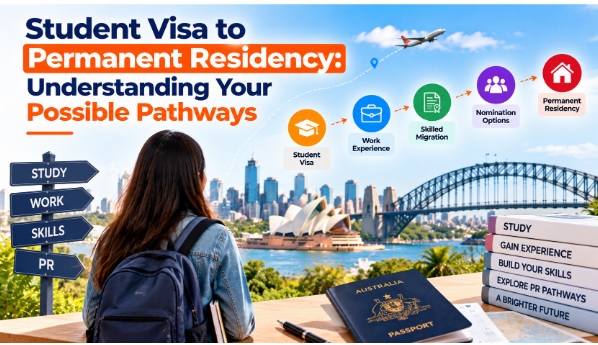
Australia is a popular destination for international students who want quality education, valuable work experience, and better career opportunities. Many students also hope to become permanent residents (PR) after completing their studies.
However, getting an Australian student visa does not automatically lead to permanent residency. Students must explore suitable visa options, meet the relevant eligibility requirements, and follow the correct application process.
Understanding your options early can help you choose the right course, develop useful skills, and plan your future in Australia. This guide explains the main pathways that international students may consider after studying in Australia.
Can You Get Australian PR After a Student Visa?
Yes, some international students may qualify for permanent residency after studying in Australia. However, there is no guaranteed or automatic pathway from a student visa to PR.
Your options depend on factors such as your qualifications, occupation, age, English-language ability, work experience, and the current immigration rules.
Students planning their next steps can explore Australian student visa and immigration assistance services to understand available support and prepare for their study journey.
1. Temporary Graduate Visa (Subclass 485)
One possible option after completing an eligible Australian qualification is the Temporary Graduate visa (subclass 485).
This visa allows eligible international graduates to stay in Australia temporarily and gain work experience. The available stream and period of stay depend on your qualification and circumstances.
Eligibility requirements may include:
- Completing an eligible qualification through an Australian education provider.
- Meeting the applicable age requirements, subject to exceptions.
- Holding or recently having held an eligible visa.
- Meeting relevant Australian study requirements.
- Providing the required supporting documents.
The subclass 485 visa is temporary, not permanent residency. However, eligible graduates may use this period to gain relevant work experience and explore other visa options.
Always check the latest requirements before applying because eligibility rules can change.
2. Skilled Independent Visa (Subclass 189)
The Skilled Independent visa (subclass 189) is a permanent visa pathway for eligible skilled workers. It does not require employer or state nomination under its points-tested stream.
International graduates may consider this option if their qualifications, occupation, skills assessment, points, and other circumstances meet the applicable requirements.
Important considerations may include:
- Having an eligible nominated occupation.
- Obtaining a suitable skills assessment.
- Meeting the relevant English-language requirements.
- Meeting the minimum points requirement.
- Receiving an invitation to apply.
Meeting the minimum points requirement does not guarantee an invitation. Selection depends on the applicable invitation process and other relevant factors.
Students who want to understand this pathway can review the Skilled Independent visa subclass 189 eligibility requirements before making long-term plans.
3. Skilled Nominated Visa (Subclass 190)
The Skilled Nominated visa (subclass 190) is another permanent residency option for eligible skilled workers. It requires nomination by an Australian state or territory.
For international graduates, this pathway may be worth researching if their occupation and circumstances align with the relevant nomination requirements.
State and territory governments may consider factors such as occupation demand, qualifications, work experience, and local employment needs. Requirements differ by jurisdiction and may change over time.
Before choosing a course or location based on this pathway, check the current nomination criteria and whether your occupation is eligible.
4. Skilled Work Regional Visa (Subclass 491)
The Skilled Work Regional (Provisional) visa (subclass 491) allows eligible skilled workers to live and work in designated regional areas of Australia.
This is a provisional visa, not a permanent visa. Eligible holders may later qualify for a permanent pathway, such as the Skilled Regional visa (subclass 191), if they meet the applicable requirements.
Depending on the relevant pathway, applicants may need state or territory nomination or sponsorship by an eligible relative.
Students considering regional Australia should research the location, employment opportunities, and current regional migration requirements before making decisions.
5. Employer-Sponsored Visa Pathways
Some international graduates may find employment with an Australian employer willing and eligible to sponsor them.
Depending on the job, employer, and applicant’s circumstances, a temporary employer-sponsored visa may be an option. Certain eligible sponsored workers may later qualify for an employer-sponsored permanent visa.
These pathways can involve requirements relating to occupation, salary, work experience, qualifications, and employer sponsorship.
Finding a job does not automatically make someone eligible for sponsorship or PR. Applicants should check the current rules for the relevant visa category.
How to Improve Your PR Planning While Studying
Planning ahead can help you make informed decisions about your education and career.
Choose your course carefully: Research whether your qualification supports your intended career and whether it is relevant to any occupation or skills assessment requirements.
Develop English-language skills: Strong English skills can help with study, employment, and meeting visa requirements.
Gain relevant work experience: Where permitted by your visa conditions, seek experience that supports your professional development and career goals.
Keep your documents organised: Maintain copies of academic transcripts, qualification certificates, employment records, and English-language test results.
Monitor immigration updates: Visa criteria, occupation lists, state nomination requirements, and application rules can change.
Seek professional advice when needed: A registered migration agent or authorised Australian legal practitioner can help explain the options relevant to your circumstances.
For personalised guidance, you can consult the best migration consultant in Darwin for visa applications to explore suitable visa options and understand the relevant application requirements.
Common Mistakes to Avoid
Do not assume that every Australian qualification leads to permanent residency. Choosing a course only because you expect it to provide PR can lead to disappointment if the relevant requirements are not met.
Avoid relying on outdated visa information or unofficial promises. No migration agent or education provider can guarantee that you will receive permanent residency.
You should also comply with your current visa conditions, provide accurate information, and maintain the documents needed for future applications.
Conclusion
The journey from an Australian student visa to permanent residency may involve several stages, including completing an eligible qualification, gaining work experience, and applying for a suitable skilled or employer-sponsored visa.
Possible pathways include the Temporary Graduate visa (subclass 485), Skilled Independent visa (subclass 189), Skilled Nominated visa (subclass 190), and eligible regional or employer-sponsored options.
Your best pathway depends on your individual circumstances and the immigration rules in effect when you apply. Research your options early, develop relevant skills, and verify all requirements through the Australian Department of Home Affairs before making important decisions.