
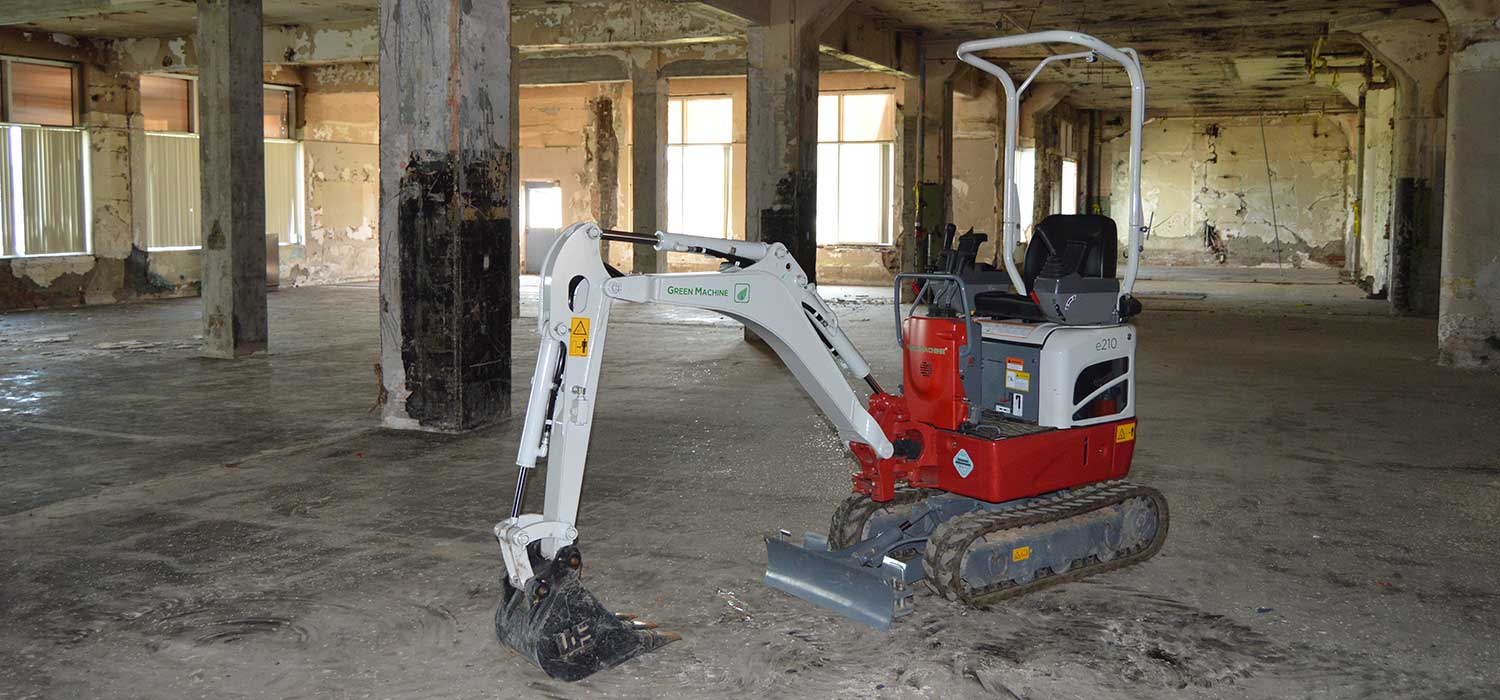
Indoor construction and renovation work can involve demanding logistical and operating conditions. Contractors may need to remove soil, prepare floor areas, excavate for selected installations, or perform work within buildings where access is restricted. Unlike open construction sites, indoor environments may have limited ventilation, narrow passages, low ceilings, finished surfaces, and nearby occupants or tradespeople. Equipment selection must therefore account for both the excavation task and the characteristics of the building.
An electric mini excavator for sale may be considered for selected indoor projects because battery-powered operation does not produce direct exhaust emissions during normal electric use. Compact dimensions may also help when working through restricted access routes. However, indoor suitability must be established carefully by evaluating machine size, floor capacity, charging arrangements, safety, ventilation requirements, and the nature of the excavation.
Understanding the Constraints of Indoor Work
Indoor construction sites differ from outdoor projects in several ways. Access may be restricted by doorways, corridors, elevators, ramps, temporary openings, or existing building layouts.
Contractors should measure the complete route from the delivery point to the working area. They need to consider the machine’s dimensions, turning space, height clearance, and any obstacles that could prevent movement.
Floor capacity is another important consideration. The operating weight of the machine, track contact, movement, and ground conditions may affect whether a floor or temporary platform is suitable for equipment use. Contractors should obtain appropriate engineering or site guidance when required rather than assume that the surface can support the machine.
Considering Direct Exhaust Emissions
Battery-powered excavators do not produce direct exhaust emissions during normal electric operation. This characteristic may be beneficial for certain indoor construction tasks where exhaust management is important.
However, electric equipment should not automatically be considered suitable for every enclosed space. Other hazards may exist, including dust, heat, fumes from separate equipment or materials, poor air circulation, and other environmental conditions.
The contractor should assess the complete working environment and follow relevant safety requirements. Suitable ventilation, monitoring, dust control, and other precautions may still be necessary depending on the activity.
Evaluating Noise and Nearby Occupants
Indoor construction may take place in buildings that remain partially occupied. Renovation projects can involve offices, retail premises, residential properties, or facilities where other people continue their activities.
Electric mini excavators may produce lower operating noise than certain comparable conventional machines, although digging activity, tracks, hydraulic functions, and attachments still generate sound.
Contractors should review available noise information and consider the impact of the entire work process. Work schedules, barriers, communication arrangements, and site coordination may still be needed to manage disruption.
Checking Machine Size and Working Capability
The machine must be compact enough to reach the working area while providing sufficient excavation capability. Buyers should evaluate overall width, height, operating weight, reach, digging depth, bucket capacity, and turning characteristics.
Indoor excavation may require careful positioning to avoid damage to existing walls, floors, installations, or finished surfaces. The contractor should determine whether the machine can operate safely without exceeding its physical or functional limitations.
The access route should be checked in advance, including any temporary ramps or surface protection required. Transport and delivery arrangements should be included in the planning process.
Planning Charging Arrangements
Charging is a key operational consideration for indoor equipment. Contractors need to determine whether charging can take place safely in a designated area and whether the available electrical supply meets the machine’s requirements.
Charging equipment, cables, connections, and battery handling should follow the manufacturer’s instructions and applicable safety procedures. Charging locations should be selected with consideration for pedestrian movement, fire safety, electrical hazards, and the building’s rules.
Operating duration should be evaluated against the project’s schedule. Contractors should determine whether the excavator can complete planned work between charging periods or whether the work sequence needs adjustment.
Coordinating with Other Trades
Indoor construction frequently involves several trades working within the same building. Excavation activities may need to be coordinated with electrical installation, plumbing, flooring, demolition, material handling, or finishing work.
Contractors should establish access arrangements, work zones, communication procedures, and schedules. Equipment movement should not interfere with other activities or create unnecessary hazards.
The excavation plan should also account for material removal and disposal. Soil and debris may need to pass through narrow routes or be transported using separate equipment.
Reviewing Equipment Support and Training
Operators should receive appropriate training and understand the machine’s controls, operating limitations, safety features, and charging procedures.
The contractor should also investigate maintenance support, parts availability, warranty coverage, and relevant documentation before purchasing equipment intended for repeated indoor work.
Conclusion
Electric mini excavators may support selected indoor construction projects where compact dimensions and the absence of direct exhaust emissions during normal operation are advantageous. Their suitability depends on building access, floor conditions, excavation requirements, charging facilities, safety controls, and coordination with other trades. Contractors who assess the entire indoor environment before deployment can make more responsible equipment choices and plan work more effectively.