
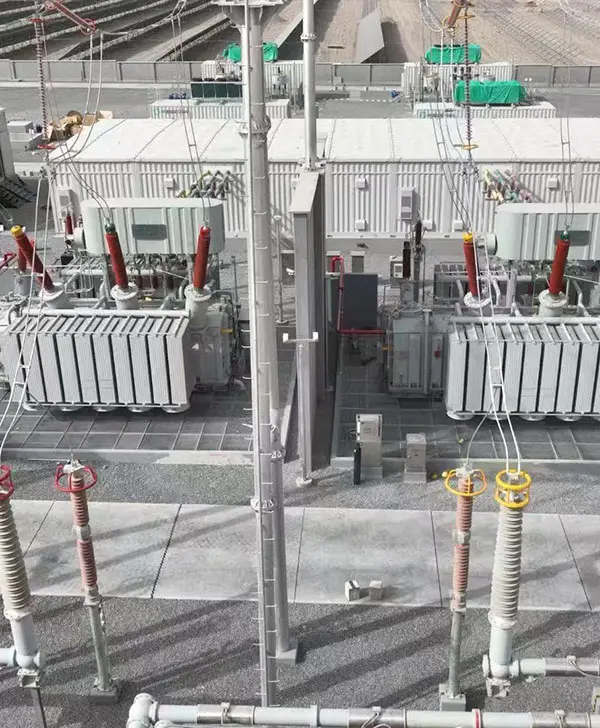
Energy projects vary widely in scale, operating conditions, and connection requirements. A transformer for a solar facility, industrial plant, utility substation, or commercial development may require a different combination of electrical ratings, cooling arrangements, monitoring features, and installation interfaces. Standard transformer models serve many applications, but a project with specific constraints may benefit from a design developed around its technical brief.
Odm Power Transformer solutions provide a route for buyers to work with a manufacturer on equipment designed or adapted to agreed requirements. This approach can be valuable when a standard catalogue model does not fully address the project’s operating conditions, physical layout, or integration needs.
Understanding ODM in Transformer Projects
Original Design Manufacturing involves a manufacturer developing or adapting a product design and producing the equipment under an agreed arrangement. The buyer typically defines the application, performance requirements, project constraints, and desired configuration.
The manufacturer reviews these requirements and proposes a technical solution. Depending on the project, the work may involve modifying an existing design platform or developing a more specialized configuration.
The parties should establish the scope of customization at the outset. They should also clarify design ownership, confidentiality, approval responsibilities, documentation deliverables, and how later design changes will be managed.
Adapting Electrical Ratings to the Project
The electrical specification is the foundation of a transformer design. It should identify rated power, primary and secondary voltages, frequency, phase configuration, vector group, impedance, insulation level, and cooling method.
Other requirements may be relevant depending on the application. These include short-circuit withstand capability, tap-changing arrangements, temperature-rise limits, harmonic loading, and expected load variations.
For renewable energy projects, the transformer may need to accommodate the characteristics of an inverter-based system and the requirements of the grid connection. Industrial installations may place different demands on starting currents, load cycles, or power quality.
The manufacturer should review the complete operating profile rather than sizing the equipment using rated capacity alone.
Designing Around Site Conditions
The physical environment can affect transformer construction and installation. Relevant factors include ambient temperature, altitude, humidity, dust, pollution, coastal conditions, seismic requirements, and available space.
An ODM process can address these conditions when they are provided early. For example, enclosure design, cooling provisions, cable interfaces, corrosion protection, and accessory selection may need to reflect the site.
The buyer should provide accurate site information and applicable project standards. If environmental conditions are not defined, the manufacturer may make assumptions that later require costly changes.
Coordinating With Other Electrical Equipment
Transformers connect different parts of an electrical system. Their design must be compatible with switchgear, cables, protection devices, earthing systems, and the network’s operating philosophy.
Customized solutions can address particular interface requirements, such as terminal positions, cable entry, neutral arrangements, monitoring connections, and control wiring.
A single-line diagram and interface schedule are useful starting documents. The project team should also review fault levels, protection coordination, and required switching arrangements before final design approval.
Improving Project Integration
A transformer that fits the electrical and physical requirements of a project can simplify coordination during installation. Agreed dimensions, connection locations, lifting points, and accessory arrangements help contractors plan foundations, cable routes, and equipment access.
This does not mean customization automatically reduces construction time. The benefits depend on early design coordination, timely approvals, and accurate information from all project participants.
The transformer manufacturer should provide outline drawings and connection details at the appropriate design stage so that civil and electrical teams can incorporate them into their work.
Documentation and Quality Assurance
Customized equipment requires controlled documentation. Typical submissions include technical data sheets, outline drawings, wiring diagrams, component lists, inspection plans, and test reports.
The buyer should establish a document review schedule and identify the people authorized to approve technical changes. Revisions should be recorded so that manufacturing follows the latest approved design.
Quality assurance should cover incoming materials, production processes, assembly, and final testing. Routine tests should be defined according to the applicable standards and project requirements. Additional tests may be required for specialized designs.
Evaluating Lifecycle Performance
The purchase price is only one part of transformer value. Operating losses, maintenance access, cooling requirements, spare parts, monitoring options, and expected service conditions also influence lifecycle cost.
Where appropriate, buyers should request guaranteed loss figures and compare alternatives using the expected operating profile. A customized feature should have a clear purpose, such as improving compatibility, meeting a regulatory requirement, or addressing a known operating constraint.
Avoid adding complexity without a demonstrated benefit. More accessories and specialized components can increase initial cost and create additional maintenance responsibilities.
Selecting an ODM Manufacturing Partner
Review the manufacturer’s experience with comparable ratings and applications. Ask about engineering resources, design verification, production facilities, testing capability, quality systems, and after-sales service.
Discuss warranty terms, spare-part availability, technical support, and the procedure for handling nonconforming equipment. For projects requiring repeat units, confirm whether the approved design can be reproduced consistently.
Making Customization Work for the Project
ODM power transformer solutions can help energy developers obtain equipment that fits specific electrical, environmental, and installation requirements. Their success depends on complete project information, engineering collaboration, formal design approvals, and disciplined quality control.
By defining requirements before manufacture and evaluating performance over the equipment’s expected service life, project owners can make customization a practical engineering decision rather than an unnecessary complication.