
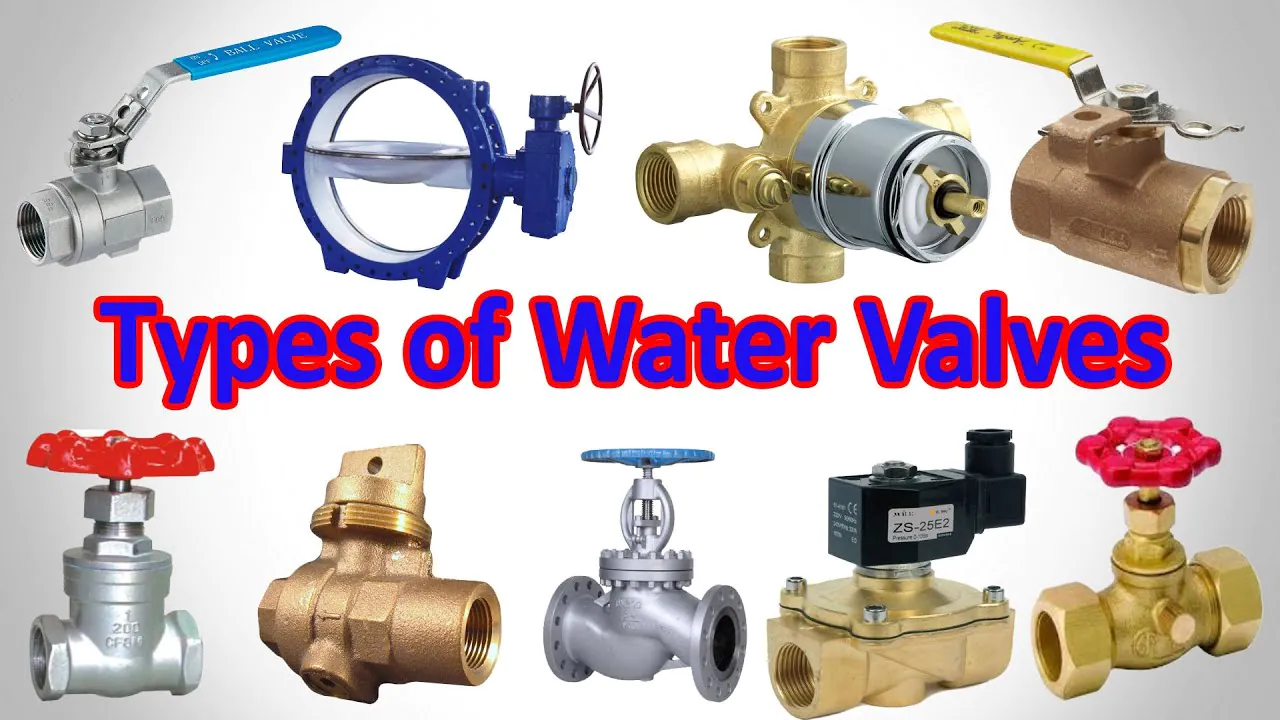
Reliable water distribution depends on controlling how water moves through pipelines, treatment facilities, storage networks, and pumping stations. These systems require valves that can isolate sections of a pipeline when maintenance is needed, regulate network access, and support safe operation. A sluice valve is commonly used for this purpose because it provides a straightforward method of opening or closing a pipeline with minimal obstruction when fully open.
Sluice valves, often called gate valves, are widely installed in municipal water networks, industrial water systems, irrigation infrastructure, and treatment plants. Their design allows a gate-shaped closure element to move vertically into or out of the flow path. Understanding how a Sluice Valve works, the available designs, and the factors affecting its selection helps engineers choose suitable equipment for dependable pipeline isolation.
What Is a Sluice Valve?
A sluice valve is a linear-motion valve designed primarily to start or stop fluid flow. It contains a movable gate or wedge that travels perpendicular to the direction of flow. When the valve is fully open, the gate moves clear of the main flow passage, allowing water to pass through with relatively little obstruction.
When the valve is closed, the gate moves down between the seating surfaces and blocks the passage. This makes sluice valves particularly useful in systems where pipelines need to be isolated rather than continuously throttled.
Typical applications include:
- Municipal water distribution networks.
- Water treatment and filtration plants.
- Pumping stations.
- Irrigation and agricultural pipelines.
- Industrial utility water systems.
- Reservoir and storage tank connections.
- Fire protection water networks, where approved for the intended service.
Sluice valves are generally designed for fully open or fully closed operation. They are not normally recommended for prolonged throttling because partially open gates can experience vibration, erosion, and damage to seating surfaces.
How Does a Sluice Valve Work?
The operating principle of a sluice valve is based on the vertical movement of a gate inside the valve body. A handwheel, gearbox, or actuator rotates or drives the stem, moving the gate between its open and closed positions.
<AsyncImage query=”sluice gate valve cutaway sectional technical diagram showing stem wedge gate and seats” aspectRatio=”16:9″ width=”100%”/>
1. Opening the Valve
When an operator turns the handwheel or activates the actuator in the opening direction, the stem moves the gate upward.
As the gate rises, it gradually clears the pipeline passage. Once fully open, the gate is positioned outside the main flow path, allowing water to move through the valve.
2. Maintaining Full Flow
In the fully open position, the valve provides a relatively straight flow passage. This generally results in lower flow resistance than many valves that retain a closing element within the passage.
The actual pressure loss depends on the valve’s internal geometry, size, and operating conditions.
3. Closing the Valve
When the handwheel or actuator is operated in the opposite direction, the stem moves the gate downward.
The gate approaches the seating surfaces and gradually restricts the flow passage until it reaches the closed position.
4. Sealing the Pipeline
In the closed position, the gate contacts the seats to prevent water from passing through the valve.
The sealing arrangement depends on the valve design, material, pressure conditions, and condition of the seating surfaces.
Main Components of a Sluice Valve
Understanding the main components helps explain how a sluice valve operates and what requires inspection during maintenance.
Valve Body
The body forms the main pressure-containing structure and connects to the pipeline. It houses the gate, seats, and internal flow passage.
Bodies are commonly manufactured from ductile iron, cast iron, or other materials selected according to the required service conditions.
Gate or Wedge
The gate is the movable closing element. It travels vertically to open or block the flow passage.
Depending on the design, it may be a solid wedge, flexible wedge, split wedge, or parallel-sided gate.
Valve Stem
The stem connects the operating mechanism to the gate. It transmits the movement required to raise or lower the closing element.
Stem materials and surface finishes are important because the component is exposed to mechanical loading and, depending on its arrangement, environmental or fluid contact.
Seats
The seats provide the sealing surfaces against which the gate closes.
They may use metal-to-metal contact or resilient materials, depending on the valve’s construction and intended application.
Bonnet
The bonnet is attached to the valve body and encloses the stem and internal components. It provides access for assembly and maintenance.
Handwheel or Gearbox
Smaller valves may use a handwheel for manual operation. Larger valves often use a gearbox to reduce the operating effort required.
Actuator
Some sluice valves are fitted with electric or other powered actuators. These allow remote or automated operation through a control system.
Types of Sluice Valves
Sluice valves are available in different designs to accommodate pressure conditions, operating requirements, and pipeline configurations.
1. Solid Wedge Sluice Valve
<AsyncImage query=”solid wedge gate sluice valve cutaway sectional engineering illustration” aspectRatio=”5:4″ width=”100%”/>
A solid wedge valve uses a single, rigid wedge-shaped gate that moves between two inclined seats.
Advantages:
- Simple and robust construction.
- Suitable for a range of general isolation duties.
- Relatively straightforward internal design.
- Available in different pressure classes and sizes.
Limitations:
- May be more sensitive to certain forms of thermal or body distortion.
- Seat alignment and manufacturing quality affect sealing.
- Not intended for continuous throttling.
Solid wedge sluice valves are used in water distribution and other general pipeline isolation applications.
2. Flexible Wedge Sluice Valve
<AsyncImage query=”flexible wedge gate valve internal sectional diagram” aspectRatio=”5:4″ width=”100%”/>
A flexible wedge valve has a gate with a degree of flexibility built into its design. This allows it to accommodate certain variations in seating geometry and body conditions.
Advantages:
- Can accommodate limited changes in seat alignment.
- Designed to reduce some stresses associated with a fully rigid wedge.
- Suitable for selected water and industrial services.
Limitations:
- Performance depends on correct material selection and design.
- Corrosion and deposits can affect the sealing surfaces.
- Requires inspection according to operating conditions.
Flexible wedge designs are used where their seating characteristics are beneficial for the intended service.
3. Parallel Slide Sluice Valve
<AsyncImage query=”parallel slide gate valve cutaway internal plates spring mechanism diagram” aspectRatio=”5:4″ width=”100%”/>
A parallel slide valve uses two parallel seating surfaces and a gate arrangement designed to seal against them.
Depending on the design, mechanical force, pressure, or a spring mechanism helps maintain contact between the sealing surfaces.
Advantages:
- Parallel seating arrangement.
- Available for selected demanding industrial services.
- Can accommodate specific operating requirements.
Limitations:
- Internal design can be more complex than a simple wedge valve.
- Correct application depends on pressure and temperature conditions.
- Not all designs are intended for municipal water distribution.
Parallel slide valves are used in certain industrial and utility systems where their design is appropriate.
4. Resilient Seated Sluice Valve
<AsyncImage query=”ductile iron resilient seated wedge gate valve cutaway rubber coated wedge” aspectRatio=”5:4″ width=”100%”/>
A resilient seated sluice valve uses an elastomer-coated wedge or another resilient sealing arrangement to provide a tight closure.
These valves are widely used in water distribution networks because their sealing materials can provide effective isolation under suitable operating conditions.
Advantages:
- Effective sealing when correctly selected and maintained.
- Commonly available in waterworks configurations.
- Relatively simple operating mechanism.
- Suitable for many municipal water applications.
Limitations:
- Elastomer compatibility depends on water chemistry and temperature.
- Sealing materials can age or deteriorate.
- The valve must be operated within its specified pressure and temperature limits.
Resilient seated designs are commonly selected for potable water, utility water, and distribution pipelines when they meet the relevant approval requirements.
5. Metal Seated Sluice Valve
<AsyncImage query=”metal seated gate valve wedge metal to metal seat cutaway diagram” aspectRatio=”5:4″ width=”100%”/>
Metal seated sluice valves use metal contact between the gate and seats to achieve closure.
Advantages:
- Suitable for selected applications involving higher temperatures.
- Can be used where elastomer seating is unsuitable.
- Available in robust industrial configurations.
Limitations:
- Leakage performance depends on seating design and surface condition.
- Wear, corrosion, and debris can affect sealing.
- Maintenance and inspection may be important in abrasive services.
Metal seated designs are used in certain industrial, utility, and water applications according to their specifications.
Rising Stem vs. Non-Rising Stem Sluice Valves
Another important distinction is how the stem moves when the valve is operated.
Rising Stem Sluice Valve
<AsyncImage query=”rising stem gate valve handwheel exposed threaded stem open closed comparison” aspectRatio=”5:4″ width=”100%”/>
In a rising stem design, the stem moves vertically as the gate opens or closes. The stem typically becomes more exposed when the valve is opened.
Key characteristics:
- Valve position can often be identified visually from stem height.
- The stem threads may be outside the main fluid passage.
- Additional vertical clearance is required above the valve.
- Exposed threads may need protection from corrosion and physical damage.
Rising stem valves are useful where visible position indication and available installation space are important.
Non-Rising Stem Sluice Valve
<AsyncImage query=”non rising stem gate valve internal threaded stem cutaway diagram” aspectRatio=”5:4″ width=”100%”/>
In a non-rising stem design, the stem rotates but does not move vertically. The threaded connection between the stem and gate causes the gate to travel inside the valve body.
Key characteristics:
- Requires less vertical clearance.
- Suitable for underground and confined installations.
- Stem position is not usually a direct visual indication of gate position.
- May require an indicator or other position-monitoring arrangement.
Non-rising stem valves are widely used in buried water distribution networks, often with suitable operating extensions and surface access arrangements.
Applications of Sluice Valves in Water Distribution Systems
Sluice valves are important in water infrastructure because they allow operators to isolate specific sections of a network without shutting down the entire system.
Municipal Water Supply Networks
Water distribution networks contain extensive pipelines connecting treatment facilities, reservoirs, pumping stations, and consumers.
Sluice valves are installed at selected points to isolate pipeline sections during maintenance, repair, or network modification.
Water Treatment Plants
Treatment plants use sluice valves in raw water lines, treated water pipelines, storage connections, and utility systems.
They help operators isolate equipment such as filters, tanks, and pumping arrangements when maintenance is required.
Pumping Stations
Sluice valves are often installed around pumps and associated pipeline sections to provide isolation for servicing.
They are commonly used alongside other valve types, such as non-return valves, which prevent reverse flow.
Irrigation Systems
Agricultural irrigation networks use sluice valves to control access to different pipeline branches and distribution sections.
Their isolation function helps operators direct water to specific areas and carry out maintenance without interrupting the entire network.
Reservoirs and Storage Facilities
Sluice valves may be installed at reservoir inlets, outlets, and connecting pipelines.
They provide a means of isolating the storage facility or associated pipework when required.
Industrial Water Systems
Factories and processing plants use sluice valves in cooling water, utility water, and other suitable services.
Material selection must account for water quality, pressure, temperature, and the presence of any treatment chemicals.
Benefits of Using Sluice Valves
Sluice valves offer several practical advantages in pipeline isolation applications.
Low Flow Resistance When Fully Open
Because the gate moves clear of the main passage, a fully open sluice valve can provide relatively low flow resistance.
This is useful in systems where maintaining pipeline capacity is important.
Reliable Isolation
A properly selected and maintained valve can provide effective pipeline shutoff.
The actual leakage performance depends on the seat design, operating conditions, and condition of internal components.
Suitable for Large Pipelines
Sluice valves are available in a wide range of nominal sizes, making them suitable for many large water distribution and industrial pipelines.
Flexible Operating Arrangements
They can be operated manually through handwheels or gearboxes, or fitted with actuators for remote and automated operation.
Broad Material Availability
Different body, gate, stem, and sealing materials allow engineers to select designs for a variety of water and industrial services.
Sluice Valve vs. Other Common Valve Types
Although sluice valves are widely used in water networks, they are not suitable for every flow-control requirement.
| Valve type | Primary function | Typical operating mechanism |
|---|---|---|
| Sluice valve | Pipeline isolation | Linear gate movement |
| Butterfly valve | Isolation or selected regulating duties | Rotating disc |
| Ball valve | Isolation and on/off control | Rotating ball |
| Globe valve | Flow regulation | Linear plug or disc movement |
| Non-return valve | Prevent reverse flow | Automatic pressure-responsive movement |
A sluice valve is generally selected when a pipeline needs to be opened or closed rather than continuously regulated. A globe or suitable control valve is usually more appropriate where accurate throttling is required. A non-return valve performs a different function by restricting reverse flow automatically.
Factors to Consider When Selecting a Sluice Valve
Selecting a suitable sluice valve requires evaluating the pipeline design and the conditions under which the valve will operate.
1. Pipeline Diameter
The valve’s nominal size should match the pipeline connection and system requirements.
Engineers should also check the actual bore, connection dimensions, and any relevant dimensional standards.
2. Pressure Rating
The valve must be rated for the maximum expected operating pressure, including relevant transient conditions.
Pressure ratings can depend on material, design, temperature, and applicable standards.
3. Fluid Characteristics
Consider whether the valve will handle potable water, raw water, treated water, wastewater, or industrial process fluids.
Water chemistry, suspended solids, and treatment chemicals can influence body, coating, and sealing material selection.
4. Body and Internal Materials
Ductile iron is commonly used in waterworks valves, while other materials may be required for different service conditions.
Check the suitability of the body, wedge, stem, fasteners, coatings, and seals as a complete assembly.
5. Stem Configuration
Choose between rising and non-rising stem arrangements based on installation space, accessibility, and operating requirements.
Underground installations often use non-rising stem designs with suitable extension spindles and surface operating equipment.
6. End Connections
Common connection arrangements include flanged and socket or other specified joint configurations.
The connection must be compatible with the pipeline material, dimensions, pressure class, and installation method.
7. Operating Method
Determine whether manual operation is sufficient or whether a gearbox or actuator is required.
For automated installations, consider the power supply, control signals, operating speed, torque requirements, and position feedback.
8. Applicable Standards and Approvals
Water distribution valves may need to comply with standards covering design, dimensions, pressure testing, coatings, and potable water contact.
Relevant standards can include EN, ISO, AWWA, or other regional requirements, depending on the application. Potable water installations may also require specific material and product approvals.
Installation and Maintenance Best Practices
Correct installation is important for achieving dependable sealing and long service life.
Installation Guidelines
- Verify that the valve size and pressure rating match the pipeline design.
- Check the valve body, coating, seats, and operating components before installation.
- Confirm the correct flow direction where the design specifies one.
- Ensure that the pipeline and valve connections are properly aligned.
- Avoid applying excessive force when tightening flange connections.
- Follow manufacturer instructions for installation orientation and support.
- Ensure that operating extensions and access covers are correctly fitted for buried valves.
- Operate and inspect the valve during commissioning to confirm proper movement.
Maintenance Guidelines
- Inspect the valve and surrounding pipeline for leakage.
- Check handwheels, gearboxes, stems, and operating extensions.
- Look for corrosion, coating damage, and external deterioration.
- Exercise valves periodically according to the maintenance plan.
- Monitor unusual operating resistance or incomplete closure.
- Inspect internal seating components when performance indicates a problem.
- Keep maintenance and inspection records.
Before carrying out inspection or repair, isolate the relevant pipeline section, depressurize it, and follow appropriate safety and lockout procedures. Underground installations may also require excavation and confined-space precautions.
Common Sluice Valve Problems and Their Solutions
Over time, operating conditions, corrosion, and mechanical wear can affect valve performance.
| Problem | Possible cause | Recommended action |
|---|---|---|
| Leakage when closed | Damaged seats, trapped debris, or worn wedge | Inspect and clean or replace sealing components |
| Difficult operation | Corrosion, deposits, or stem damage | Inspect operating components and lubricate where specified |
| External leakage | Damaged seals, packing, or body joints | Identify the leak source and replace defective parts |
| Incomplete opening | Obstructed gate or damaged stem threads | Inspect the internal mechanism |
| Excessive operating torque | Misalignment, corrosion, or pressure-related loading | Check installation and valve condition |
| Coating deterioration | Environmental exposure or mechanical damage | Repair the coating using an approved system |
Repeated operational problems may indicate that the valve is unsuitable for the service or has reached the end of its expected maintenance life.
Conclusion
Sluice valves are essential isolation components in water distribution systems, treatment plants, pumping stations, irrigation networks, and industrial utility pipelines. Their gate-based design allows operators to open or close a pipeline with relatively low flow resistance when fully open.
Different configurations, including solid wedge, flexible wedge, resilient seated, metal seated, rising stem, and non-rising stem designs, provide options for different installation and operating requirements. Selecting the right valve involves considering pipeline size, pressure rating, fluid characteristics, materials, connection type, and operating method.
With correct installation, suitable product approvals, and regular maintenance, sluice valves can provide dependable pipeline isolation and support the long-term performance of water infrastructure.