
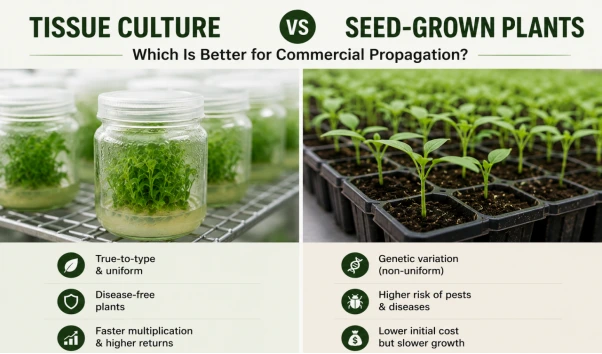
Buying tissue culture plants in large quantities requires attention to both variety and plant quality. Different cultivars can have distinct growth characteristics, environmental requirements, and production timelines, so comparing options solely by price or quantity may not provide enough information for a sound purchasing decision.
When evaluating Tissue Culture Plants Wholesale, buyers should compare cultivar identity, plant development, uniformity, health, acclimatization requirements, and supplier documentation. Looking at these factors together makes it easier to match plant material with the intended production system.
Start With the Plant Variety
The first comparison should focus on the exact species and cultivar. A supplier may offer several varieties within the same plant category, but their growth habits and commercial characteristics can differ significantly.
Check the cultivar name, expected characteristics, and intended growing conditions before comparing prices or quantities. Accurate identification is especially important when a specific variety is required for a commercial crop.
Compare Plant Development Stages
Not all tissue culture plants are supplied at the same stage. Some may be newly developed shoots, while others may have established roots or completed part of the acclimatization process.
When comparing suppliers, make sure the development stage is similar. A larger or more developed plant may naturally require a different price and handling approach than a younger plantlet.
Evaluate Plant Uniformity
Uniformity is an important consideration for commercial growers. Plants within the same batch should generally show reasonably consistent development when they have been produced and graded under appropriate quality standards.
Compare batches based on factors such as plant size, shoot development, rooting, and overall appearance. Greater consistency can simplify transplanting and subsequent nursery management.
Check Plant Health
Healthy tissue culture plants should show normal development for their stage and should not display obvious signs of contamination or physical damage.
When possible, buyers can request current batch information or representative images. This provides more useful information than relying solely on general descriptions of a supplier’s products.
Consider Root Development
Root quality can influence how easily plants establish after transplantation. Depending on the crop and production stage, buyers may receive plants with different levels of root development.
When comparing products, determine whether the plants are rooted, partially rooted, or supplied primarily as shoots. The answer affects both handling requirements and the facilities needed after delivery.
Review Acclimatization Requirements
Plants grown under controlled laboratory conditions need time to adapt to normal nursery environments. The amount of acclimatization required can vary according to the plant variety and development stage.
A supplier such as Young Plants can be evaluated by reviewing the information provided about plant stages and recommended post-delivery handling, just as buyers should do with any tissue culture supplier.
Compare Quality-Control Practices
Quality control should cover more than the final appearance of a plant. Buyers should consider how source material is selected, how cultures are maintained, how contamination is monitored, and how plants are graded before shipment.
A consistent quality-control process can provide useful assurance when ordering large batches, particularly when plants will be used for commercial production.
Examine Batch and Traceability Information
Clear batch information helps buyers track the origin and production history of their plants. Useful records may include cultivar identification, batch numbers, production dates, and relevant quality or phytosanitary documentation.
Traceability becomes particularly valuable when comparing performance between different orders or investigating unexpected differences after transplantation.
Compare Packaging and Delivery Conditions
Plant quality can be affected by transportation. Buyers should therefore compare packaging methods, estimated transit times, temperature considerations, and procedures for handling plants upon arrival.
A supplier offering healthy plants at the production stage still needs appropriate shipping practices to help maintain their condition during delivery.
Look Beyond Price
Price is an important purchasing consideration, but it should be evaluated alongside plant stage, quality, quantity, packaging, documentation, and expected post-delivery requirements.
A lower initial price may not provide the same value if plants require substantially more recovery time or additional handling. Comparing the complete purchasing requirements provides a more meaningful basis for evaluating different options.
Create a Simple Comparison Checklist
Before making a wholesale purchase, buyers can compare suppliers using the following criteria:
- Species and cultivar
- Plant development stage
- Root and shoot development
- Batch uniformity
- Visible plant health
- Contamination-control procedures
- Acclimatization requirements
- Documentation and traceability
- Packaging and shipping conditions
- Lead time and order quantity
Final Thoughts
Comparing tissue culture plants wholesale requires a balanced review of variety, plant condition, production standards, and delivery requirements. Buyers should first confirm that they are comparing the same or equivalent cultivars and development stages.
By examining quality, consistency, acclimatization needs, documentation, and logistics alongside price, growers can make purchasing decisions that better fit their production facilities and long-term cultivation plans.