

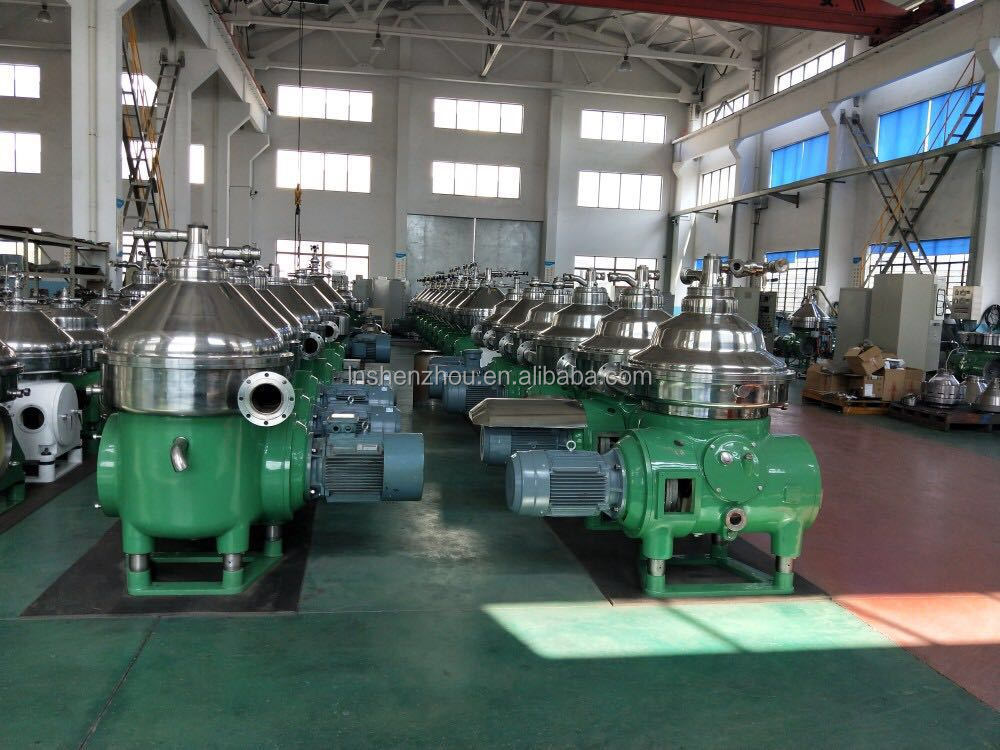
Modern industries often need to separate solids from liquids or divide two liquid phases quickly and consistently. Conventional settling methods can become inefficient when materials contain very fine particles or when production requires continuous processing. Centrifugal separation offers a practical solution by using rotational force to accelerate the separation process.
A Disc Centrifuge is designed to handle these demanding separation tasks by generating high centrifugal force inside a rotating bowl. Its disc stack creates multiple thin separation layers, helping improve the removal of fine suspended particles and the separation of liquids with different densities.
Food and Beverage Processing
The food and beverage industry is one of the major areas where disc centrifuge technology is applied. Many food products contain suspended solids or multiple liquid phases that need to be separated without lengthy settling periods.
Common applications include:
- Milk clarification and separation
- Vegetable and fruit juice clarification
- Edible oil processing
- Beverage clarification
- Recovery of useful liquid products
The ability to operate continuously makes centrifugal separation useful for processing lines where stable throughput is important.
Dairy Industry
Dairy processing frequently involves separating milk into different components. Centrifugal equipment can help remove unwanted particles and separate cream from skim milk.
Because milk contains relatively fine components, rapid centrifugal separation can provide better efficiency than gravity-based methods. Proper control of temperature, feed rate, and operating conditions is important for achieving consistent results.
Edible Oil Processing
Vegetable and other edible oils may contain moisture, fine solids, and other unwanted materials after extraction or processing.
Disc centrifuge systems can be used for clarification and liquid-liquid separation. The centrifugal force encourages heavier water and solid contaminants to move outward while the lighter oil phase moves toward the center.
This allows separation to take place continuously while reducing the need for extended settling tanks.
Chemical Manufacturing
Chemical plants handle a wide range of mixtures with different densities, viscosities, and particle characteristics. Centrifugal separation can be incorporated into processes where rapid clarification or liquid-phase separation is required.
Applications may include:
- Process liquid clarification
- Catalyst recovery
- Separation of suspended solids
- Removal of contaminants
- Liquid-liquid phase separation
The centrifuge configuration must be selected according to the chemical properties and operating conditions of the material being processed.
Pharmaceutical and Biotechnology Applications
Pharmaceutical and biotechnology production often requires controlled separation of fine biological or process materials.
Centrifugal systems may be used for separating cells, fermentation solids, or other suspended materials from process liquids. Hygienic design and effective cleaning are particularly important in these environments.
The equipment may also need to meet specific process requirements related to temperature, contamination control, and product recovery.
Wastewater and Industrial Water Treatment
Industrial wastewater can contain suspended solids, oils, and other materials that need to be removed before water is reused or discharged.
A disc centrifuge can serve as part of a broader treatment process. Its high centrifugal force helps separate fine suspended materials that may settle slowly under normal gravity.
In oily wastewater applications, centrifugal separation can also assist in separating oil, water, and solid contaminants when the density differences are suitable.
Oil and Fuel Processing
Petroleum-based fluids and fuels can become contaminated with water and fine solids during storage, transportation, or processing.
High-speed centrifugal separation can help remove these contaminants without relying solely on filtration. The appropriate operating conditions depend on factors such as viscosity, temperature, density differences, and contaminant concentration.
This makes centrifugation particularly useful when fluid cleanliness is important for downstream equipment or further processing.
Marine and Industrial Lubricant Applications
Lubricating oils can accumulate water and particulate contaminants during operation. If these materials remain in the oil, they may contribute to wear and reduce equipment performance.
Centrifugal separation can help remove heavier contaminants from certain lubricating and hydraulic fluids. Continuous treatment can be especially useful for systems that need regular oil purification rather than occasional batch cleaning.
Mining and Mineral Processing
Mining operations often involve slurries containing liquids and fine mineral particles. While larger solids may be handled using other separation technologies, centrifugal equipment can be useful for specific clarification and liquid recovery applications.
The suitability of a disc centrifuge depends heavily on particle size, solids concentration, slurry viscosity, and the desired separation result.
Pulp and Paper Production
Pulp and paper processes generate liquids containing fibers, fillers, and other suspended materials. Centrifugal separation can help clarify process water and recover usable materials in selected stages of production.
Efficient separation can also support water recycling by reducing the concentration of suspended matter before the water returns to another processing stage.
How Operating Conditions Affect Different Applications
Although the same basic centrifugal principle applies across industries, operating conditions vary significantly.
Important factors include:
Feed Rate
A higher feed rate can increase throughput, but excessive flow may reduce separation efficiency. The feed rate should therefore be matched to the characteristics of the mixture and the required separation quality.
Particle Size
Fine particles are generally more difficult to separate than larger particles. The internal disc arrangement helps shorten the settling distance, improving the opportunity for small particles to migrate under centrifugal force.
Viscosity
High-viscosity liquids resist particle movement and can reduce separation efficiency. Temperature control may sometimes be used to maintain suitable fluid properties.
Density Difference
The greater the density difference between phases, the easier it is for centrifugal force to drive them apart. Mixtures with very similar densities may require more carefully optimized operating conditions.
Choosing Centrifugal Equipment for Industrial Use
Selecting the right system requires more than looking at maximum rotational speed or rated capacity. Engineers should consider the complete characteristics of the application.
Key considerations include:
- Required processing capacity
- Solids concentration
- Particle size distribution
- Liquid viscosity
- Density of each phase
- Operating temperature
- Desired separation quality
- Solids discharge requirements
- Cleaning and maintenance needs
Shenzhou Machinery is one example of a manufacturer associated with centrifugal separation equipment, while the final equipment configuration should always be based on the specific process requirements.
Benefits of Disc Centrifuge Technology
Across different industrial applications, centrifugal systems can provide several practical advantages.
Continuous Processing
Many centrifuges can operate continuously, making them suitable for production environments where consistent material flow is required.
Compact Equipment Design
The high centrifugal force allows significant separation performance within a relatively compact machine compared with large gravity-settling systems.
Fine Particle Separation
The disc stack increases the effective separation area and can improve the handling of fine suspended particles.
Flexible Applications
Depending on the configuration, the technology can be adapted for clarification, liquid-liquid separation, or combinations of separation duties.
Conclusion
Disc centrifuge technology has become an important separation method across food processing, dairy production, edible oils, chemicals, pharmaceuticals, wastewater treatment, fuel processing, mining, and other industries.
Its ability to generate high centrifugal force and provide continuous separation makes it valuable when conventional settling methods are too slow or require excessive space. However, successful operation depends on matching the equipment to the properties of the material, desired throughput, and required separation quality.
By considering feed characteristics, operating conditions, maintenance requirements, and process objectives, industries can determine where centrifugal separation provides the most effective solution.