
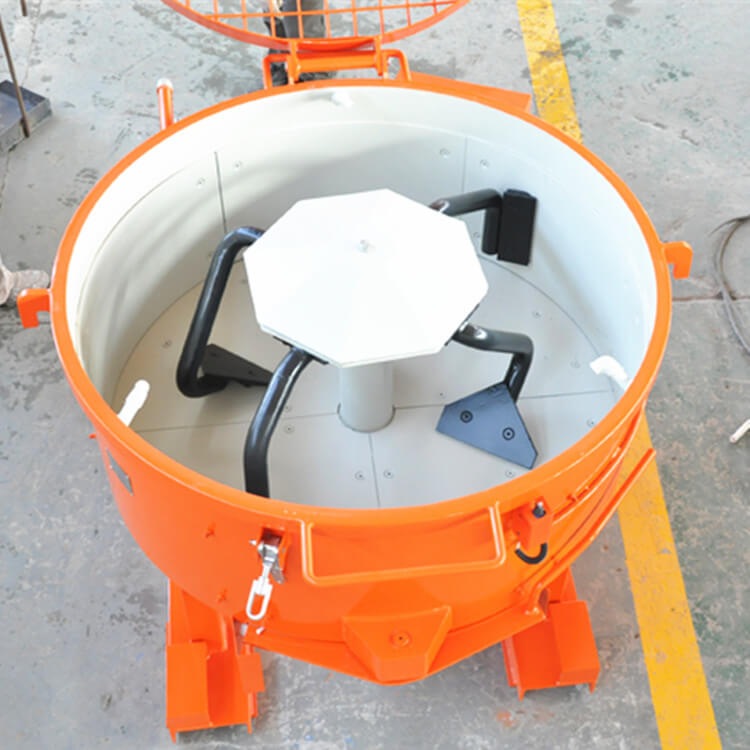
Refractory manufacturing depends on carefully controlled raw materials and consistent processing conditions. Aggregates, fine powders, binders, and additives must be distributed properly to produce materials capable of withstanding high temperatures and demanding operating environments. Mixing equipment is therefore an important part of the overall production process.
Selecting suitable Mixers For Refractories requires consideration of material characteristics, production volume, mixing intensity, wear resistance, moisture requirements, and process control. The right equipment should provide consistent mixing while fitting smoothly into the rest of the manufacturing line.
Why Mixing Matters in Refractory Production
Refractory formulations can contain particles with significantly different sizes and densities. Coarse aggregates need to be distributed alongside fine powders, binders, and smaller additives.
Insufficient mixing can result in uneven material composition, potentially affecting properties such as density, strength, porosity, thermal resistance, and workability.
A properly selected mixer helps establish a more uniform material before forming, casting, pressing, or other downstream operations.
Common Refractory Materials
Before selecting a mixer, manufacturers should identify the type of refractory products being produced.
Common materials include:
- Refractory castables
- Monolithic refractories
- Ramming materials
- Dry refractory mixes
- Refractory mortars
- Precast refractory products
- Ceramic-based refractory compounds
Each formulation can have different mixing requirements.
Understand the Material Characteristics
The physical properties of refractory ingredients strongly influence equipment selection.
Important characteristics include particle size distribution, bulk density, moisture content, abrasiveness, flowability, and binder type.
A formulation containing large quantities of fine powders may require different mixing conditions from one dominated by coarse aggregates.
Consider the Required Mixing Intensity
Some refractory materials require strong mechanical action to distribute fine powders and binders effectively.
Intensive mixing can help move material through different areas of the mixing chamber and improve contact between components.
However, excessive mechanical energy is not always beneficial. The ideal intensity should be established according to the formulation and desired material properties.
Evaluate Mixer Capacity
Capacity should be matched to the required batch size and production rate.
The practical working volume is usually more important than the maximum vessel volume because sufficient space is needed for effective material circulation.
When planning a new production line, future capacity requirements should also be considered.
Examine Mixing Tool Design
Mixing tools determine how refractory materials are moved through the chamber.
Their geometry, arrangement, rotational speed, and construction can influence mixing efficiency and mechanical wear.
For abrasive refractory formulations, manufacturers should pay particular attention to tool materials and replaceable wear components.
Assess Wear Resistance
Many refractory raw materials are highly abrasive. Continuous mixing can therefore cause wear to tools, liners, scrapers, shafts, and other components.
When evaluating equipment, determine which parts are exposed to the greatest wear.
Important questions include:
- Which components are considered wear parts?
- What materials are used for the mixing tools?
- How often should liners be inspected?
- How easy are worn components to replace?
- Are replacement parts readily available?
Understanding these factors can help estimate long-term maintenance costs.
Consider Mixing Time
Mixing time affects both product quality and production efficiency.
A cycle that is too short may not provide sufficient uniformity. An unnecessarily long cycle can reduce throughput and increase energy consumption.
Testing the actual refractory formulation can help establish an appropriate mixing time.
Review Ingredient Addition Sequence
The order in which raw materials are introduced can affect mixing performance.
Coarse aggregates, fine powders, binders, water, and additives may need to be added at different stages depending on the formulation.
A controlled addition sequence can help improve distribution and reduce agglomeration.
Evaluate Moisture and Binder Addition
Some refractory products are mixed dry, while others require water or liquid binders.
Accurate dosing is important because moisture levels can influence flowability, forming behavior, density, and final performance.
If liquids are added during mixing, the equipment should provide a reliable method for controlled distribution.
Consider Discharge Performance
After mixing, refractory material must be transferred efficiently to the next production stage.
A suitable discharge system should minimize residual material inside the mixing chamber.
Efficient discharge can help shorten cycle times, reduce material waste, and simplify cleaning.
Automation and Process Control
Automated systems can improve batch consistency by controlling raw material quantities and mixing parameters.
Depending on the production setup, automation can manage:
- Aggregate and powder dosing
- Binder or water addition
- Mixing speed
- Mixing time
- Discharge
- Batch records
Integration with weighing, conveying, storage, and forming equipment can further improve production control.
Applications of Refractory Mixing Equipment
Refractory mixers are used in the production of materials for several high-temperature industries.
Typical applications include refractory materials used in:
- Steel plants
- Cement manufacturing
- Foundries
- Glass production
- Nonferrous metal processing
- Industrial furnaces
- Petrochemical facilities
- Incineration systems
The required mixer design depends on the material and final product.
Maintenance Requirements
Regular maintenance is important when processing abrasive refractory materials.
Operators should inspect mixing tools, liners, shafts, seals, bearings, and drive components according to the manufacturer’s recommendations.
Removing accumulated material and maintaining clean internal surfaces can also help preserve consistent mixing performance.
Energy Efficiency
Refractory mixing can require substantial mechanical energy, particularly for dense or cohesive formulations.
Energy efficiency should be evaluated alongside mixing quality and production output.
Optimizing batch loading, mixing speed, and cycle time can help reduce unnecessary energy consumption without compromising material uniformity.
Testing Before Purchase
Material testing is highly useful when selecting equipment for specialized refractory formulations.
A representative test can help determine:
- Appropriate batch size
- Mixing intensity
- Mixing time
- Ingredient sequence
- Moisture requirements
- Material uniformity
- Discharge behavior
Testing actual materials provides practical information that general specifications may not reveal.
Choosing a Refractory Mixer Manufacturer
The supplier’s experience should also be considered. A manufacturer familiar with refractory applications may be better able to understand the challenges associated with abrasive aggregates and fine powders.
Evaluate technical support, manufacturing capabilities, quality control, spare-parts availability, installation assistance, and after-sales service.
Clear technical documentation can also make operation and maintenance easier.
Compare Total Cost of Ownership
Purchase price is only one part of the overall cost.
Long-term expenses can include electricity, wear parts, maintenance, labor, installation, cleaning, and production downtime.
A mixer with a higher initial cost may provide better value if it offers greater durability and reliable mixing performance.
Practical Selection Checklist
Before choosing equipment, confirm that it provides:
- Suitable batch capacity
- Appropriate mixing intensity
- Compatible mixing tools
- Adequate wear resistance
- Effective powder and aggregate circulation
- Reliable liquid or binder addition
- Efficient discharge
- Practical cleaning access
- Required automation
- Reasonable maintenance requirements
- Available spare parts and technical support
Conclusion
Selecting the right refractory mixer requires a detailed understanding of the materials, production process, and final product requirements. Particle size, abrasiveness, moisture content, binder type, batch capacity, mixing intensity, and cycle time all influence equipment suitability.
Manufacturers should also evaluate wear resistance, discharge performance, automation, maintenance, and total ownership costs. Where formulations are specialized, material testing can provide valuable information before investment. A well-matched mixing system can help support consistent refractory material quality and reliable production efficiency.