
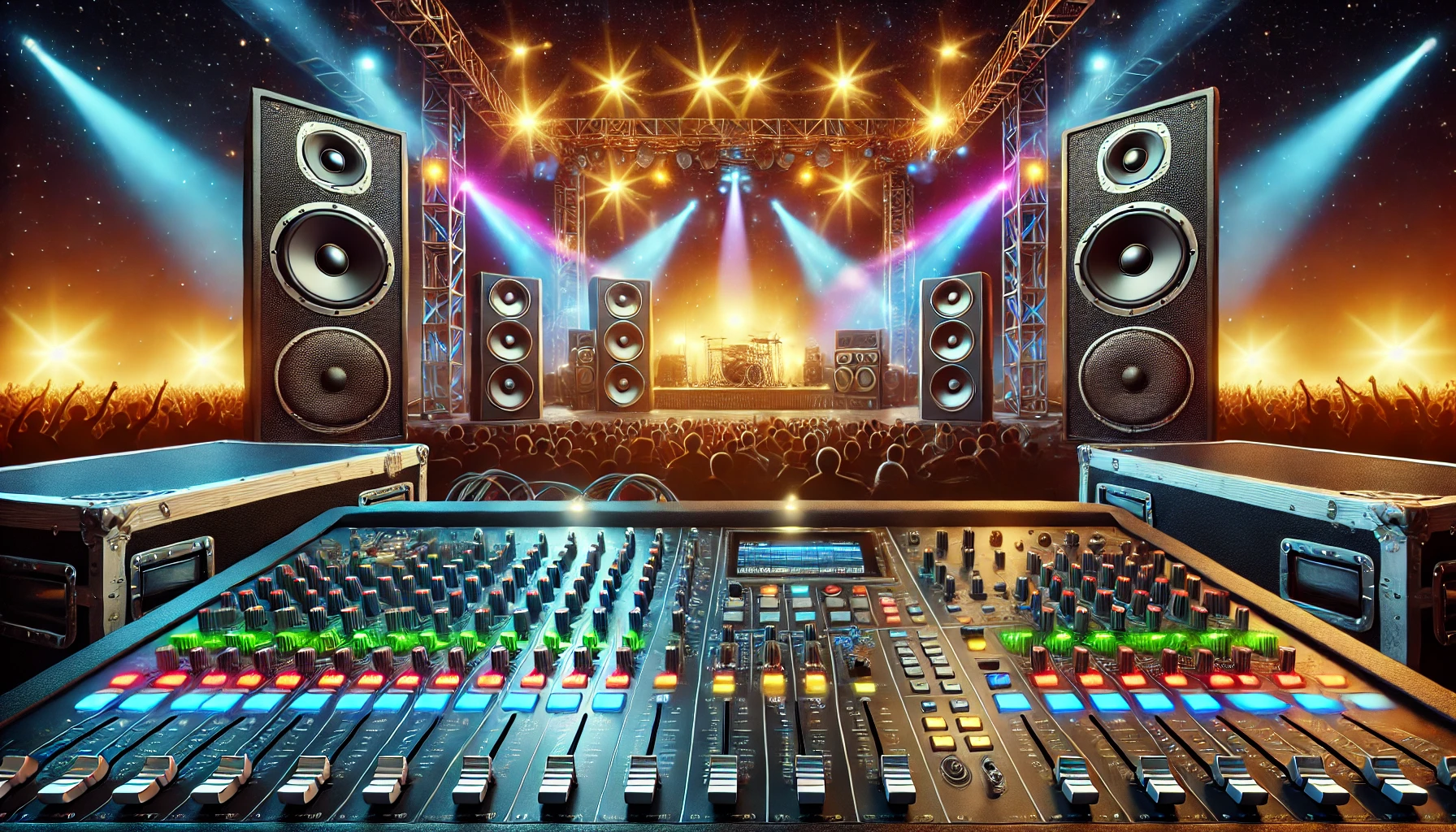
Adding more speakers does not automatically create immersion. Many venues assume that upgrading equipment equals upgrading experience. In reality, spacial audio depends less on hardware volume and more on structural readiness.
Before investing in spacial audio solutions, venue operators need to examine whether their space can support the technology properly.
Acoustic Foundation
The first question is not technical. It is architectural.
Every room has its own acoustic fingerprint. Hard surfaces reflect sound aggressively. High ceilings create long reverberation tails. Glass, concrete, and untreated walls distort clarity. Spacial systems rely on precision. If reflections dominate, directional cues blur.
Venues should assess reverberation time, reflection points, and absorption balance before installation. Acoustic treatment, including panels, diffusers, and bass management, often needs adjustment. Without this groundwork, even advanced systems underperform.
Speaker Placement Possibilities
Spacial audio requires three-dimensional coverage. That includes overhead positioning, perimeter arrays, and carefully calculated angles.
Some venues lack ceiling load capacity or structural access for suspended speakers. Others have lighting rigs or architectural features that block optimal positioning. If speaker placement options are limited, spacial accuracy decreases.
Before procurement, a feasibility study should evaluate mounting points, cable routing, and structural reinforcement requirements.
Digital Infrastructure
Modern immersive systems depend on networked audio distribution. Low-latency digital signal pathways are essential for maintaining timing coherence.
Older venues may operate on analogue infrastructure or outdated cabling. Retrofitting can increase cost significantly. Network bandwidth, redundancy, and synchronization capability must be reviewed in advance. If the venue cannot support real-time processing across multiple channels, performance will suffer.
Content Compatibility
Not all programming benefits equally from spacial design.
Concert venues, theatres, immersive exhibitions, and high-end corporate environments often gain measurable impact. However, venues hosting primarily speech-based events may see limited value unless advanced processing enhances clarity.
Content planning should align with technology investment. Installing spacial audio solutions without a strategy for compatible programming reduces return on investment.
Control and Calibration Capacity
Immersive systems require calibration expertise. Signal processors must align timing, frequency response, and object positioning. This process is not a one-time setup. Adjustments may be needed depending on event type.
Venues should evaluate whether they have in-house technical capability or require external specialists. Without ongoing calibration, spacial precision degrades.
Visual and Architectural Integration
Spacial sound equipment should integrate seamlessly with venue aesthetics. Large visible speaker clusters may conflict with design expectations, particularly in premium spaces.
Architectural coordination allows hardware to blend discreetly into ceilings and walls. Retrofitting without aesthetic planning can create visual clutter that undermines brand perception.
Power and Cooling Considerations
High-channel-count systems increase amplifier demand. Electrical capacity must support additional load safely. Equipment racks also generate heat. Adequate ventilation and cooling systems are essential for stability.
Ignoring these factors risks system shutdown during peak events.
Audience Expectations
Spacial audio delivers noticeable impact only when audience perception aligns with design intent. Listener positioning matters. Uneven seating distribution can create inconsistent experiences.
Venues should assess sightlines, seating geometry, and audience flow. Proper coverage modelling ensures that immersion extends beyond premium seating zones.
Long-Term Flexibility
Technology evolves quickly. A venue should consider scalability. Can the system expand to support future formats? Is software upgradeable? Can additional zones be added without full replacement?
Investment should accommodate growth rather than lock into static configuration.
Financial Alignment
Spacial systems involve hardware, acoustic treatment, installation, calibration, and training. Budget planning must account for full implementation rather than speaker cost alone.
A partial approach often delivers partial results.
Spacial audio changes how audiences perceive space. It transforms events from front-facing presentation into enveloping experience. Yet readiness determines outcome.
If the acoustic foundation is unstable, infrastructure outdated, or programming misaligned, immersion becomes uneven.
A venue is ready not when it can purchase equipment, but when its architecture, systems, and strategy support the technology fully. Spacial sound is not an accessory. It is an integrated environment.
Preparation defines whether that environment feels transformative or merely louder.