
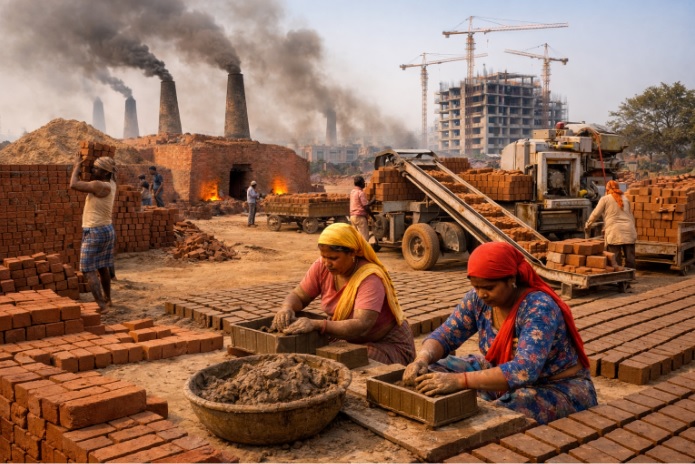
Construction demand patterns vary in different regions with increasing speeds, which makes brick production planning, pricing, and supply a big challenge. Brick manufacturing companies in India are now adapting by transforming old habits. Traditionally, manufacturers had goals to wait for orders before resuming production, but nowadays, manufacturers aim to observe the market by planning ahead before the onset of seasons.
- Season Planning and Output Control: The need for bricks fluctuates with the weather and timelines. Producers are discovering how to remain updated with actual market needs. Planning ahead in batches keeps the kilns running more efficiently with little waste in stock and fuel. Shortened time windows allow suppliers to take advantage of timely calls in urban housing sites, road building, and rural construction without committing money to a surplus of bricks.
- Shift Toward Regional Preferences: Presently, the quantity of demand is no longer the same everywhere. Builders have various wants with regard to the size, power, and finish of bricks, depending on the soil content and climatic conditions prevalent in the region. Brick production has shifted from the production of the same commodity for the whole market.
- Energy Use and Cost Awareness: Fuel price is also another force, especially regarding brick pricing and supply decisions. For flexibility, energy usage is being monitored more intensively. For instance, they regulate firing cycles, service kilns regularly, and avoid over burning. Energy management is being planned, allowing for variations in production without inducing price variations so that suppliers can meet customer needs at a reasonable price.
- Labour Management and Skill Balance: The number of labourers varies according to migration and seasonal work. Brick yards meet this need with more efficient balancing of skills and manual labour. Some brick yards even do task rotation, and others plan based on peak months of demand. This ensures that there is always a steady labour supply and that orders do not cause a delay while maintaining uniform quality.
- Use of Simple Data Signals: Even without systems, data is being used to inform decision-making. Sales records, news of local projects undertaken, and trends seen over the past season are all used to inform daily production decisions. Brick makers use information to compare their needs year on year, removing the guesswork involved. These are all measures that will inform smart production levels.
- Transport Planning and Delivery Timing: Speed of service is as important as price in influencing purchasing decisions. Producers of brick products also plan routes for transporting products depending on distance from the site as well as road accessibility. Reliable timings assist in reducing brick breaking as well as waiting time on site. Synchronization of service deliveries with periods of demand also creates trust and avoids congestion during peak construction periods.
- Quality Control Under Demand Pressure: Quality standards will sometimes be tested by rising orders. Manufacturers can check moulding steps, drying steps, and firing steps more often. Consistent checks prevent weak batches in months with heavy sales. Return requests are avoided when sellers hold quality steady, building confidence in those builders relying on uniform bricks for structural safety. This discipline supports long-term stability of demand in competitive markets.
In conclusion, what was once a seasonal thought has now become a daily task of adapting to demand. Planning output, managing costs, and being close to buyers keep producers relevant in ever-changing conditions. These steady adjustments show how the brick manufacturing industry continues to respond to real needs, balancing supply with demand while supporting ongoing growth in construction. This is a reflection of steady adaptation rather than a sudden change in the local market.