

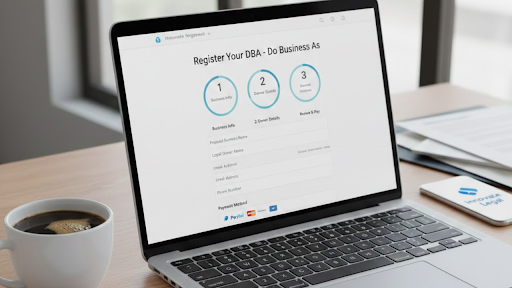
Starting a business? Congrats!
But here is something many entrepreneurs don’t realize—choosing your business name is just the beginning.
What if you want to do business under a name different from the one registered?
Or what if you are expanding your business into a new market and need a fresh identity?
This is where DBA (Doing Business As) comes in. It is a game-changer for growing your brand without the hassle of changing your entire business structure.
Think about it. You have already put in the hard work to launch your business, but now it is time to give it a name that stands out. Filing a DBA is your ticket to flexibility, whether you are a sole proprietor, an LLC, or even a big corporation.
The best part? You can file a DBA online quickly and easily.
Let’s just dive into x simple steps to file your DBA in 2026.
How To Register a DBA in 2026
1. Choose Your Fictitious Business Name
Here is how to select the perfect DBA name for your business:
Make it Memorable
Your DBA name should be easy to recall, simple to spell, and ideally reflect what your business stands for.
| Tip: Avoid overly complicated or hard-to-pronounce names. |
Follow Legal Guidelines
Different jurisdictions have specific rules about what you can and can’t include in your DBA name. You cannot use “LLC,” “Inc.,” or any other terms that imply a different business structure unless you are registered as such. Make sure your name doesn’t violate local regulations.
| Tip: Always check local and state regulations to see what words or phrases are restricted for your business type. |
2. Check Business Name Availability
Make sure your desired name is available and compliant with all regulations. Here are the key places you should search:
State’s Secretary of State
Most states have an online business name search tool on the Secretary of State’s website. This will allow you to verify if the name you want to use is already registered by another business in your state.
Corporate Registry Website
Check for name availability if your state has a separate corporate registry (such as a state-level business or corporate division).
County Clerk Records
Some jurisdictions require businesses to file DBAs with the county clerk’s office. It is a good idea to check local records as well to ensure your name is not already in use at the county level.
USPTO Trademark Database
Search the United States Patent and Trademark Office (USPTO) to ensure your name is not trademarked. You will need to choose a different name to avoid infringement if someone else owns the trademark for the name.
General Web/Social Media Searches
Conduct a simple web search and check popular social media platforms.
| NOTE: Various services streamline the process of checking DBA name availability. They can help you search through the necessary databases to verify your name’s availability across state and county records. You can even opt for the business name generator tool to come up with creative and unique business names that are available and compliant. |
3. Determine Where To File
Your filing may be done at the state or local level (both), depending on your location and business structure. State-level filing is required in larger states or when operating across multiple counties, with the SOS managing registration. Local filing is typical for businesses operating within a single county and is handled by the County Clerk. Some areas may require both filings for full compliance.
4. Complete the Application
You will need to fill out the official DBA form to complete your DBA registration. Here is the following information that will be needed:
- Legal Business Name: The official name of your business as registered with the state.
- DBA Name: The name under which you plan to operate your business.
- Business Description: A brief description of the nature of your business.
- Owner Details: Personal details of the business owner or owners.
A sole proprietor will need to provide the Social Security Number (SSN) or Employer Identification Number (EIN) if they have one. The EIN is recommended, especially if you plan on hiring employees or need a separate tax ID. Various services provide a simplified application process to fill out your DBA registration form. They can guide you through the required details to speed up the process.
5. File & Pay
Submit the form along with the required filing fee. Here are the options for the filing process:
Online Filing
Many states and counties allow you to file your DBA application online through their official website. This is often the quickest method to submit the form and pay the filing fee electronically.
By Mail
You can often mail the completed DBA form to the relevant state of county office if online filing is not available. You will need to include a check or money order for the filing fee.
In Person
Some jurisdictions may allow or require you to file the DBA form in person at your local County Clerk’s office or Secretary of State’s office.
6. Publish a Notice (If Required)
Some states or counties mandate publishing your DBA in a local, court-approved newspaper for public notice. You might need to file an affidavit of publication afterward.
7. Renew Annually
DBAs expire, so mark your calendar to renew them before they lapse to keep using your business name.
Conclusion
Filing a DBA comes with specific requirements and costs that you need to plan for in 2026. Costs vary widely depending on where you file. Some areas may also require renewal fees every few years, and if publication is required, you may incur additional costs. So, it is important to plan your budget correctly and keep your business compliant. Various services can simplify the DBA registration process with expert guidance.