
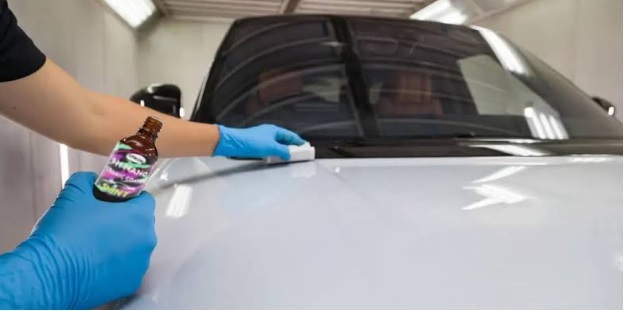
Keeping a car’s paint looking fresh is not as simple as it used to be. Daily driving exposes the exterior to dust, road grime, bird droppings, sunlight, and the occasional stone kicked up by another vehicle. Naturally, car owners look for ways to reduce that wear without constantly polishing or repainting panels.
Two names that often come up in this conversation are 9H ceramic coating and Paint Protection Film (PPF). They offer protection in very different ways, though, which is why comparing them purely on price can be misleading. The same applies when researching the 3M PPF coating price. Before deciding where the money is better spent, it helps to understand what each treatment is actually designed to do.
What Does 9H Ceramic Coating Mean?
The term 9H refers to the pencil-hardness scale commonly used when describing the surface hardness of certain coatings. A 9H ceramic coating is generally a silica-based liquid formulation that cures into a hard, transparent layer over the vehicle’s clear coat.
Its biggest advantages are related to surface protection and maintenance. A properly applied coating can make paint more resistant to chemical contaminants, oxidation and light surface marks. It also gives the exterior a hydrophobic finish, causing water to bead rather than spread across the panel.
That effect is more than cosmetic. When dirt and water have less opportunity to cling to the surface, routine washing becomes easier.
Still, the 9H label should not be interpreted as meaning that the car becomes scratch-proof. A ceramic coating is hard, but it is relatively thin and cannot absorb serious physical impacts.
Where PPF Takes a Different Approach
PPF works more like a protective skin for the vehicle.
Paint Protection Film is a thicker, flexible material placed directly over the paint. Its job is to take the punishment that would otherwise reach the factory finish. Stone chips on a highway, minor abrasions and everyday contact around vulnerable panels are situations where PPF can offer an advantage.
Modern films may also have self-healing top coats. Depending on the product, minor surface marks can reduce or disappear when exposed to suitable heat.
This makes PPF particularly useful on the front bumper, bonnet, front fenders, mirrors and other areas that face frequent road debris.
Comparing the Cost of PPF and Ceramic Coating
Price comparisons become tricky because neither service has one universal rate.
The 3M PPF coating price, for example, can change according to the vehicle’s size, the coverage selected, the particular film and the installation centre. Protecting only the front bumper and bonnet will naturally cost less than covering the entire vehicle.
Ceramic coating has a similar pricing structure. The size and condition of the vehicle matter, but preparation can be an equally important factor. A car requiring paint correction before coating will take considerably more time than a relatively new vehicle with clean, well-maintained paint.
Rather than asking only for the cheapest quote, ask what is included. Surface preparation, coverage, warranty and aftercare can make a substantial difference to the final value.
Which One Protects Paint Better?
That depends on the type of damage you are worried about.
If your main concern is water spots, environmental contaminants, oxidation and maintaining a glossy, easy-to-clean finish, 9H ceramic coating is a strong option.
If stone chips and physical scratches are the bigger concern, PPF has the edge because it provides an actual physical barrier.
Neither product completely replaces the other. In fact, some car owners use both. PPF can be installed on high-impact areas, while ceramic coating is applied to the remaining paint. A coating may also be suitable for the PPF itself, provided the film manufacturer allows it.
Is Expensive PPF Always Better?
Not necessarily.
A premium film from a recognised manufacturer can be worthwhile, but installation quality is just as important. Even an excellent film can look poor if edges are badly finished or the surface underneath has not been prepared correctly.
When considering the 3M PPF coating price, check whether the quoted amount includes professional installation, the coverage area and warranty support.
It is also sensible to ask how the installer handles future issues such as lifting edges, bubbling or film replacement.
Conclusion
Choosing between 9H ceramic coating and PPF isn’t really about finding one universal winner. They solve different problems.
Ceramic coating improves surface protection, gloss and ease of maintenance. PPF provides a thicker physical barrier against impacts and everyday abrasion. The right choice depends on how the car is driven, where it is parked and how much importance the owner places on preserving the factory paint.
And when comparing the 3M PPF coating price, look beyond the number on the quotation. Film quality, coverage, installation standards and warranty terms all contribute to what you actually receive for your money.
For many owners, the smartest approach is not choosing between appearance and protection, but combining the right technologies where they make practical sense.