
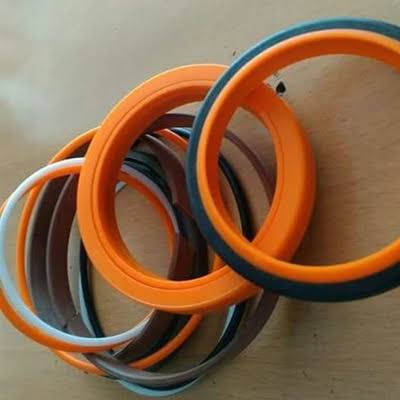
Hydraulic seals are essential components in equipment that relies on pressurized fluid to generate movement and mechanical force. Their quality, dimensional accuracy, and material properties directly influence the reliability of hydraulic systems. For businesses purchasing these components, selecting a supplier involves more than comparing product prices or reviewing a catalog. It is important to understand whether the supplier has the production capabilities to meet specific technical and volume requirements.
Evaluating a Hydraulic Seals Manufacturer requires examining its manufacturing equipment, material handling processes, engineering expertise, quality control systems, and production capacity. A thorough assessment helps industrial buyers determine whether a manufacturer can deliver consistent products, handle customized orders, and support long-term supply requirements.
1. Examine the Manufacturer’s Product Range
The first step is to understand which types of hydraulic sealing components the manufacturer can produce. A broad product range may indicate experience with different sealing applications, although the actual manufacturing capabilities should be verified.
Common hydraulic sealing products include:
- Piston seals: Prevent internal fluid leakage inside hydraulic cylinders.
- Rod seals: Prevent hydraulic fluid from escaping around moving piston rods.
- Wiper seals: Remove dust, dirt, and other contaminants from exposed rod surfaces.
- O-rings: Provide sealing in static and selected dynamic applications.
- Backup rings: Support primary seals and help reduce extrusion risks.
- Wear rings: Guide moving components and reduce direct contact between metal surfaces.
Buyers should check whether the manufacturer produces the required seal profiles, dimensions, and material options. If the application involves specialized machinery, it is also useful to ask whether custom designs are supported.
2. Evaluate Manufacturing Equipment and Technology
<AsyncImage query=”industrial hydraulic rubber seal manufacturing factory molding machines CNC production equipment” aspectRatio=”16:9″ width=”100%”/>
Manufacturing equipment has a significant influence on production efficiency, dimensional accuracy, and product consistency.
Hydraulic seals may be produced through several processes, depending on their material, geometry, and production volume.
Compression Molding
Compression molding is commonly used for producing rubber components. A prepared material charge is placed into a heated mold, where pressure and temperature help form the required shape.
Injection Molding
Injection molding involves introducing material into a closed mold under controlled conditions. It can support repeatable production of suitable elastomer and polymer components.
Transfer Molding
Transfer molding moves prepared material into mold cavities through a transfer mechanism. It may be used for products requiring particular molding arrangements.
CNC Machining
CNC machining is useful for producing precise profiles, prototypes, and certain custom sealing components. Its suitability depends on the material and product design.
When evaluating equipment, ask whether the manufacturer’s machinery is appropriate for the required products and whether it is properly maintained. Modern equipment can be beneficial, but its value depends on operating controls, tooling quality, and the skills of production personnel.
3. Check Material Selection and Processing Capabilities
Material selection is one of the most important factors in hydraulic seal production. Different hydraulic systems expose seals to different pressures, temperatures, fluids, and mechanical stresses.
A capable manufacturer should understand the properties and limitations of commonly used sealing materials.
| Material | Common Characteristics | Typical Considerations |
|---|---|---|
| NBR | Good flexibility and compatibility with many mineral oils | Confirm fluid and temperature suitability |
| Polyurethane (PU) | Strong abrasion and tear resistance | Consider formulation and operating conditions |
| PTFE | Low friction and broad chemical resistance | Account for its different elastic properties |
| FKM | Good resistance to many oils and elevated temperatures | Verify compatibility with the specific fluid |
| EPDM | Good resistance to weathering and many water-based environments | Generally unsuitable for many petroleum-based hydraulic oils |
Ask the manufacturer how materials are selected, stored, prepared, and inspected. It is also useful to determine whether the company can provide material specifications or relevant test reports.
A supplier that understands material compatibility can help reduce the risk of premature seal deterioration.
4. Assess Custom Manufacturing and Engineering Support
Not every hydraulic system uses standard sealing dimensions. Specialized equipment may require custom profiles, non-standard sizes, or materials selected for particular operating conditions.
A manufacturer’s ability to handle customized production can therefore be an important purchasing consideration.
Evaluate whether the company can:
- Work from customer drawings and technical specifications.
- Examine existing seal samples.
- Recommend suitable materials.
- Review operating pressure and temperature requirements.
- Develop prototypes or samples.
- Modify designs when technical requirements change.
- Support repeat production of approved custom designs.
Engineering support is particularly important when replacing discontinued components or developing seals for newly designed hydraulic equipment.
Before requesting a quotation, provide accurate drawings, dimensions, fluid information, and operating conditions. This allows the manufacturer to assess feasibility more effectively.
5. Review Dimensional Accuracy and Production Tolerances
<AsyncImage query=”precision inspection measurement of industrial rubber hydraulic seal using digital caliper micrometer” aspectRatio=”16:9″ width=”100%”/>
Hydraulic seals must fit correctly within their installation spaces. Small dimensional variations can affect sealing contact, friction, installation, and resistance to pressure.
For example, an undersized seal may not maintain sufficient contact with its mating surface, while an oversized component may create excessive friction or installation difficulties.
A manufacturer should have suitable measuring equipment and documented procedures for checking critical dimensions.
Important measurements may include:
- Inner and outer diameters.
- Cross-sectional thickness.
- Lip height and profile geometry.
- Overall dimensions.
- Groove and installation-related dimensions.
- Other application-specific tolerances.
Ask how measurements are performed, how often inspection takes place, and whether measuring equipment is calibrated.
The required tolerance depends on the seal design, material, application, and technical specification. A reliable manufacturer should understand which dimensions are critical rather than applying arbitrary tolerances to every feature.
6. Investigate Quality Control Procedures
Production capacity is not useful if the manufacturer cannot maintain consistent product quality. Quality control should be integrated throughout the manufacturing process, from incoming materials to finished components.
A structured quality control system may include several stages.
Incoming Material Inspection
Materials should be checked against relevant specifications before entering production. This may involve reviewing supplier documentation, material identification, and selected physical tests.
In-Process Inspection
Production teams monitor important variables during molding, machining, trimming, and other operations.
Finished Product Inspection
Completed seals are examined for dimensional accuracy, visible defects, and compliance with product specifications.
Batch Traceability
Batch identification helps manufacturers connect finished products with relevant production and inspection records.
Corrective Action
When defects or process variations occur, manufacturers should investigate their causes and implement appropriate corrective measures.
Buyers can request examples of inspection documentation and ask how nonconforming products are handled.
7. Examine Testing and Validation Facilities
<AsyncImage query=”rubber polymer material testing laboratory hardness tensile compression test equipment” aspectRatio=”16:9″ width=”100%”/>
Testing helps determine whether hydraulic seals and their materials meet the required specifications.
A manufacturer with suitable testing capabilities can provide additional confidence in product consistency and application suitability.
Common testing methods include:
Hardness Testing: Measures resistance to indentation and helps verify material hardness.
Tensile Testing: Evaluates tensile strength and elongation under controlled conditions.
Compression Set Testing: Measures permanent deformation after a material has been compressed for a specified period.
Fluid Compatibility Testing: Evaluates how exposure to hydraulic fluids affects material dimensions and properties.
Abrasion Testing: Measures resistance to material loss caused by friction.
Pressure and Leakage Testing: Evaluates sealing performance under defined pressure conditions.
Dimensional Inspection: Confirms whether finished components meet specified measurements.
Not every manufacturer needs to perform every test internally. Some may use qualified external laboratories for specialized evaluations. Buyers should clarify which tests are conducted in-house, which are outsourced, and what documentation is available.
8. Evaluate Production Capacity and Order Flexibility
A manufacturer’s production capacity determines whether it can handle the buyer’s expected order quantities within the required time.
However, capacity should not be judged only by the number of machines or the size of the factory. Actual output also depends on production scheduling, tooling availability, material supply, workforce skills, and inspection requirements.
Consider asking the following questions:
- What is the normal production capacity for the required seal type?
- Can the manufacturer handle both small and large orders?
- How are urgent orders scheduled?
- What are the typical lead times?
- Can repeat orders be produced to the same specifications?
- How does the company manage increases in demand?
Businesses with regular purchasing requirements should also evaluate whether the manufacturer can maintain stable production over an extended period.
9. Check Production Planning and Delivery Management
Reliable production planning helps manufacturers coordinate material procurement, machine availability, production schedules, inspection, and packaging.
Poor planning can result in delays even when the factory has sufficient machinery.
A well-organized production process should include clear order confirmation, realistic lead-time estimates, progress monitoring, and communication about unexpected issues.
Buyers should evaluate:
- Whether production schedules are documented.
- How material shortages are managed.
- Whether custom orders receive separate planning.
- How quality inspection affects delivery timelines.
- Whether shipping and packaging arrangements are clearly defined.
For businesses that depend on continuous equipment production or maintenance schedules, delivery reliability is just as important as manufacturing capacity.
10. Assess Workforce Skills and Technical Expertise
Machinery and automation are important, but experienced personnel remain essential to successful hydraulic seal manufacturing.
Engineers help interpret drawings, evaluate material requirements, and develop suitable product designs. Production technicians manage equipment and processing conditions, while quality inspectors verify that products meet established specifications.
When evaluating a manufacturer, consider whether its team has relevant knowledge in:
- Elastomer and polymer materials.
- Hydraulic sealing applications.
- Mold design and production.
- CNC machining and dimensional control.
- Material testing.
- Quality management.
- Custom product development.
A technically capable team should be able to explain manufacturing limitations and identify potential problems before production begins.
Clear communication is also important. Manufacturers should be able to discuss specifications, suggest practical adjustments, and provide realistic information about product feasibility.
11. Review Certifications and Quality Management Systems
Certifications and documented management systems can provide useful information about a manufacturer’s approach to quality and operational control.
For example, ISO 9001 is a quality management system standard that focuses on consistent processes, customer requirements, and continual improvement.
However, ISO 9001 certification does not automatically prove that every hydraulic seal meets a particular performance requirement. Product specifications and relevant testing evidence should still be reviewed.
Depending on the application, buyers may also ask about:
- Documented inspection procedures.
- Calibration records.
- Material traceability.
- Supplier evaluation practices.
- Nonconformance management.
- Applicable material or product testing standards.
Always verify the scope and validity of any claimed certification rather than relying only on a statement in a product brochure.
12. Examine Custom Tooling and Prototype Development
Tooling plays an important role in producing hydraulic seals with specific profiles and dimensions. For customized components, mold design and tooling accuracy can influence the quality and repeatability of finished products.
Ask whether the manufacturer can develop or modify molds according to technical requirements.
Prototype production is also valuable because it allows customers and manufacturers to evaluate a design before committing to a larger order.
A typical development process may involve:
- Reviewing drawings or product samples.
- Confirming dimensions and material requirements.
- Developing the required tooling.
- Producing an initial sample.
- Checking dimensions and physical properties.
- Conducting application-related testing where necessary.
- Approving the design for production.
Clarify who owns custom tooling, how it is maintained, and whether it can be used for future orders.
13. Evaluate Communication and After-Sales Support
Production capabilities extend beyond the factory floor. Good communication and technical support help businesses resolve issues and manage ongoing purchasing requirements.
Before selecting a manufacturer, assess how it responds to technical questions, quotation requests, sample evaluations, and quality concerns.
Important considerations include:
- Response time for technical inquiries.
- Availability of product specifications.
- Support with product identification.
- Procedures for reporting defects.
- Replacement and complaint-handling policies.
- Assistance with repeat orders.
- Communication about production or delivery changes.
A supplier that provides clear and consistent communication can make long-term procurement more manageable.
14. Practical Checklist for Evaluating a Hydraulic Seals Manufacturer
The following checklist can help procurement teams compare potential suppliers more systematically.
| Evaluation Area | What to Verify |
|---|---|
| Product range | Required seal types, profiles, and sizes |
| Equipment | Suitable molding and machining technology |
| Materials | Available compounds and compatibility knowledge |
| Customization | Ability to work from drawings and samples |
| Dimensional control | Measurement equipment and tolerance procedures |
| Quality assurance | Incoming, in-process, and final inspection |
| Testing | Material and product validation capabilities |
| Production capacity | Ability to meet expected order volumes |
| Delivery | Realistic lead times and scheduling |
| Workforce | Relevant engineering and technical experience |
| Documentation | Specifications, inspection records, and traceability |
| Customer support | Technical assistance and complaint handling |
Using the same evaluation criteria for each supplier makes comparisons more objective and helps identify capability gaps before placing an order.
Conclusion
Evaluating the production capabilities of a hydraulic seals manufacturer requires a comprehensive review of its equipment, material knowledge, engineering support, quality control, testing facilities, and production management. These factors influence whether a supplier can produce components that meet technical specifications and maintain consistent quality across orders.
Industrial buyers should look beyond factory size and advertised production capacity. The ability to handle customized designs, control critical dimensions, verify material properties, and deliver products on schedule is equally important.
By asking detailed questions and reviewing relevant production and quality documentation, businesses can select a manufacturing partner that supports reliable hydraulic equipment performance and long-term supply requirements.