
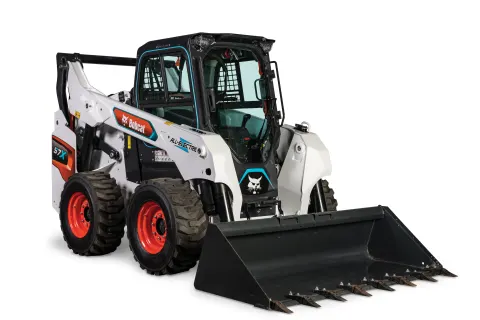
Skid steer loaders are widely used in construction, agriculture, landscaping, and material handling because of their compact size and ability to perform multiple tasks. Traditionally, these machines have relied on diesel engines, but electric-powered models are becoming an alternative for businesses seeking quieter operation and reduced on-site exhaust emissions.
Choosing between electric and diesel equipment requires a clear understanding of performance, operating costs, maintenance, and working conditions. An Electric Skid Steer Loader can offer several practical advantages, but its suitability depends on the job requirements, available charging infrastructure, and expected daily operating hours.
What Is the Difference Between Electric and Diesel Skid Steer Loaders?
The main difference is the power source. An electric skid steer loader uses a rechargeable battery and electric motors, while a diesel model relies on an internal combustion engine to generate power.
Both types can perform tasks such as lifting materials, moving soil, clearing debris, and operating compatible attachments. However, their energy requirements, maintenance routines, noise levels, and refueling or charging processes differ.
Electric models generally produce no exhaust emissions at the point of use and tend to operate more quietly. Diesel models, on the other hand, can be convenient for long shifts in remote locations where charging facilities are unavailable.
Electric vs. Diesel Skid Steer Loaders: Key Differences
| Feature | Electric Skid Steer Loader | Diesel Skid Steer Loader |
|---|---|---|
| Power source | Rechargeable battery | Diesel engine |
| On-site exhaust emissions | None during normal electric operation | Produces exhaust emissions |
| Noise level | Generally quieter | Generally louder |
| Energy supply | Requires charging | Requires diesel fuel |
| Maintenance | Fewer engine-related service requirements | Engine, fuel, cooling, and exhaust systems require servicing |
| Operating duration | Depends on battery capacity, workload, and charging opportunities | Depends on fuel capacity and consumption |
| Initial investment | May be higher, depending on the model | Often has a lower purchase price than comparable electric equipment |
| Indoor applications | Useful where exhaust emissions must be minimized | Requires appropriate ventilation and compliance with site regulations |
| Infrastructure | Needs compatible charging equipment and sufficient electrical capacity | Needs access to diesel fuel |
| Best-fit conditions | Sites with predictable shifts, charging access, or noise restrictions | Remote sites, extended shifts, and operations requiring quick refueling |
These differences provide a useful starting point, but actual performance varies by manufacturer, machine size, battery capacity, and equipment configuration.